
 E-Paper



What’s normal for monsoon?
IMD’s forecast of a normal monsoon holds caveats and potential skew in spread and timing

 Prefer HTon Google


The India Meteorological Department (IMD)’s headline prediction of a normal monsoon this year hides some caveats that may influence the course of the agriculture sector and economy. To start off, IMD’s forecast of the June-September monsoon at 96% of the long-period average (LPA) is at the lowest end of the 96%-104% band that is considered normal rainfall. Second, the national forecaster said there was a 35% probability of a normal monsoon and a 29% probability of a below-normal monsoon this year. And third, IMD said currently neutral El Nino Southern Oscillation conditions were prevailing in the country, but El Nino conditions — characterised by an unusual warming of waters in the eastern equatorial Pacific, which has a high correlation with weaker monsoon rains — were likely to develop in July. IMD director general M Mohapatra sought to calm nerves by adding that not all El Nino years see bad monsoons, but any developments on this front will be keenly watched, and IMD’s May forecast will serve as a crucial barometer of sentiment.
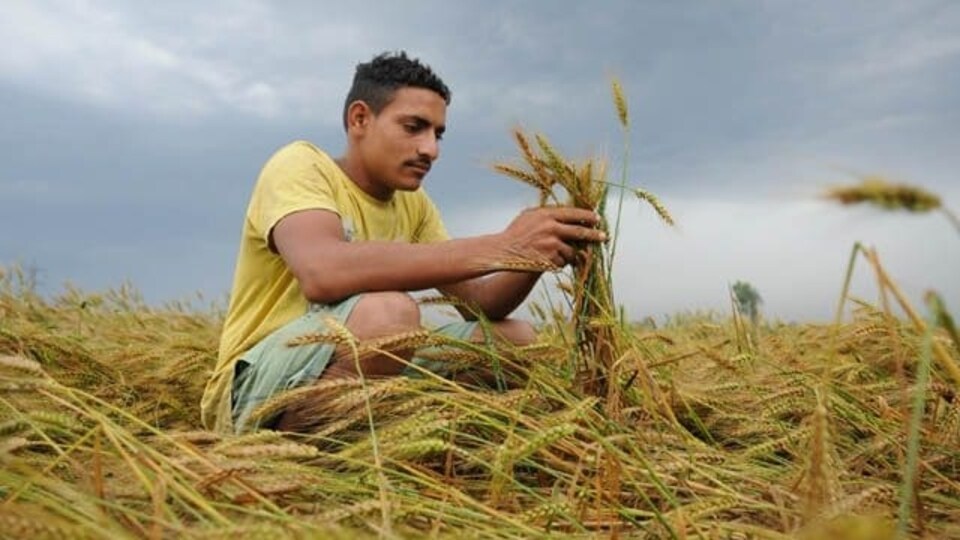
In any year, the southwest monsoon — which brings about 70% of the country’s annual rainfall — holds outsized importance because 51% of India’s farmed area, accounting for 40% of production, is rain-fed, and a little less than half of its population is dependent on agriculture. But this year, the stakes are even higher, given the global economic gloom and the vagaries of inflationary pressures. A poor monsoon can depress farm produce and rural spending, crimp production and fuel food inflation, besides wreaking havoc with harvest rates and farm jobs.
But beyond the immediate import of the forecast, one crucial question must be asked — what is a normal monsoon anymore? In 2022, for example, IMD’s data showed that the June-September season ended with 6% showers above LPA. But as this newspaper noted, this was a mere statistical achievement with wild variations sowing chaos. This skew was both temporal and geographic. The four states of the Gangetic plains -- Uttar Pradesh, Bihar, Jharkhand, and Bihar — that produce one-third of the country’s rice received 20% deficient rainfall. For eight states, it was among the 10 hottest monsoons since data started being recorded in 1951. The spread of the rain was also patchy. On a quarter of days (31 of 122 days), there was a deficit of 20% or more; and on a third (41 days), there was a surplus of 20% or more. Heavy and extreme rain were responsible for the surplus, with the latter showing a 186% deviation from the 1961-2010 average. As the monsoon becomes more volatile and skewed, cropping patterns, land use, forecasting and policymaking will need to evolve.


