
 E-Paper



Asean's changing place in the global economy | Number Theory
What has been ASEAN’s larger economic and trade trajectory? How has it changed with important countries? Here is what the data shows
Updated on: Nov 18, 2026, 06:35:55 IST

 Prefer HTon Google

Share via


Copy link

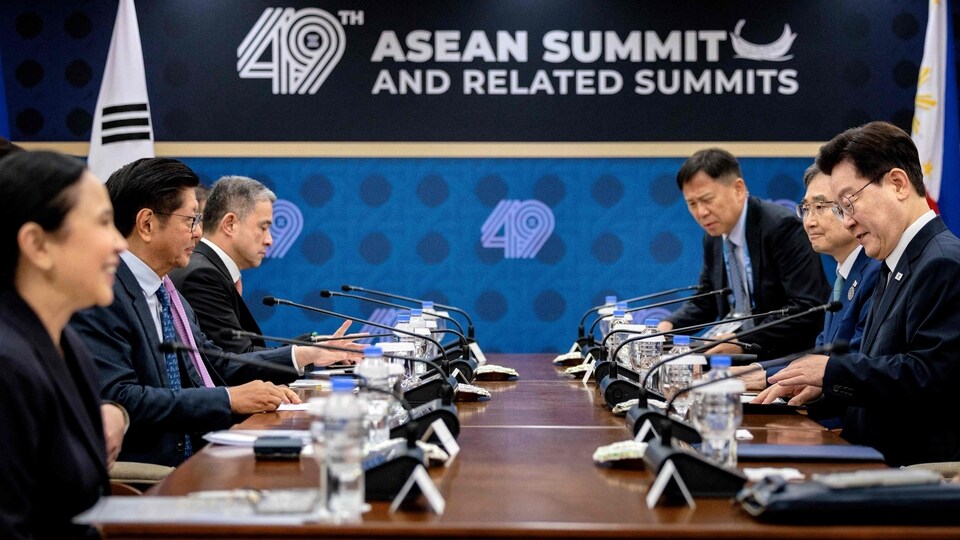
The 49th ASEAN Summit ended on November 17 in Manila, the Philippines. The regional group of Southeast Asian countries was formed on August 8,1967 with Malaysia, Indonesia, the Philippines, Singapore and Thailand as members. It subsequently added six more countries. The group took a major economic step when it joined the Regional Comprehensive Economic Partnership (RCEP) trade bloc in 2020, along with Australia, China, Japan, New Zealand and South Korea. While India did not join RCEP, despite being part of the initial negotiations, it has had a free trade agreement (FTA) with ASEAN since 2010. What has been ASEAN’s larger economic and trade trajectory? How has it changed with important countries? Here is what the data shows.
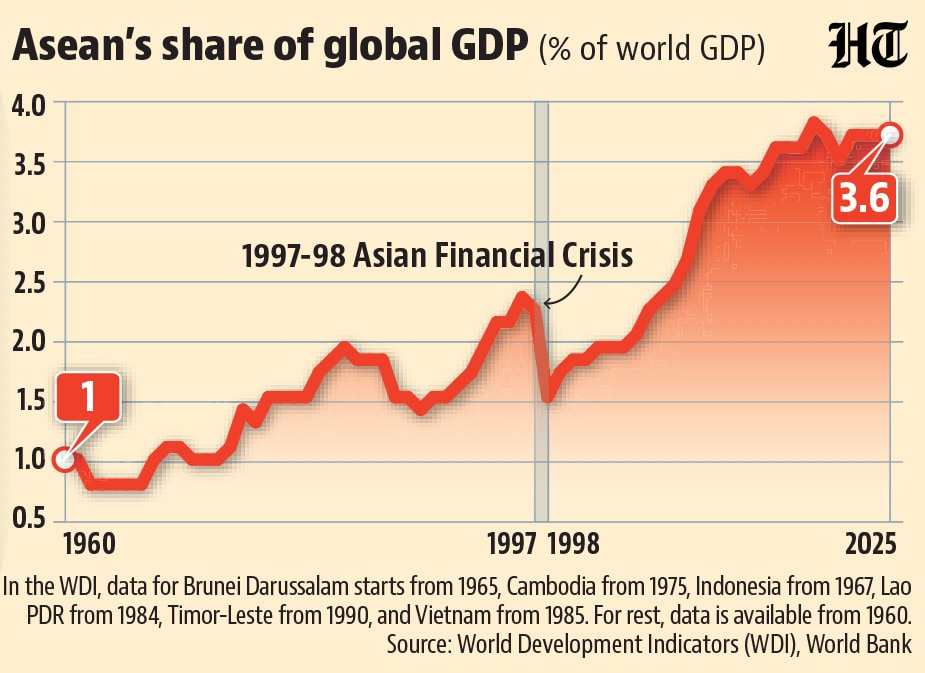
 ASEAN’s global GDP shareIn 1960, ASEAN represented just 1% of the global GDP; today, it accounts for 3.6%. Its share has increased over the years, although the trend has flattened in recent years, particularly since 2022. To be sure, ASEAN’s share of global GDP has not risen consistently. The Asian Financial Crisis of 1998—which severely affected Indonesia, Thailand and Malaysia after being triggered by a capital outflow following economic mismanagement – led to prolonged economic pain across this region. The long-term GDP share of ASEAN countries shows that the Asian crisis led to a lost decade of sorts for the bloc with the number falling from 1997 onwards and then reaching back this level only in 2006.
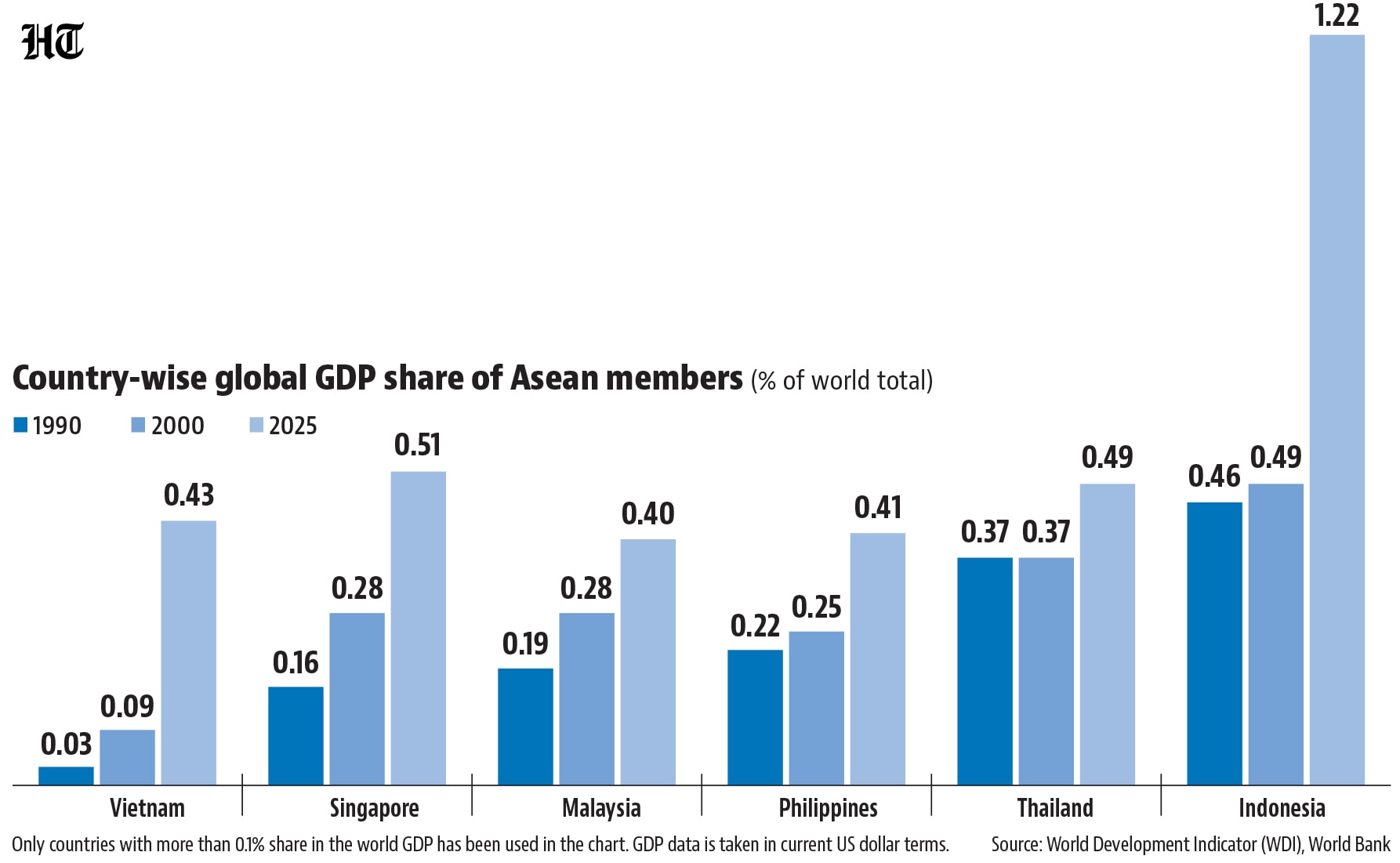
- Intra-ASEAN importance of member countries has changed significantly overtimeASEAN’s rising economic importance also hides the changing importance of the countries within the group. The Philippines lost GDP share between 1960 and 1990, and has still not regained its 1960 GDP share levels in the global economy. Indonesia, the largest economy in the group, peaked in terms of global GDP share in 2020s. ASEAN’s most recent success story is Vietnam, which has almost doubled its global GDP share between 2010 and 2025. The other big winner in the group is Singapore, which has also seen a large increase in its global GDP share.
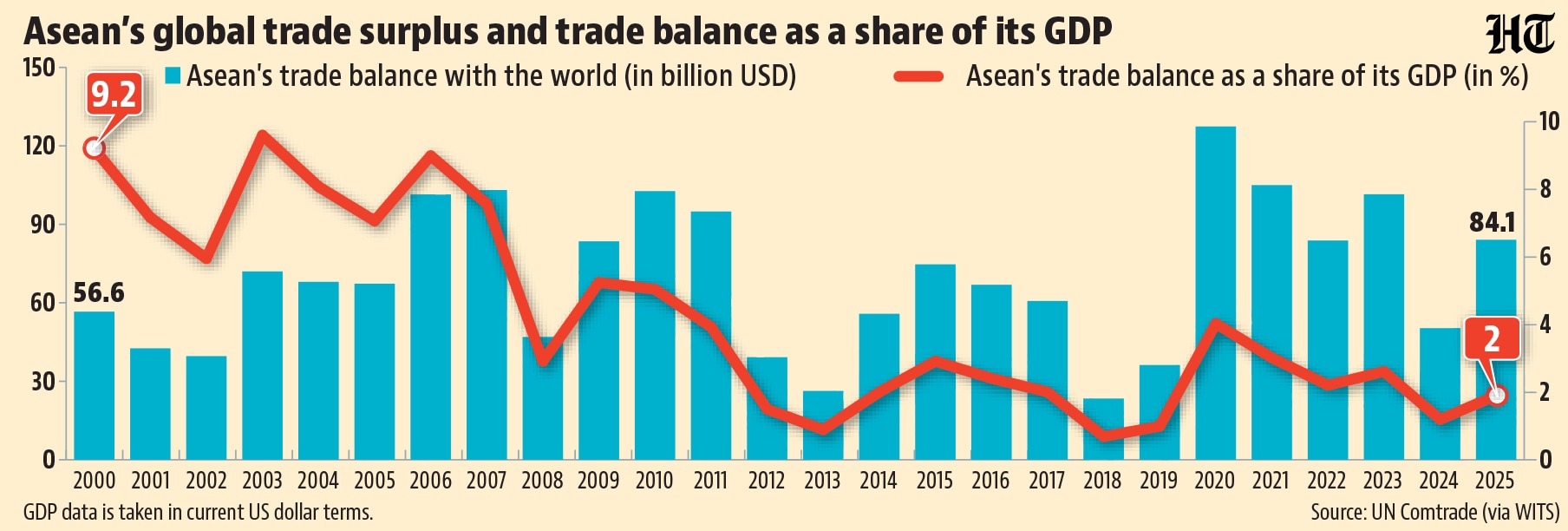
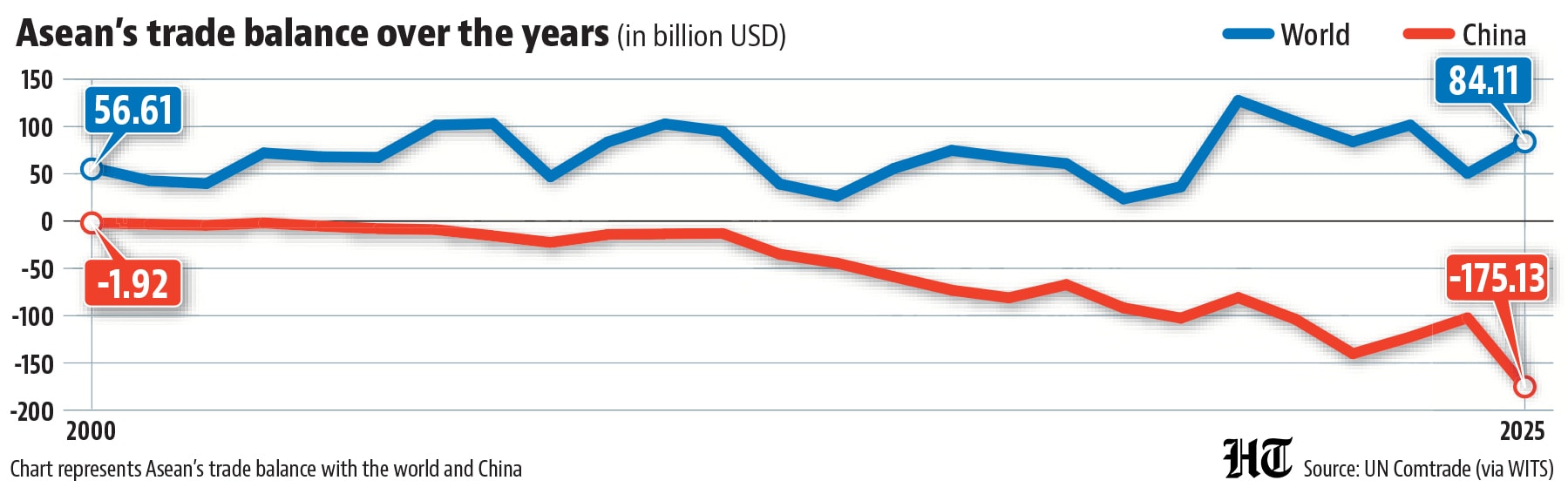
- ASEAN continues to post a trade surplusThe world first noticed some members of ASEAN as the Asian Tigers, countries in Southeast Asia which experienced rapid export growth. An HT analysis of trade data since 2000 shows that the group as a whole continues to enjoy a trade surplus vis-à-vis the rest of the world. This number has grown in absolute terms but has significantly reduced as a share of ASEAN’s GDP.
- ASEAN’s integration in RCEP has deepened the asymmetry in its trade patternWhile ASEAN posts a trade surplus overall and vis-à-vis the US and India, it does have a trade deficit vis-à-vis China. An HT analysis of trade data shows that the asymmetry in ASEAN’s trade – surplus with the rest of the world and deficit with China – has increased after it joined the Regional Comprehensive Economic Partnership (RCEP) along with China, Japan, South Korea, Australia and New Zealand. This, when read, with the fact that at least some of ASEAN’s member countries such as Vietnam have been described as a recent addition to the global value chain which imports inputs and capital from China and exports the finished goods to countries like the US – Vietnam had the largest trade surplus with the US in the first half of the year – underlines the role ASEAN might be playing in the global realignment of trade. India’s trade deficit with ASEAN has also gone up in absolute terms.


Unlock a world of Benefits with HT! From insightful newsletters to real-time news alerts and a personalized news feed – it's all here, just a click away! -Login Now!


