
 E-Paper



In wars of attrition, the roles of munitions and economics | Number Theory
Modern warfare and its practitioners are keenly watching the dynamics evolve
Updated on: Sep 21, 2026, 06:35:32 IST

 Prefer HTon Google
Share via


Copy link

The advent of smart munitions was supposed to be a game-changer in military conflicts, both in offence and defence. The ongoing wars in Europe and West Asia have challenged this notion by introducing, well, economics. Modern warfare and its practitioners are keenly watching the dynamics evolve.

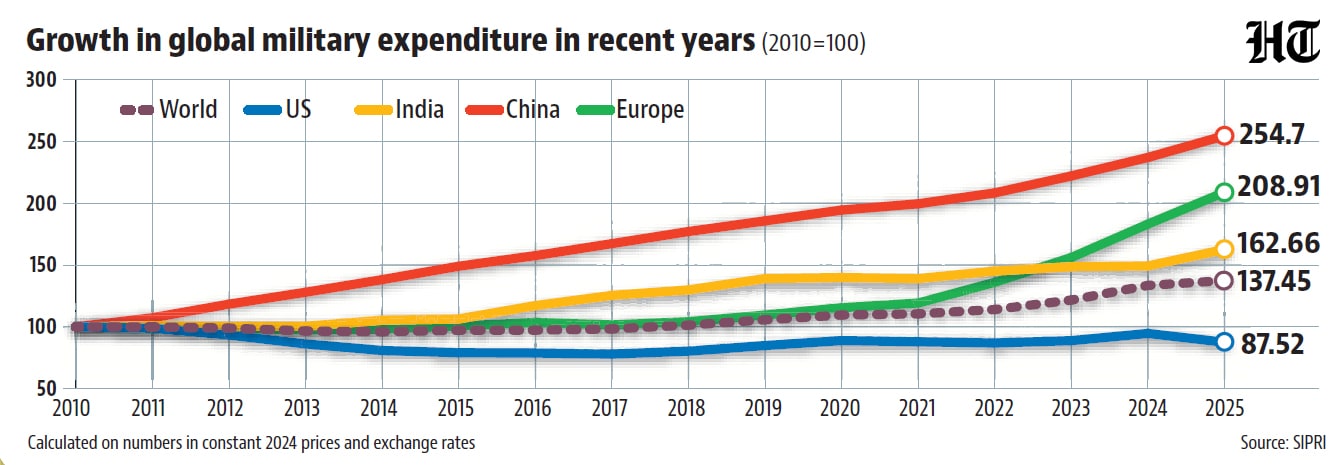
 Militaries are spending more, and still feeling insecureThe world is spending far more on its militaries than it did a decade ago. Global military expenditure rose from $1.96 trillion in 2015 to $2.77 trillion in 2025, an increase of 41%. Europe has led the acceleration as spending has more than doubled from $381 billion to $791 billion over the period, while China’s rose 71% and India’s 53%. The Ukraine war has been the clearest catalyst for Europe’s rearmament. But spending more in itself isn’t enough to sustain a war today.
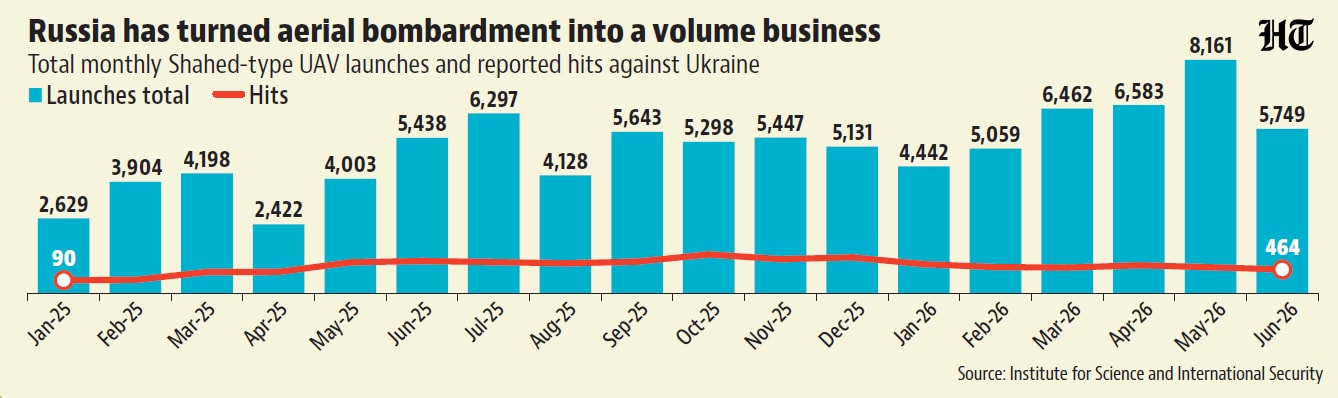
- Cheap weapons change the problem from finesse to scaleThis is where cheaper munitions come in. A relatively inexpensive drone threatening a valuable military asset or critical infrastructure justifies firing a costly interceptor missile. The problem arises when an attacker can force that choice again and again, which is what has happened in Russia-Ukraine and the West Asia war. Russia launched 8,161 Shahed-type UAVs — relatively low-cost, long-range one-way attack drones designed to strike targets by crashing into them with an explosive payload — against Ukraine in May 2026. Only 543 were reported to have reached their targets that month, giving them a hit rate of less than 7%. However, such large waves can stretch air defences, force repeated engagement decisions and deplete future defences.
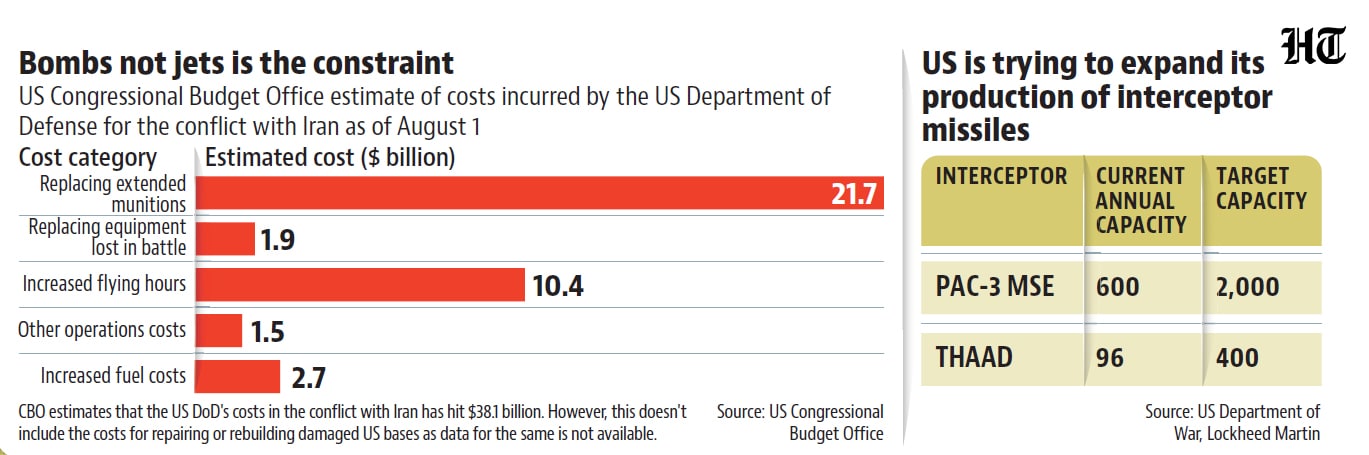
- The return of difficult demands on munitions military-industrial complexesModern wars of attrition have made production lines almost as important as front lines. According to a report by the US Congressional Budget Office published on September 15, the total costs incurred by the US Department of Defence is the conflict with Iran has reached $38.1 billion as of August 1—likely an undercount since it doesn’t include the cost of repairing or rebuilding damaged US bases. More interestingly, replacing extended munitions alone account for $21.7 billion of the total costs, from which $13.1 billion is for just replacing spent missile-defence interceptors. CBO also estimates that the US has probably used between half and two-thirds of its combined stock of Patriot, THAAD, SM-3 and SM-6 interceptors since June 2025, and that rebuilding those inventories would take “at least five years” even if production is increased. To be sure, the US is now trying to increase its annual capacity to produce PAC-3 MSE interceptor missiles from around 600 to 2,000 and THAAD from 96 to 400. But expanding output is not simply a matter of asking a Lockheed Martin to assemble more missiles as each interceptor depends on motors, seekers, explosives, electronics and other specialised components whose suppliers must also scale up. In other words, modern military power increasingly rests on manufacturing capability to quickly replace a weapons stockpile and not just on how advanced those weapons themselves are.
- India has become a bigger producer, but endurance is a different testIndia has made some strides in promoting its domestic defence industry. Domestic defence production has risen from ₹43,746 crore in 2013-14 to a record ₹1.78 lakh crore in 2025-26, with the private sector now accounting for an estimated 24% of output. To be sure, India still remains the world’s second-largest recipient of major arms in 2021-25—behind only the war-struck Ukraine. The harder question is what these headline gains say about endurance. After Operation Sindoor, India’s then Chief of Defence Staff General Anil Chauhan warned that dependence on imported niche technologies can limit scalability and create vulnerabilities in sustained operations. India does indeed now build more of what it fights with than before. But what public data cannot tell us is whether its factories and supply chains can actually sustain a modern war of attrition, especially considering that it still relies on imports for some of its most crucial weapons systems even as domestic production has expanded in recent years.


Unlock a world of Benefits with HT! From insightful newsletters to real-time news alerts and a personalized news feed – it's all here, just a click away! -Login Now!


