
 E-Paper



Is focus on agri in US deal missing the woods for the tree(nut)s? | Number Theory
.
Updated on: Feb 6, 2026, 08:46:53 IST

 Prefer HTon Google
Share via


Copy link

The details of the Indo-US trade deal are not known but expected soon. A lot of the political reactions in India have been about the potentially harmful impact of the deal on our farmers. This makes it worthwhile to look at the Indo-US trade in agriculture before the deal happened.
Is focus on agri in US deal missing the woods for the tree(nut)s?
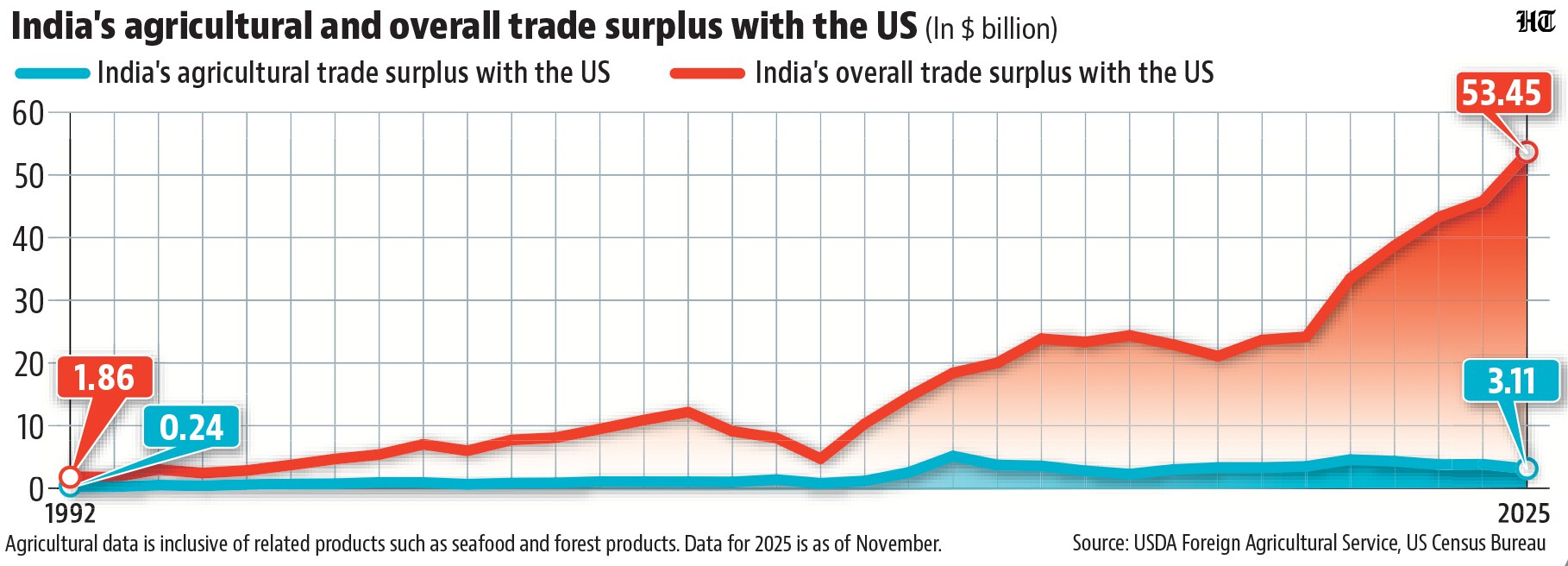
 India is a steady contributor to US trade deficitThe merchandise trade deficit of the US with India has been growing over the years, not just in absolute but even relative terms. It has increased from about 2% of the US’ overall trade deficit or $1.9 billion in 1992 to 3.8% or $45.8 billion in 2024. In agricultural trade, the US ran a $3.84 billion farm-trade deficit with India in 2024, about 5% of its overall agricultural deficit. This needs to be read with the fact that the US, the biggest agricultural exporter in the world and long accustomed to running a surplus in farm goods, has slipped into deficit in recent years under both broader and narrower definitions in the more recent period.
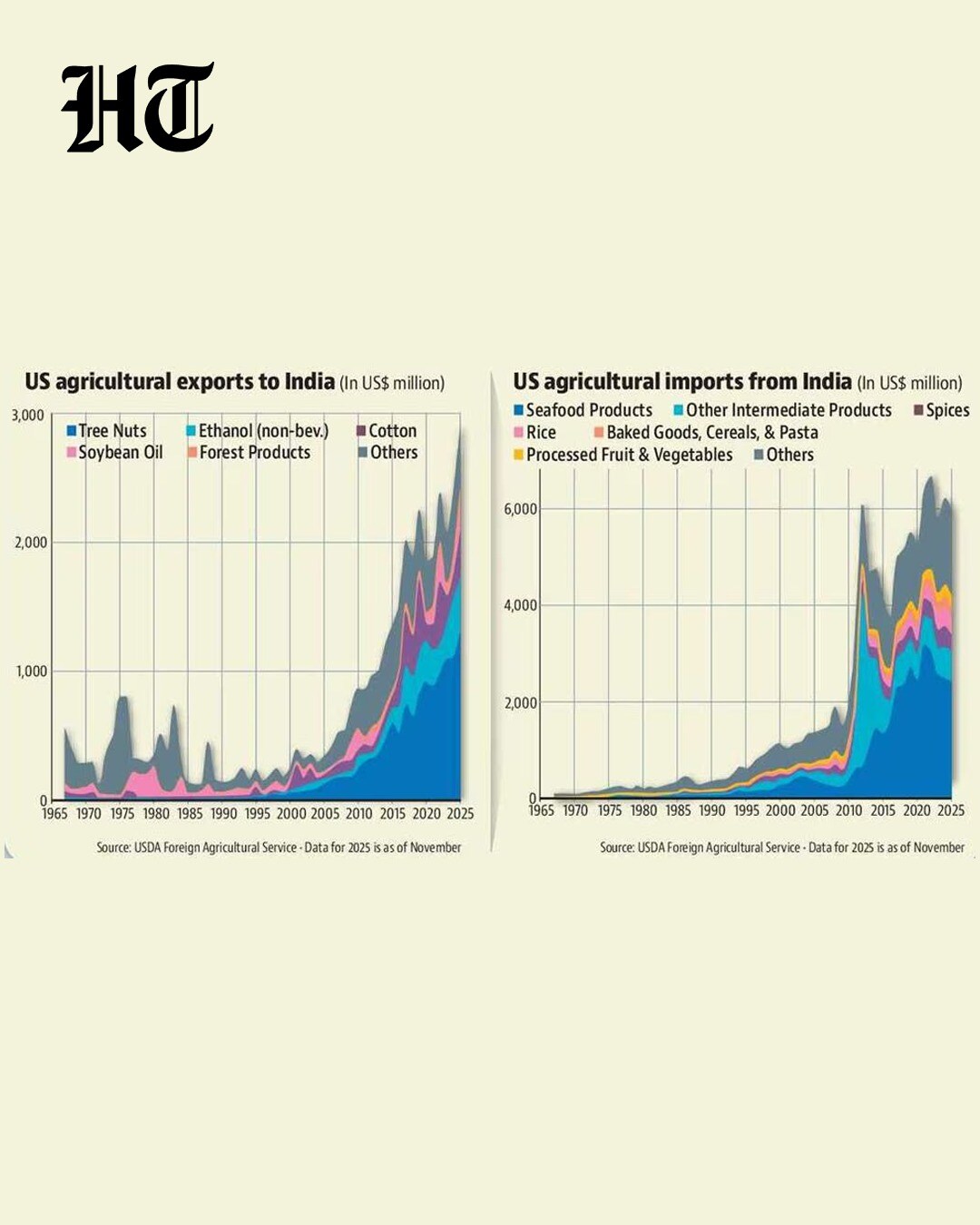
- What the US and India trade in agricultureAgricultural trade between the US and India is concentrated in a few high-value categories rather than bulk commodities. US agricultural exports to India reached $2.4 billion in 2024, while it imported agricultural goods worth $6.2 billion. On the export side, the US mainly sells nuts to India, a trade that has grown steadily over the past decade and reached about $1.1 billion in 2024, making it the single largest farm export to India. Other items such as ethanol, cotton and soybean oil feature intermittently and tend to fluctuate with policy shifts and global price cycles rather than reflecting stable demand. US imports from India are broader and more diversified. Seafood dominates, accounting for nearly $2.5 billion in 2024, followed by a long tail of processed and intermediate foods such as spices, rice, baked goods, cereals, and processed fruit and vegetables.
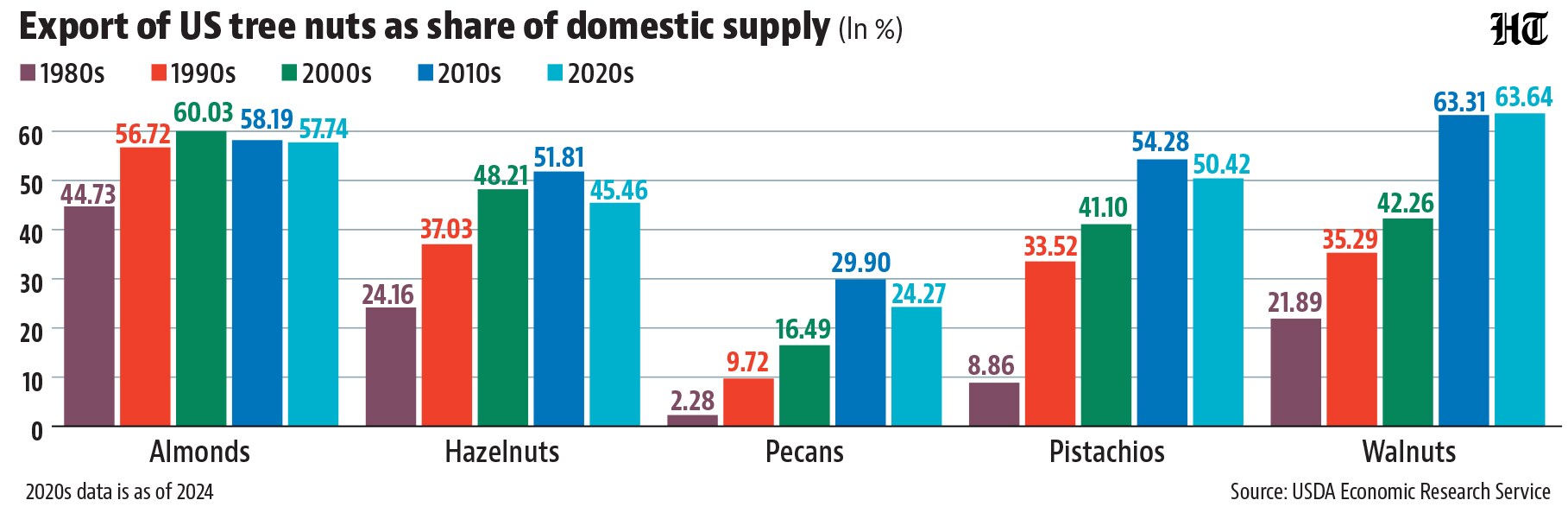
- Nuts, which form the bulk of US agricultural exports to India, are highly export dependentNuts, which dominate US agricultural exports to India, account for only about 5.6% of total US agricultural exports. Yet for the US, keeping these exports growing matters disproportionately because they are among the most export-dependent farm products it produces. Since the 1990s, more than half of US almond output has consistently been sold overseas, from about 45% in the 1980s. Walnuts are even more exposed to global demand, with close to two-thirds of domestic supply exported since the 2010s. Pistachios have followed a similar path, moving from marginal exports in the 1980s to roughly half of production being shipped abroad in recent years. Other nuts show the same direction of travel, though at lower levels. Export shares of hazelnuts and pecans have increased steadily over time, reinforcing the sector’s dependence on foreign markets. The deal could help US tree nut farmers as reports suggest that it includes duty cuts on items such as tree nuts, fruits and vegetables, and alcohol, even as “sensitive” farm products (from India’s perspective) stay protected.
- What we understand...What the deal might really change for the US is not the headline balance on agricultural trade, but the margins that matter. For India, the bigger win is securing a lower US tariff regime and reducing uncertainty for its exporters, with farm concessions probably serving as a relatively low-cost way to bank broader access. Also, if reports about India increasing its purchase of things such as US aviation, military and nuclear equipment and oil is true, it is the non-farm rather than farm sector that may end up doing the heavy lifting to power the trade deal .


Unlock a world of Benefits with HT! From insightful newsletters to real-time news alerts and a personalized news feed – it's all here, just a click away! -Login Now!


