
 E-Paper



Mapping caste equations in Bihar's assembly | Number Theory
.
Published on: Nov 3, 2025, 08:38:04 IST

 Prefer HTon Google
Share via


Copy link

The first two parts of this three-part data journalism series which is based on a historical database of all 3629 MLAs in Bihar since 1962, which has been prepared by the first author of this series, looked at the overall and historical social composition of Bihar’s MLAs. The concluding part will look at how the social composition of MLAs has changed in Bihar with the evolution of politics.
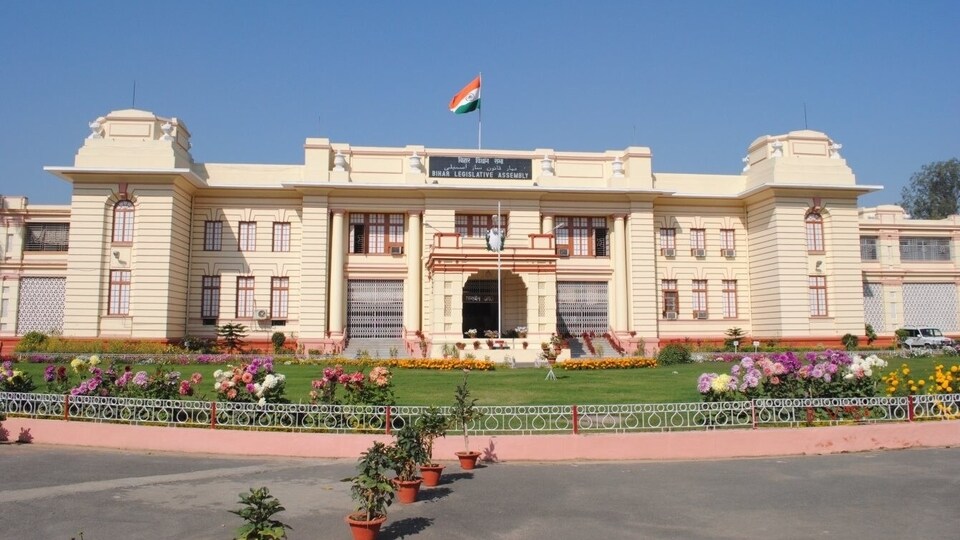
Mapping caste equations in Bihar's assembly
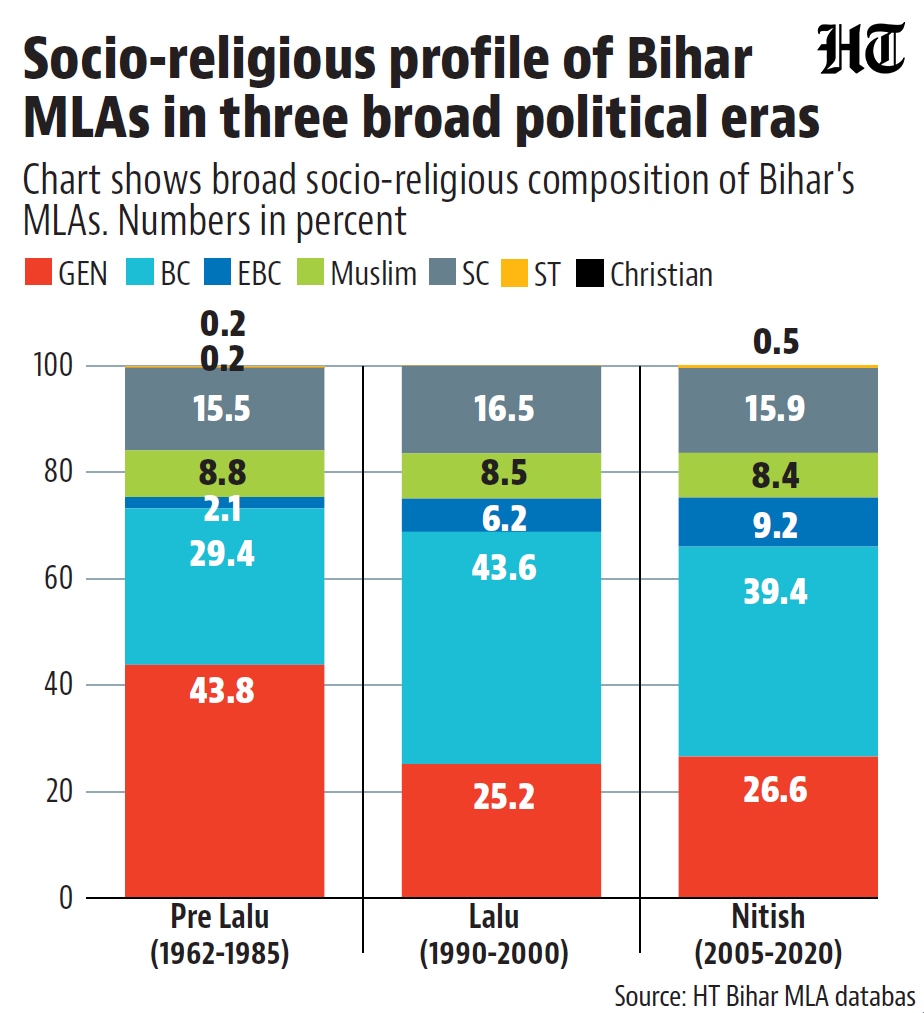
 Bihar’s politics can be broadly classified into three periodsSpeaking in de facto terms, Bihar has had only three (or four, depending on how you look at it) chief ministers who have completed a full-term in office. They are Shri Krishna Singh, the first Congress chief minister of the state, Lalu Yadav and later his wife Rabri Devi, who together held office from 1990 to 2005 and Nitish Kumar who has ruled almost continuously since 2005. These chief ministers also signify the broad historical categorisation of Bihar’s politics: the pre-Lalu period which was mostly dominated by upper castes, the Lalu era which saw backward class (BC), especially Yadav, dominance, and the Nitish era, which saw a weakening of Yadav dominance and a tactical alliance between the upper castes and a section of the BCs and extreme backward classes (EBCs). A broad classification of Bihar’s MLAs by these three periods supports this anecdotal narrative. The share of upper castes was the highest in the pre-Lalu years, BCs reached their peak in the Lalu era and EBCs gained some ground at the cost of BCs in the Nitish period. Put together, these three groups have had a consistent share of 75% among MLAs, with the rest divided almost consistently between Scheduled Castes and Muslims.
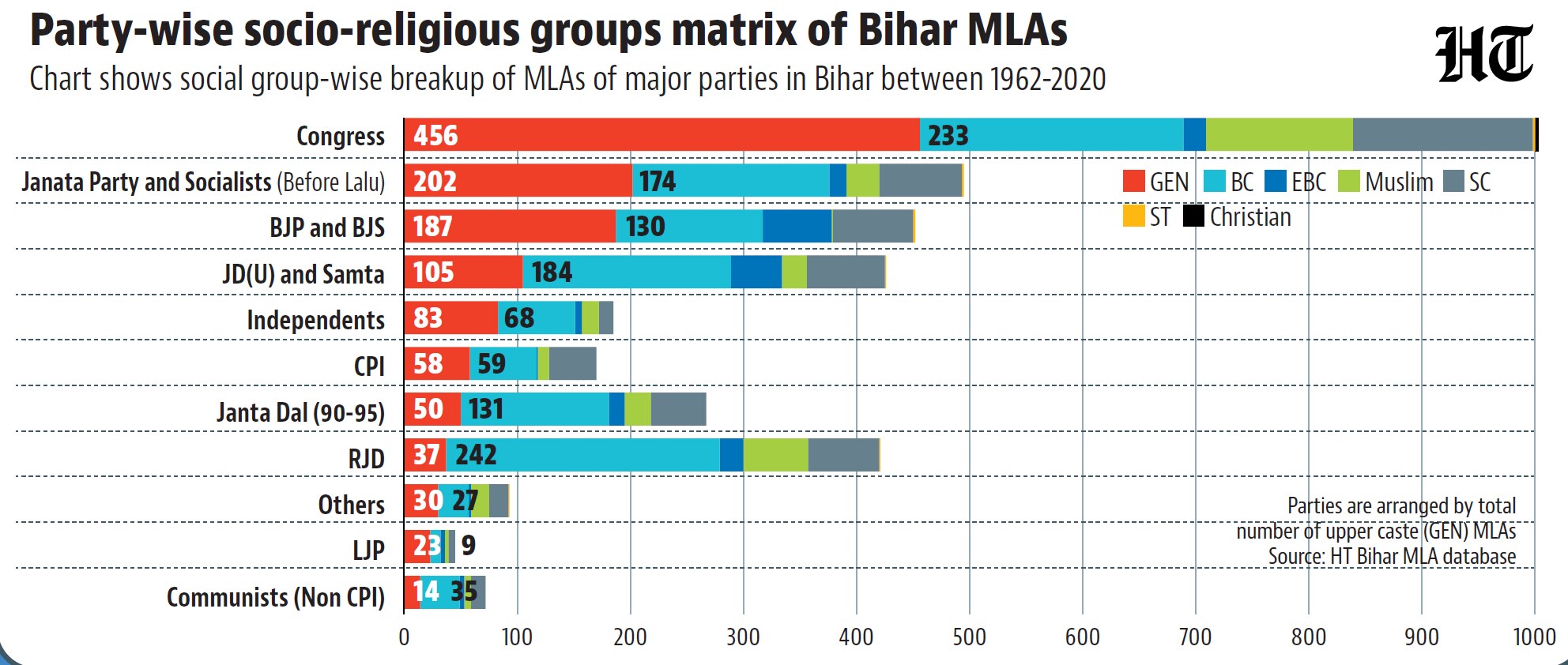
- Congress has the highest number of upper caste and Muslims MLAs in BiharThanks to its historical dominance, the Congress (including its smaller factions that existed) still has the maximum number of MLAs (1003) in Bihar. A broad social group wise division of party-wise MLAs shows that it also has the highest historical number of upper caste and Muslim MLAs in the state. The RJD, which is ranked fifth in terms of number of overall MLAs, leads the count of BC MLAs in the state. When compared with the caste composition of socialist formations before the rise of Lalu Yadav (pre-1990), when upper caste MLAs exceeded BC MLAs in these parties, it shows the political change Lalu’s rise brought in Bihar’s politics. The BJP and its predecessor Bharatiya Jan Sangh and JD(U) and its predecessor Samata Party have had a more balanced representation from both upper caste and BC MLAs when they are put together.
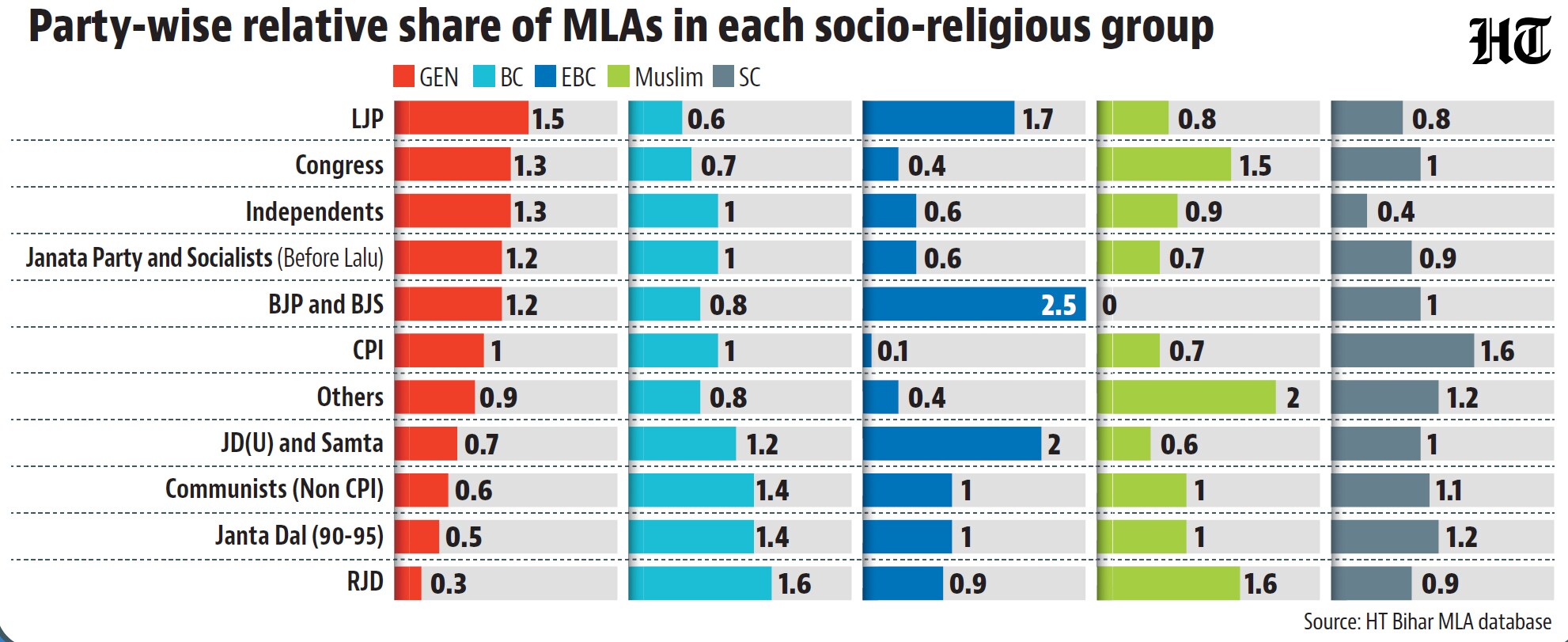
- Relative share of each social group among different partiesWhat is the core social group of major political parties in Bihar? This question can also be answered on a dynamic basis, as representation within parties can change. We will revisit this question using our database later. But looking at the relative share of each social group in major parties in Bihar is a good way to answer this question. Relative share of a particular social group within a party is simply the ratio of the party’s share in the group’s total number of MLAs and that party’s share in the overall number of MLAs in the database. A value greater than one will denote a higher than proportionate representation for a social group within a party and a value lower than one would signify under-representation. The Congress, pre-Lalu socialists and the BJP/BJS are the three major parties that have a greater than one relative share for upper castes. Congress and RJD also have a relative share greater than one for Muslims. RJD has the highest relative share for BC MLAs, while BJP/BJS and JD(U)/Samata have the highest relative share of EBCs. The RJD has by far the lowest relative share for upper castes among all major political party groupings.



Unlock a world of Benefits with HT! From insightful newsletters to real-time news alerts and a personalized news feed – it's all here, just a click away! -Login Now!


