
 E-Paper



Number Theory: How will tariffs hit India in the medium term?
.

 Prefer HTon Google


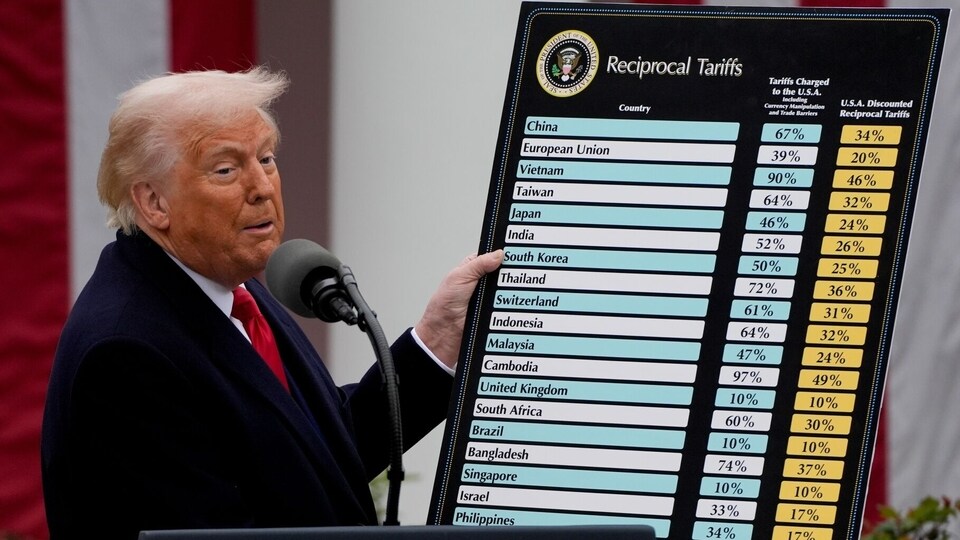
By announcing tariffs on all countries Donald Trump has delivered a seismic shock to the global economy as we know it today. It remains to be seen whether Trump continues these tariffs or uses them to negotiate what he believes can be better terms for the US in merchandise trade. Either way, restoration of status quo ante seems extremely unlikely at the moment. If this triggers a full-blown trade war – China for example has already announced retaliatory tariffs on US exports – things could become even worse. How will all this impact the Indian economy? No analyst is willing to give a hard estimate of this and for good reason. Given the massive disruption to global value chains and the possibility of individual countries trying to negotiate with the US, things are in a state of flux right now. However, there is another way to look at this question which suggests that India stands to lose more from second order effects than from higher tariffs.
 India’s growth disadvantage vis-à-vis China is lower than its export disadvantageChina is the lodestar of economic growth in the 21st century. While the Chinese economy started opening from Deng Xiaoping’s time, it really took off when China joined the World Trade Organisation (WTO) in 2001. China is currently the world’s second largest economy and India hopes to become the world’s third largest in the next couple of years. India’s policy aspiration, in many ways, has been to replicate China’s success story. However, a basic comparison of Indian and Chinese exports and overall GDP shows that China’s lead in exports over India has been much larger than its lead in terms of overall GDP. This means that India has managed to find non-export drivers to its growth despite being a relative laggard in exports.
- China is far more entrenched in global value chains than IndiaChina being the global export superpower also means that it has a much deeper engagement with global value chains than India. The best way to look at this is to compare the share of India and China in total merchandise exports and imports in the world. China’s share in total merchandise exports and imports in 2023 was 14.1% and 10.5% respectively. This number was just 1.8% and 2.8% for India. As is obvious from these numbers, the potential damage to the Chinese economy from a disruption in global value chains because of Trump’s tariffs is bound to much bigger than what it will be for India. In other words, India’s loss because of the US turning protectionist is likely to be more notional than real in the sense that this will dissipate what many believed could have been strong tailwinds because of the China+1 sentiment at a time when the US was only interested in targeting China in its trade war. This is still bad news for India because current growth rates are far from enough to boost mass income levels of what is the world’s most populous country.
- But secondary effects of Trump’s trade war could inflict much larger losses on IndiaThe biggest assumption Donald Trump is working on in his trade war is that its effects will be confined to the world of merchandise trade alone. History shows that capitalism has never worked in silos. While Trump is bemoaning the current economic order for the fact that it has created a huge merchandise deficit for the US, he is refusing to acknowledge the fact that it also gave the US the world’s dominant currency and opened doors for the US financial sector and services across the world. While India missed the manufacturing and exports bus even after liberalisation, it did reap global tailwinds from the white-collar global services economy. This becomes clear from a comparison of contribution of manufacturing and financial and professional services sectors to India’s overall GVA growth. If the US economy indeed goes into a recession -- most analysts believe this is likely -- its service sector is unlikely to remain unaffected. A similar outcome is likely if globalisation outside merchandise trade were to retreat across the world, which once again, is not something which can be ruled out completely at the moment. This is also why India needs to invest more in evolving a consensus in reforming the global economic order than seeing the current disruption as some sort of a zero-sum game.


