
 E-Paper



MBBS might not be enough to be doctor as govt plans another qualifying exam
The medical commission, which will replace the controversial Medical Council of India, says a national test is must for practising and for post-graduate studies.

 Prefer HTon Google


The National Eligibility-cum Entrance Test (NEET) will not be enough for one to become a doctor or pursue higher medical education.
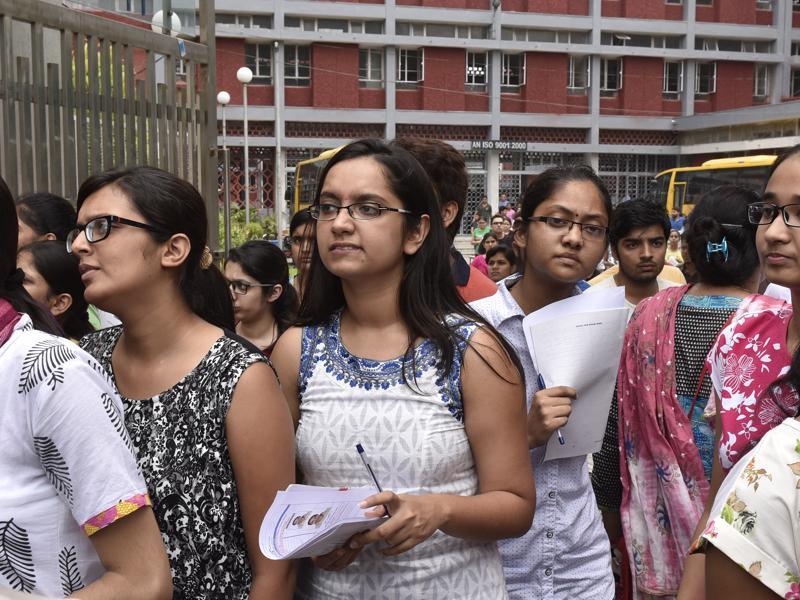
The government in the National Medical Commission Bill — a statutory body to replace the Medical Council of India that regulates medical education and professional practice — has proposed that students will have to clear the National Licentiate Examination (NLE) after completing graduation to practice and it will also serve as NEET for admission in post graduate courses.
Read | NEET results on Aug 17 to end long wait for medical aspirants
Through the bill the government aims to clean up the medical educational institutions under the MCI which are riddled with corruption and nepotism. The MCI itself is now being monitored by a Supreme Court appointed a three-member committee headed by former Chief Justice of India R M Lodha.
But, the draft bill prepared by the National Institution for Transforming India (NITI) Aayog plans to revamp the medical education system by proposing new tests for students and having uniform academic and examination standards for around 450 medical colleges in the country.
While the bill agrees with the Supreme Court ‘s views on NEET being only test for entry into medical colleges across India, it has for the first time proposed to introduce NLE to evaluate graduates from medical colleges on the lines of skill tests for hiring teachers.
“The quality of education in medical college is an area of concern,” said a senior functionary of NITI Aayog, who was part of the committee that drafted the bill. “We felt that the test will force the institutions to introduce quality as questions would be raised if a large number of students fail to clear the test. Only those who clear the test will get license to practise,” he added.
To ensure quality, the bill proposes to set up separate under-graduate and post graduate medical education boards — overarching bodies to “oversee all aspects” of medical education at the undergraduate level.
Read | NEET a must for private medical colleges, says Bombay HC
The boards would prescribe the standards for conducting courses and examinations while leaving room for creativity at local levels including the design of some courses by individual institutions, the draft bill says. It will also prepare “dynamic curriculum” catering to “societal needs” and will ensure regular assessment of students and norms for setting up medical colleges in the country.
In addition to all this, the government plans to rate medical colleges based on their infrastructure and performance on regular basis.
New medical college will be allowed only after approval of the accreditation body, an official said, adding that there will also be an Aadhaar-based national register of all doctors and medical students in the country.
The work on a new law for medical institutions started after a Parliamentary committee earlier this year described MCI as an “ossified and opaque” body unable to cope with the “humongous” task of medical education. The committee report came after an unsuccessful bid of the UPA government to revamp the council which in the past had been investigated by the Central Bureau of Investigation.


