
 E-Paper



Prime ministers in the making at Hindu College
Most Delhi University colleges hold elections for the positions of president, vice president, joint secretary and secretary but what sets the Hindu College apart is its parliament


Delhi University (DU) elections are a great introduction for students to the parliamentary process of the country. DU was the first university to use electronic voting machines (EVMs) in the student union polls and this year it has been decided to introduce the None Of The Above (NOTA) option used during ‘real’ elections that gives students a right to reject if they do not find any candidate suitable for the post.
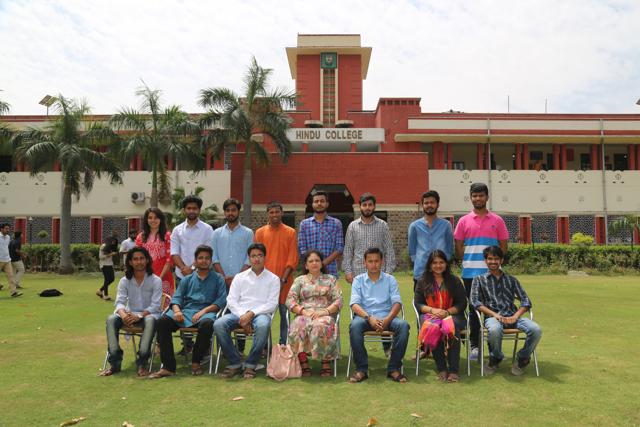
Most colleges on campus hold elections for the positions of president, vice president, joint secretary and secretary. What sets the Hindu College apart is its parliament. It was established in the 1920s by the then college principal NV Thadani and played an important role during the freedom struggle. During college elections held every year, the students vote for the post of the prime minister. The candidate who gets the maximum number of votes is sworn in as the prime minister and the one with the second maximum number of votes becomes the leader of the opposition.
Once the election results are declared, there is a swearing-in ceremony cum a budget session. The prime minister of the college can appoint 10 students as his ministers and all ministers (portfolios include culture, finance, environment, canteen, sports etc) can appoint secretaries to assist them in day-to-day affairs of running the college. The principal of the college is the president and one of the teachers is appointed the speaker whose job is to swear in the prime minister and look after the proceedings of the college parliament.
On the first day of the session, the finance minister gets to present his budget in which the funds for various societies in colleges are decided. Just like in the question hours, students here get a chance to raise questions about the budget and members of the different societies ask for enhancement of the budget. The process goes through three readings and is then finally put through a vote of confidence, says Ashish Holaria, who was prime minister of Hindu College last year.
“Being part of the entire ‘political process’ helps us deal with people from different departments, help solve their problems, look into allocation of resources, lobby with the authorities for more funding etc,” he says, adding “we get to empathise with them and sit across the table to find solutions to problems and finally convince them that our solutions are better than other leaders.”
As the college prime minister, there are a lot of expectations, students have from you. “While there is a lot of respect that one commands among the student community, one also is under tremendous pressure to live up to their expectations,” he says.
Student prime ministership taught Holaria many life lessons. It taught him how to deal with real life problems but most important it taught him how to manage his time. “My first priority was to fulfill my role as a student prime minister and also to ensure that I did well in my studies. For that I had made an annual time table to plan for the entire year, which I adhered to more or less. But I had to sacrifice time spent with friends and college trips,” he says.
DUSU is the representative body of the students from most colleges and faculties. Apart from DUSU, which is an umbrella council, each college also has its own students’ union for which they hold separate elections.


