
 E-Paper



The power of self-awareness that can help youth soar
Self-awareness especially during the teenage phase, has the power to help prepare young minds to face life ahead.


Breakthrough lessons to help children set vision and goals...It’s time to inspire, motivate and empower them for a fruitful tomorrow
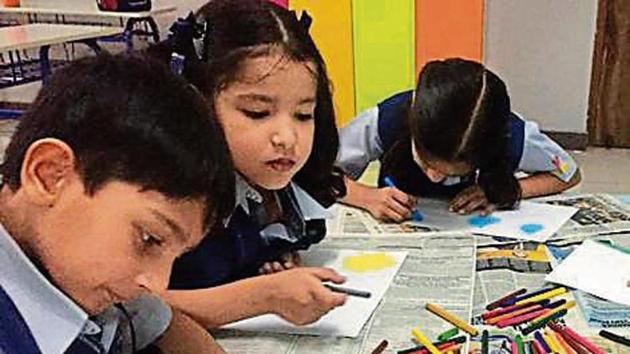
For parents, it is a moment of sheer joy to watch their children start the process of exploring their inner and outer world. As they enter the age of adolescence, this process reaches new heights when children show more enthusiasm to seek new activities and experiences in pursuit of building their career.
Children, as young as toddlers know exactly what they want and they use every resource available to them to get it, even if it means crying at the top of voice! Unfortunately, with every passing year, they are told how certain things are right and wrong.
Is this approach correct? Do we need to tell them that the world is divided into a binary of right and wrong, good and bad? Do children need to live the dreams of their parents?
Parents and teachers wake up!! We are responsible for stopping them from living their dreams and settling for less.
Experiences transform people and there are some experiences that play a critical role in helping people, particularly young people, discover their purpose in life. Self-awareness especially during the teenage phase, has the power to help prepare young minds to face life ahead. Assisting our children to learn how to find their way through different scenarios, understanding their strengths, ways to combat gap areas and helping them learn how to reach their full potential while knowing that they all have what it takes to succeed, is the need of the hour.
It is important for children to recognize and for educators and parents to understand that success in life goes far beyond academics. Here is a simple yet fun activity that I do with my participants in my workshops- something which teachers and parents could easily replicate in school and at home. Children who may wish to do this activity by themselves, could also give this a shot.
“Begin by asking children to prepare an “I Want” list. In trying to be a good student, son or daughter, friend or a sibling children often forget what they want for themselves. What are those things and experiences that could fill their hearts with joy? Tell them to believe that they are in complete control of their destiny as they list out their wishes and that they should not hold back. The list needs to come with enthusiasm and spontaneity, and it can be as long and as fanciful as their heart desires. You will see the energy within each child and the entire room change as children express their wishes and desires with the freedom that they had forgotten to experience. Set their inner carefree child free.
Children need to be made aware of the fact that there are seven key elements namely- career, money, health, relationships, passions, learning & development and community service which need to be in harmony for an individual to have a balanced, growth-centric life ahead. It is important to tell them that focusing on any one or more aspects of their life at the cost of ignoring any other aspect will eventually lead to crisis and chaos.
Here is an example of how balancing these different elements is so vital - a child who excels at her education and gets high grades but pays no attention to her health or a child who struggles to develop good relationships with family or friends. In both of these cases, the child will find it impossible to enjoy the fruits of success as ‘something’ very critical will be missing from his/her life.
So, what approach could parents and teachers adopt in such a scheme of things?
*To begin with, vision setting must become an integral part of our academic curriculum from an early age. Ask them to jot down how they see their lives unfolding over a number of years. Setting a vision across the seven components will help them build a strategy to live up to their highest potential.
*At school and at home, teachers and parents need to spend a significant amount of time in helping children reflect upon what they’d like to see happening in their future and then to articulate it in the form of a vision statement. Vision is a statement of intent and is a peek into one’s future, and hence, it would require children to visualize what they want rather than focus on what they may have today.
Here is an example of focused vision setting exercise for three key elements of life which can be conducted with children:
1. Academics: Focus on what your ideal academic performance looks like. Which subjects and topics would you like to excel at? What will be your ideal learning path? How will you define success for yourself when it comes to academics?
2. Next, visualise your ideal job or career: What do you foresee yourself doing? What is your ideal or most loved career? Where are you working? What are you doing? With whom are you working? What is your compensation like? Is it your own business?
3.Then, focus on your recreation time. What are you doing with your family and friends in the free time you’ve created for yourself? What hobbies are you pursuing? What kinds of vacations do you take? What do you do for fun?
This activity could take them a few minutes or an hour depending on how much clarity they already have about the kind of life they would want to live. Often a vision setting exercise goes through some iteration as children go through it repeatedly and get greater insights.
4. Remember to tell a child that a vision is usually just a sentence that encapsulates their ‘ideal’ life. For example, when it comes to money their vision could be: “I want to excel at physics and build a career as a research scientist”. Their vision for Joy and passions could be: “I want to be a renowned wildlife photographer.”
Once the children have written the vision statements for all the seven components of their life, it is vital that you make them read it all together and really absorb the essence. Help them to feel how it would be to be living each one those visions across all seven aspects of life in unison, simultaneously. If the feeling that they get as they imagine such a life fills them with excitement and a sense of completeness, then you must let them know that they have indeed got in touch with the highest potential of their own self. All that is left for them to do now is to manifest it in their lives.
(Author Abhinav Goel is Founder, I-Empower, a life-skills and human development focused organization. Views expressed here are personal.)


