
 E-Paper



Punjab polls: Doaba, hub of Dalit politics, sees 6% drop in turnout
Sandwiched between Beas and Sutlej, Doaba region comprises four districts — Jalandhar, Hoshiarpur, Kapurthala and SBS Nagar — with a total of 23 seats in the Punjab assembly

 Prefer HTon Google


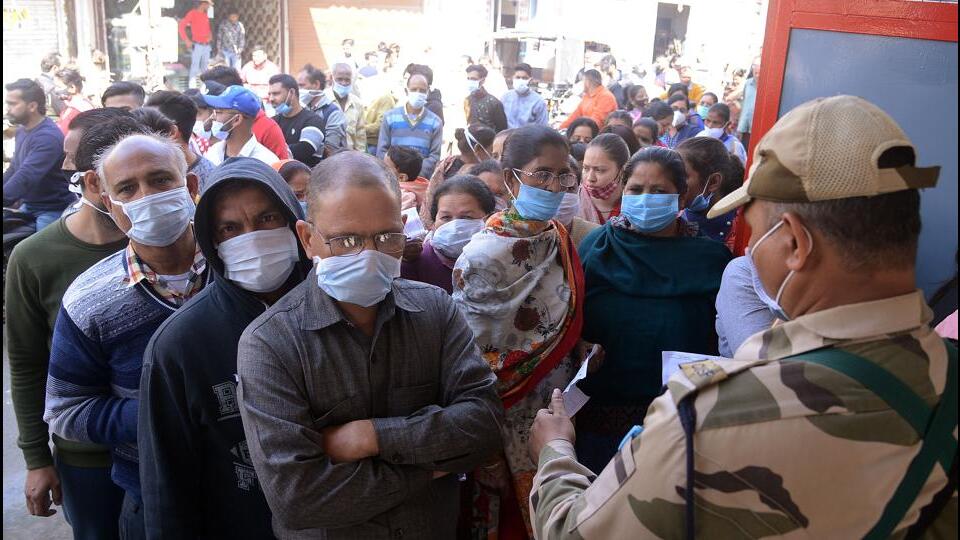
Amid a triangular contest on most seats, polling passed off largely peaceful amid 67.57% turnout in Punjab’s Doaba region as assembly elections were held on Sunday. However, the voting percentage saw a significant decline from 73.85% recorded in 2017 and 77.4% in 2012.
The region comprises four districts — Jalandhar, Hoshiarpur, Kapurthala and SBS Nagar — with a total of 23 seats in the 117-strong state assembly. In 2017, the Congress had won 15 seats, while five went to the Shiromani Akali Dal (SAD), two to the Aam Aadmi Party (AAP) and one to the Bharatiya Janata Party (BJP), which was then an Akali ally.
Doaba is also known as the hub of Dalit politics and comprises eight reserved constituencies, including four in Jalandhar, two in Hoshiarpur and one each in Kapurthala and SBS Nagar. These reserved segments recorded 68.72% average polling, down from 73.73% in 2017. Among them, Chabbewal recorded the highest polling with 71.8% turnout.
Meanwhile, Balachaur seat in SBS Nagar district, from where SAD’s Sunita Chaudhary, AAP’s Santosh Kataria and Congress MLA Darshan Lal Mangupur were in the fray, recorded highest polling in the region at 73.8%. It was followed by Sultanpur Lodhi segment (72%) in Kapurthala district, which witnessed a four-cornered fight with cabinet minister Rana Gurjit Singh’s son revolting against the Congress legislator.
Jalandhar Central seat, from where senior BJP leader Manoranjan Kalia is in the fray, recorded lowest turnout in the region at 60.2%, followed by Jalandhar Cantonment (62.1%) that is represented by cabinet minister Pargat Singh and Hoshiarpur segment (60.2%).
Jalandhar district lags behind
Overall, SBS Nagar district led with 70.1% votes polled, though a significant drop from 77% and 79.6% in the last two elections. Jalandhar district fared the worst with 65.2 % polling, down from 72.9% and 75.6%, while the turnout stood at 67.01% in Hoshiarpur, sliding from 71.3% and 75.3% in 2017 and 2012, respectively. In Kapurthala, 67.97% polling was recorded, down from 74.2% and 79% in the past.
Jalandhar remained the only district in Doaba, where no segment touched the voting figure of 70%, whereas its total seven segments crossed this figure polling during the 2017 polls.
With the contest largely three-cornered — between ruling Congress, SAD-BSP alliance and AAP — help desks set up by Sanyukt Kisan Morcha, the newly floated political front of farm unions, wore a deserted look in most villages while the BJP help desks too witnessed a low footfall in rural segments of Jalandhar, Kapurthala and SBS Nagar. However, after bitter campaigning statewide, in a positive sign, parties shared common help desks outside polling stations at Nangal Jatta village in SBS Nagar and a few other villages in Kapurthala and Jalandhar.
Many youngsters and women in Jalandhar’s urban segments claimed that they were voting for change, with issues such as jobs and employment taking priority over security and other national issues. Meanwhile, in rural segments of Doaba, the Charanjit Singh Channi government’s power bill waivers and other schemes seems to have resonated with the electorate. With voters sealing the fate of all candidates, only the results to be announced on March 10 will tell whether the Congress’ Channi gambit and Dalit factor pays off in Doaba.


