
 E-Paper



In north Bengal, can the TMC reverse the BJP’s edge?
Although north Bengal’s 8 Lok Sabha seats account for only 54 of Bengal’s 294 assembly segments, the fact that the BJP was ahead of the ruling party in 34 segments there has put the entire region in the priority list of Mamata Banerjee and her nephew, Abhishek

 Prefer HTon Google


In Bengal’s northern region, where the Bharatiya Janata Party (BJP) won seven of the eight Lok Sabha seats in the eight districts starting from Malda to Darjeeling in the 2019 Lok Sabha polls, the ruling Trinamool Congress (TMC) is aiming to recover lost ground, just as the BJP is aiming to make strides in what was the TMC’s stronghold in south Bengal.
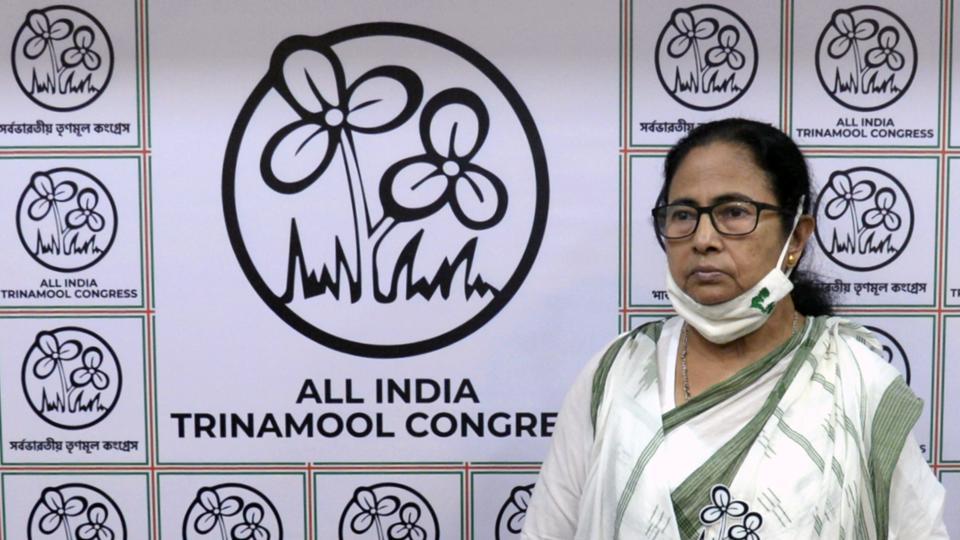
Although north Bengal’s eight Lok Sabha seats account for only 54 of Bengal’s 294 assembly segments, the fact that the BJP was ahead of the ruling party in 34 segments in north Bengal has put the entire region in the priority list of chief minister Mamata Banerjee and her nephew, Abhishek.
TMC leaders say all 54 seats, including Darjeeling, Kalimpong and Kurseong that the chief minister has left for her allies, the two rival factions of the Gorkha Janmukti Morcha (GJM), are crucial for the ruling party — although it is the remaining 240 seats in south Bengal that will essentially decide the fate of the eight-phase election that begins on March 27.
Realising that infighting in some of the north Bengal units of the TMC would help the BJP make more inroads, Banerjee started taking political and administrative steps from August last year, TMC leaders said.
Also Read | Bengal assembly elections: ‘Khela Hobe’ slogan has state hooked
On September 30, Banerjee visited north Bengal to announce some major projects in five districts with grants for different communities figuring prominently in the long list of sops. She laid the foundation stone of Jalpaiguri Medical College and Hospital and granted 104 acres of land for the expansion of Bagdogra airport near Siliguri town. She also announced that 161 former members of the Kamtapur Liberation Organisation (KLO) would be employed as home guards. Formed in 1995, the KLO carried out an armed struggle for a separate state for the local Koch Rajbanshi community which comprises a sizeable section of voters, especially in Cooch Behar district.
While meeting bureaucrats from Darjeeling, Kalimpong, Cooch Behar, Jalpaiguri and Alipurduar districts, Banerjee announced a grant of ₹5 crore for the Rajbanshi Language Academy, ₹10 crore for the Rajbanshi Development and Cultural Board and a second campus of the Panchanan Barma University. Barma is the most prominent face of the Rajbanshi community since he carried out the first movement against caste politics in the last century.
“She addressed upper caste Hindus as well,” a TMC leader, who accompanied Banerjee, said on condition of anonymity. “Banerjee announced a monthly allowance and home building funds for the chief priest of the famous Madan Mohan temple in Cooch Behar that several central leaders of the BJP have visited. She announced that Cooch Behar Medical College and Hospital would be renamed after Maharaja Jitendra Narayan, the former king of Cooch Behar,” the TMC leader added. Jitendra Narayan died in 1922. Among his five children was Gayatri Devi who was married to Maharaja Sawai Man Singh II of Jaipur.
Also Read | EC removes Bengal DGP: A look at recent instances of poll body’s intervention
Banerjee did not ignore the Christian and Gorkha communities either. She announced the second phase of renovation at Katherine Graham Memorial Chapel in Kalimpong and granted ₹175 crore to the Gorkhaland Territorial Administration, the district council in Darjeeling hill region.
On October 19, BJP president J P Nadda visited north Bengal to make a counter move. He asked party functionaries to struggle relentlessly for six months.
“At a closed-door meeting, Nadda told local leaders to forget everything else and concentrate on strengthening the organisation at the polling booth level in every community block,” a BJP leader, who attended the meeting in Siliguri, said on condition of anonymity.
Nadda garlanded the statue of Panchanan Barma and offered prayers at the Anandamoyee Kali temple before meeting representatives of different communities, businessmen and representatives of the ethnic groups. He said if the BJP comes to power, it will transform north Bengal by setting up industries and helping local artisans and farmers. Banerjee followed up with a three-day visit in mid-December.
But the TMC remained focused on the region. Rabindranath Ghosh, senior TMC leader and north Bengal development minister, said, “Analysis of the 2019 poll results clearly shows that the CPI(M) and Congress transferred their votes for the BJP. The two parties thought that the TMC would be devastated. It is an irony that it is they who lost relevance. The TMC has emerged even stronger. We will win at least 40 seats in north Bengal.”
To strengthen the TMC’s organisation, Abhishek Banerjee visited north Bengal alone for the first time on January 4 and stayed for five days. He mostly held internal meetings with legislators and senior leaders from Darjeeling, Alipurduar, South Dinajpur, Cooch Behar and Malda districts. His focus was on South Dinajpur where Mihir Goswami, the TMC legislator from the South Dinajpur seat, joined the BJP in November. Speaking on the defectors, Ghosh said “Our party now has only good and honest people. There is no room for dishonest ones.”
This offensive from the TMC has helped it win some local allies. Bangshi Badan Barman, general secretary of Greater Cooch Behar People’s Association (GCPA) has thrown his weight behind the ruling party.
Barman said, “No chief minister of West Bengal did so much for the Rajbanshis as Mamata Banerjee has done.” Atul Roy, president of the Kamtapur Progressive Party also praised the TMC government for carrying out development work. The BJP, however, has managed to woo a faction of the GCPA, headed by Ananta Roy, who is now an ally.
Also Read | Why has the Left not been able to mobilise the ‘have-nots’ in West Bengal?
Not everyone is convinced. Nikhil Roy, president of the Kamtapur People’s Party (United) feels that doles are part of a strategy to secure votes. “The demand for a separate state and constitutional recognition for the Kamtapuri language have neither been addressed by the TMC, nor the BJP,” said Roy.
The TMC has also attempted to win over Hindi-speaking tribal communities. A sizeable section of the Akhil Bharatiya Adivasi Parishad is led by Bisra Tirkey. He said, “Banerjee has recognised the history of the adivasis for the first time. The state government has set up Hindi schools, Hindi colleges and has announced holiday during our Karam Puja (harvest festival). The list continues. We will support the TMC.”
But the BJP believes this is a part of a public relations offensive that will not yield dividends for the ruling party. BJP state general secretary Sayantan Basu camped in north Bengal for more than 30 days since January to oversee poll preparations. “We will not only retain the ground we already control but surge ahead. We will win at least 42 to 45 seats,” Basu said.
Ananda Gopal Ghosh, a retired professor of history from North Bengal University, feels that electoral promises in the name of recognising democratic rights is doing more harm than good. “The election scenario in north Bengal is very disappointing because various political parties are playing religious, linguistic and minority cards to appease voters. Democratic values are disintegrating. The mainstream parties are responsible for this,” said Ghosh.


