
 E-Paper



Plagiarism, missing credits, stolen scripts: How Bollywood writers are fighting back against exploitation, malpractice
HT's Deep Dive into the world of screenwriters peels layers off how the writers in Hindi cinema and web industries are fighting malpractice and exploitation.

 Prefer HTon Google


For Rajat (name changed), a 29-year-old writer looking to get his big break in Hindi cinema, getting a call from a known production house about his story was a big deal. This was right after the pandemic, when the OTT boom had begun. The producers assured his story was ripe for a web series with a major player. Rajat worked for months on the concept, fleshing out a cohesive story, but it did not pan out. "It was disappointing, but not the end of the road," I told myself. Rajat got paid for his work and was told that the story was not working, and hence, the makers had decided to go in a different direction.
Imagine his surprise when he came across the trailer for a series on a big platform, some two years later, with the concept of his story, just with the setting and a few characters changed. "I questioned the producers, and they told me that they took the idea and fleshed it out with another writer. I told them it was wrong, and they said I signed off on it," the writer says. He won't go into the illegality of the contract he entered, but Rajat says he didn't fight the producers. "I had gotten more work since then, and did not want to be seen as problematic. What hurt me was that nobody would know that the show was mine. As a writer, the credit being missing hurt."
To think this is a stray incident would be trivialising just how rampant missing credits, stolen scripts, and plagiarism are in the Hindi entertainment industry. The emergence of web shows and films on streaming may have democratised stories in the Indian entertainment landscape, but it has also resulted in a corporate-driven boom of malpractice and exploitation. And at the receiving end are the writers. But the fightback has begun, and quite spectacularly so.
How plagiarism and missing credits ail Bollywood and OTT
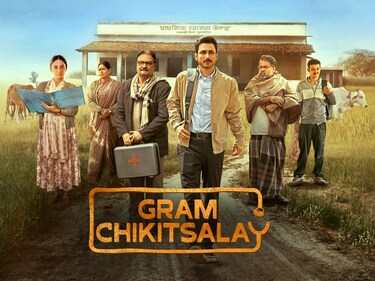
Two incidents in the month of May raised eyebrows about plagiarism, or rather stealing of scripts, in the Indian entertainment scene. One was the widely reported incident of the Prime Video series Gram Chikitsalay being accused of using a plagiarised script for the show. The matter is sub-judice. Another involved a writer posting their experience of being wronged by an unnamed OTT giant, which used their story without credit. The post has since been deleted.
Figures from the Screenwriters Association (SWA) say that during a two-month period last year, the body received 98 such complaints. Encouragingly, more than 60 of these have since been closed. Charudutt Acharya is a veteran screenwriter who has written films like Vaastu Shastra and Dum Maaro Dum, as well as shows such as Crime Patrol and Duranga. Talking about this proliferation of 'stolen' stories, he says, "Old school narration has gone away. There used to be a method where you wouldn't give away the entire plot until you were signed, and narrations took place sitting at a table across from each other. Now, there are so many production houses, and everyone wants the full script with outline and pitch note. Then, there are so many people in the intermediary. Scripts go through too many hands now. The chain of command is too long now. It's easy for some misguided person to 'borrow' a script and make it their own, or give it to someone else."
Often, it can be writers vs writers
Zama Habib, who has written for TV shows and films for over 30 years, serves as the General Secretary of the SWA. He says the problem of stolen ideas and plagiarism does not always arise from producers. "There are times when some other writer develops an idea originally conceived by some other idea, and the producer omits the credit of the original writer. This can be because the other writer is a bigger name, who may look better on the poster." But writers say that in these rewrites, the other writers are also complicit. "The veterans need to take a stand," says a writer on the condition of anonymity, "I once requested a veteran writer who was hired to 'change' my script, to request the producers to keep my credit. But they said I hadn't done enough work to make that demand. That sort of attitude does not help."
The fightback from writers
In the West, the Writers Guild of America famously went on strike in 2023, bringing Hollywood to its knees. The strike was joined by top Hollywood stars, and the studios, facing losses in the millions, buckled. One may ask why that wouldn't work in India. For one, there is no similar union for writers in India. The closest a body comes to the WGA is the Screenwriters Association of India (SWA), a writers' body that has been attempting to solve these issues.
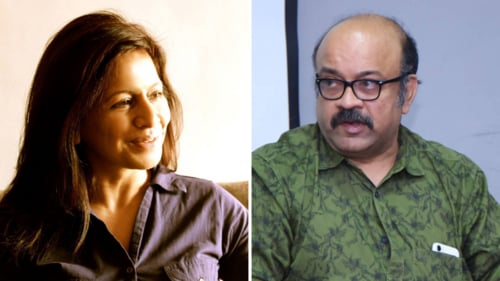
Preeti Mamgain, a writer who has worked on TV shows like Everest and Aasman Se Aage and the film Mohen Jo Daro, is also the President of the SWA's Dispute Settlement Committee. She explains what has changed, “There were times when writers entered into contracts, shouldn't even call them contracts, actually, but writers sold their stories and scripts for as low as Re 1. People used to believe the producers were doing me a favour by making a film on my stories. In the last two decades, the avenues for writers have opened up. Now, writers have a choice.”
The SWA has negotiated several cases wherein producers have been forced to acknowledge the writers' work and even pay them damages. "There have been several cases, some that came to the limelight and others that were settled out of court. But in those cases, producers and corporates paid writers big amounts of money. Due to that, producers have become more aware. Even writers are more aware of signing contracts and MoUs. The contracts may still be a little one-sided, but that can still be contested later," Preeti adds.
How do you legally fight a 'stolen idea'
Through its Dispute Settlement Committee, the SWA has established a procedure to analyse these allegations, wherein scripts are studied by impartial experts, and a report is made comparing the two drafts. This report analyses the story, the plot points, the tone, the characters, and even subtle things like the highs and the lows. It is an attempt to make a subjective art of storytelling as scientific as possible.
The involvement of a body like the SWA largely works in getting the producers to toe the line, writers say. A writer informs about a film script they wrote for a small production house. After they were told to rewrite, the writer asked for money based on the work done so far, and was told to take a hike, albeit in not-so-polite terms. They approached the SWA and were assigned a lawyer by the body. Within a week of that, the money came into their accounts, and their credits were restored.
But bigger production houses don't spook easily, writers agree. Zama Habib says, "In such cases, where courts are the only recourse, we even provide the writers with legal help, up to a certain amount. But the onus is on the writers to fight that battle. Many choose to, and such cases have come in the news as well. But even today, many writers don't choose to go ahead. In a country like India, where copyright is constitutionally protected, the legal fight will always favour you if you are right. But, the fear of a long legal battle deters many." Habib notes that often, courts have taken into cognisance SWA's analyses of scripts, which gives not just credibility to the organisation as an arbiter, but also confidence to the writers. Yet, it's a long road ahead!


Get more updates from Bollywood, Taylor Swift, Hollywood, Music and Web Series along with Latest Entertainment News at Hindustan Times.


