
 E-Paper



Dhami asks Uttarakhand officials to draft time-bound roadmap for Vision 2047 goals
At a two-day chintan shivir in Dehradun, the Chief Minister underlines outcome-linked implementation, use of technology, and coordination across departments.

 Prefer HTon Google


Uttarakhand Chief Minister Pushkar Singh Dhami on Friday addressed administrative officers at a two-day “Chintan Shivir and Dialogue on Vision 2047” at the Civil Services Institute, calling for a “clear, practical and time-bound” strategy to align the state’s development priorities with the national objective of making India a developed country by 2047.
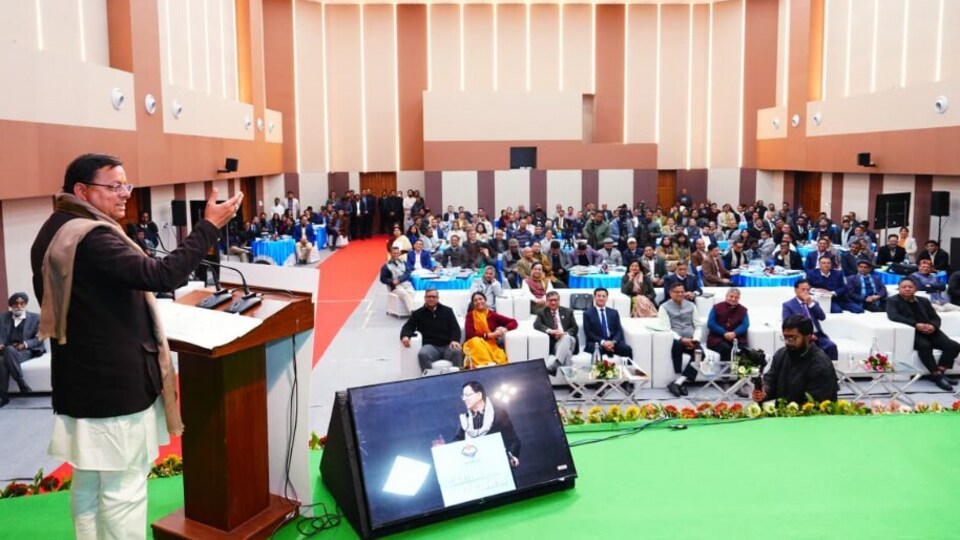
According to the state government’s statement, Dhami said the exercise would focus on key sectors linked to Uttarakhand’s overall development and help set a direction for the coming years. He added that the national goal could be achieved only if all states progressed in parallel, and that Uttarakhand should determine a long-term development pathway based on its resources, capacities and distinct features.
Dhami outlined that the Vision 2047 approach should not be treated as limited to a single government term or a single scheme, but as a long-term framework spanning economic, social, technological, strategic and cultural dimensions. He said the intent was to place emphasis on human-centred, inclusive and sustainable development, with transparent and citizen-focused governance.
Highlighting the role of the administrative machinery, the Chief Minister said implementation capacity, responsiveness and efficiency would influence outcomes from policy design through to delivery. He asked officers to ensure that policies and programmes are executed with a target-driven and citizen-oriented approach, and to focus on timeliness, transparency and accountability. He also flagged delays associated with procedural bottlenecks and said such issues could weaken public trust in administration.
Dhami said the state’s roadmap should be assessed through changes experienced by citizens, and pointed to indicators such as growth in farmers’ income, employment generation for youth and equal opportunities for women. He asked officers to define clear outputs and outcomes for each scheme, adding that expenditure alone should not be treated as a measure of success.
Referring to Uttarakhand’s geography, he said the state faces specific challenges as a hill state, and argued that planning should be adapted to local conditions and future requirements. He said Uttarakhand could work towards balancing the needs of the economy and ecology, and called for clarity on where the state should be positioned by 2047 in sectors such as education, health, industry, tourism, agriculture, energy, technology and governance.
The Chief Minister also urged departments to coordinate beyond institutional silos and work as “Team Uttarakhand” to prepare a multi-year action plan. He asked officers to pay attention to development needs in the areas where they began their service and to track grievances and issues that emerge during the “Jan Jan Ki Sarkar, Jan Jan Ke Dwar” outreach programme, noting them systematically and pursuing resolution.
Dhami described the proposed foundation of “Viksit Uttarakhand” as resting on three pillars—good governance, technology and innovation, and citizen-centric sustainable and balanced development. He said the state should expand the use of e-governance and newer tools such as artificial intelligence and data analytics to make administration faster and more transparent, while ensuring that technology-enabled services reach remote and border villages. He also emphasised that disaster management should be treated as an integral part of development planning in an environmentally sensitive state.
The statement said Dhami stayed on after his address to listen to discussions in the inaugural session and noted key points and suggestions. Officials and experts present included Setu Aayog CEO Shatrughn Singh, Principal Secretary R.K. Sudhanshu, Dr R. Meenakshi Sundaram, NITI Aayog programme director Dr Neelam Patel, along with IAS officers and subject specialists.


