
 E-Paper



Poor data collection delays Gurugram’s Comprehensive Mobility Plan by 4 months
The Comprehensive Mobility Plan promises to be the most authoritative survey on Gurugram’s traffic challenges since 2009, when a similar study was conducted by Wilbur Smith Associates.


A comprehensive mobility plan (CMP) for Gurugram, commissioned by the GMDA in July last year, has been delayed by four months on account of poor data collection, GMDA officials confirmed on Wednesday. The plan, which is intended to evaluate the conditions that make mobility a challenge in the city, will now be ready by April 2019. The initial deadline was December 2018.
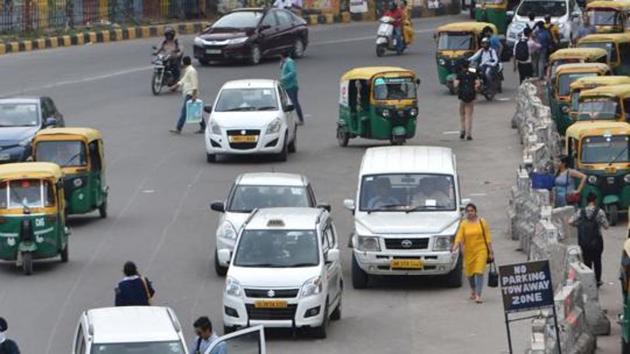
The CMP will be drafted by a team of traffic and mobility experts from the School of Planning and Architecture (SPA) in Delhi, using data collected from 12 traffic and mobility surveys in Gurugram. The GMDA had hired a company in July last year to carry out these surveys.
“However, the execution of the surveys and quality of data (which was submitted to the GMDA and SPA in October) turned out to be quite shoddy,” GMDA chief executive officer V Umashankar said.
Sewa Ram, head of transport planning at the SPA and one of the authors of the CMP, confirmed that “there have been some issues” with the data collected by the agency. “As it stands, without fresh surveys we cannot proceed with the undertaking,” he said.
As a result, the entire exercise is being repeated by Delhi-based Apreton Infrastructure at the SPA’S recommendation, at a cost of ₹1.6 crore. A work order, issued on December 26 by GMDA chief engineer (mobility) RK Mittal gave the company three weeks to complete the surveys. “This has not yet been done though. It will still take a few more weeks,” said an official in GMDA’S mobility division, requesting anonymity.
A representative of Apreton Infrastructure declined to comment on why the surveys have not been completed yet.
Umashankar clarified that the delay in conducting surveys has not cost the GMDA financially. “We have not paid the previous company as their work was not satisfactory, as per the contract. We have lost precious time, but are doing our best to make up for it,” he said.
The CMP promises to be the most authoritative survey on Gurugram’s traffic challenges since 2009, when a similar study was conducted by Wilbur Smith Associates.
However, in the 10 years since, several new mobility issues have become more pronounced than they were, Sewa Ram said, adding that a comprehensive mobility plan is urgently needed to plan for the future.
“There has been an increase in disorganised parking. Lack of pedestrian and cycling infrastructure also has more consequence today than it did in 2009, which is also the case when it comes to the absence of mass transit systems, such as buses and trains. Inflow and outflow of bypassable traffic, such as trucks and other commercial vehicles, has increased. Clogging of high-volume junctions, such as Shankar Chowk, IFFCO Chowk, Hero Honda Chowk and Rajiv Chowk, has also become more troublesome,” he said.
Sewa Ram added that the CMP will make short-term (five years), mid-term (10 years), and long-term (15 years) recommendations to improve mobility as part of the Gurugram-manesar Masterplan 2031.
The CMP is also legally mandated under the GMDA Act, whose definition of mobility “includes the movement of person on foot, or a wheeled conveyance of any description.” As such, the plan will lay greater emphasis on conditions that affect the mobility and safety of ‘vulnerable road users’, or those who rely on non-motorised means of transport, including cycles, rickshaws or by foot.
“Only about 25% of the primary road network in Gurugram has usable pavements, which adversely affects the common man who does not rely on cars,” said Sanjay Gupta of the SPA, who is also working on drafting the CMP.
So far, efforts to improve mobility in Gurugram have focused mainly on conditions of vehicular traffic and the CMP is expected to rectify this approach.
At the moment, Gurugram’s population is serviced by about a 1,000-kilometre network of primary road networks. The city sees about 17 lakh people, the current population, make about 20 lakh trips each day, two-thirds of which are within city limits. These estimates amount to a high passenger volume count.
However, there is no established mass transit system in Gurugram to meet the demand. Thus, the CMP is being drafted with the city’s estimated population by 2030, which is about 30 lakh people.

Stay updated with all the Breaking News and Latest News from Mumbai. Click here for comprehensive coverage of top Cities including Bengaluru, Delhi, Hyderabad, and more across India along with Stay informed on the latest happenings in World News.


