
 E-Paper



Food distress persists, most daily wagers unwilling to return soon: Report
Gurgaon Nagrik Ekta Manch (GNEM), a civil society group, on Friday, released a report stating that daily wagers and industrial workers were the most affected by the Covid-19 pandemic and the ensuing lockdown, with monetary reserves for many dwindling to as little as Rs 500


Gurgaon Nagrik Ekta Manch (GNEM), a civil society group, on Friday, released a report stating that daily wagers and industrial workers were the most affected by the Covid-19 pandemic and the ensuing lockdown, with monetary reserves for many dwindling to as little as Rs 500.
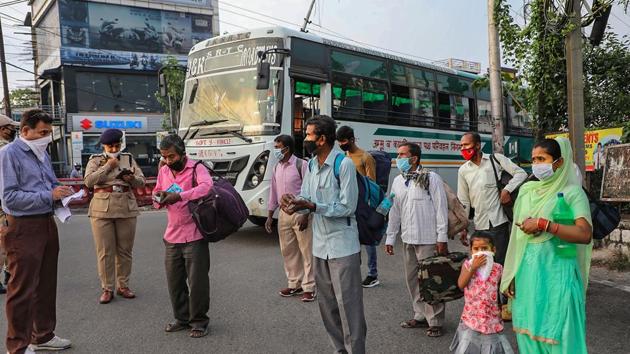
The report — aptly titled ‘Caught in a Bind: A Status Report on Uncertainty and Distress Amongst Gurugram’s Unorganized Workers’ — states that livelihood insecurity among daily wagers remained extremely high despite the easing of the lockdown and gradual resumption of economic activity.
Based on an IVR survey of 5,000 people conducted in the last two weeks of May, the report outlines that re-employment was tepid with 60% of daily wage workers and 42% of factory workers out of work. According to 45% of those who work in factories for a monthly wage, factories had begun operations but they were still waiting to be called back to work. At least 34% of permanent factory employees also said the same thing. The report attributed the reason for poor re-employment to social distancing norms that needed to be adhered to, due to which companies were only recalling a few workers who were being made to work for longer hours, often with no overtime.
According to the report, 44% of self-employed workers had not yet been able to restart work owing to negligible demand and lack of capital to restart business. Due to financial distress, debt was also rising, especially among the self-employed. Out of those surveyed, 25% of the respondents did not take loans and relied on savings or help from family, while 30% took loans of up to Rs 2,000. Around 24% of respondents took a loan ranging from Rs 2,000 and 5,000 and 8% above Rs 8,000. Self-employed workers reported more debt, with 44% borrowing between Rs 5,000 and 8,000.
The report stated that while demands for rent were a source of anxiety, such demands were not persistent. Only 25% of the respondents faced pressure from landlords to pay rent. Lack of rent waiver and cumulative rent owed to landlords, however, was a reason to worry for migrants.
With uncertainty around income, food, and rent, many workers had moved back to their native villages. Out of those surveyed, only around 30% of migrants were keen on returning immediately, while 40% were planning to wait and watch. A higher proportion of migrants from Assam, Bihar and West Bengal were eager to return immediately, while around 64% of the respondent from Uttar Pradesh were willing to wait for employment
The report also stated that the administration’s efforts towards tackling food distress were inadequate and implementation of distress PDS during the peak period of food distress (April and May) was delayed due to which hunger problems in the city had compounded. It says that the administration’s distress ration system was a non-starter, mired in opaqueness, and had failed to cover a significant population, especially those in industrial pockets. Around 37% of the respondents said that the withdrawal of cooked meal facilities had exacerbated stress for them as they were dependent on it.
VS Kundu, additional chief secretary, said that the administration had carried out household surveys to assess requirement of those in need, after which ration had been distributed. “Ration distribution is an ongoing process and is expected to continue till the end of June at least. The administration tried to cover as many people as it could,” said Kundu.

Stay updated with all the Breaking News and Latest News from Mumbai. Click here for comprehensive coverage of top Cities including Bengaluru, Delhi, Hyderabad, and more across India along with Stay informed on the latest happenings in World News.


