E-Paper



Breaking bad habits and living a healthy lifestyle can reverse diabetes

 Prefer HTon Google



Diabetes is a known lifestyle disease and it can be cured with if people live a good healthy life.
Indians not only develop diabetes a decade before Caucasians but many are not even aware they have it until complications such as nerve damage sets in.
Genes predispose about 30% people to getting the disease early, but in the rest of the cases, poor lifestyle choices are to blame for people getting diagnosed in their 30s and 40s and many more – an estimated 77 million – with insulin resistance. One in three people with insulin resistance develop diabetes if preventive strategies are not implemented.
Read: Children at risk: Alarming level of diabetes among adolescents
“Not one but multiple genes are responsible in Asians developing the condition earlier than Caucasians; but having said that, the genetic predisposition was always there. So the sudden rise in numbers is definitely a mix of genetic and an unhealthy lifestyle. I’d say, nearly 70% is lifestyle induced,” says Dr Anoop Misra, chair man, Fortis C-DOC Centre of Excellence for Diabetes, Metabolic Diseases, and Endocrinology.
Read: Sugar mommies: Diabetes among pregnant women spikes in India
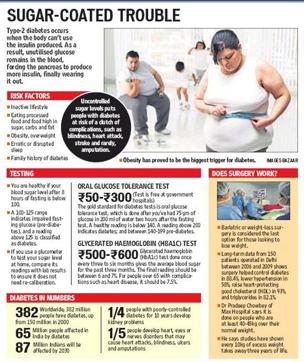
Obesity as a result of a sedentary lifestyle, high junk food intake, especially refined carbohydrates, lack of exercise and lack of sleep or erratic sleep pattern is proving to be the biggest trigger in developing diabetes.
“Obesity is the root cause, with excess abdominal fat and too much fat within liver pancreas prevents normal insulin secretion. The moment you develop a paunch, you are headed towards diabetes and other metabolic diseases,” said Dr Ambrish Mithal, chairman, department of endocrinology and diabetes, Medanta.
There is, however, growing evidence to support that modifying lifestyle cannot just control but also help reverse diabetes.
“I have plenty of patients who have been off medicines for a couple of years now and their diabetes hasn’t come back,” says Dr Mithal.
Delhi-based rehabilitation psychologist, Divya Parashar, 40, can vouch for it after she reversed her diabetes within a year with diet changes and exercise.
Read: World diabetes day: 66% Indian children have abnormal sugar levels
Parashar was diagnosed with diabetes— post meal levels were at 210mg/dl, fasting was 120mg/dl, in 2006.
“I weighed 96 kilos then, which was about 34 kg overweight. I had put on weight while working in the US and when I returned to India, I decided to get back into shape,” says Parashar who now runs marathons.
To lose weight, she started her day with a 90minute exercise regimen, primarily doing aerobics. “Since I put on weight from having canned juices, sweets, corn among other things, I switched my meals to include eggs, green leafy vegetables, nuts and dairy products. I ate frequent but small meal portions and lost my excess weight in eight months,” she said.
Read: A good night’s sleep can help you cut diabetes: Study
With her weight loss, Parashar’s glucose levels dropped to fasting 80mg/dl and post-meal 90-95mg/dl and have continued to remain so till now.
“She is a living proof that modifying lifestyle can reverse diabetes,” says Dr Misra, who helped her weight and her sugar levels get back to healthy levels.