
 E-Paper



New mRNA tech could transform lung therapies
Combining mRNA with a specialised lipid nanoparticle could reach areas of the lungs previously inaccessible to conventional treatments.

 Prefer HTon Google


American researchers have developed a groundbreaking injectable therapy to deliver mRNA directly to the lower lungs, potentially transforming treatment for chronic lung diseases and accelerating healing in damaged lung tissue.
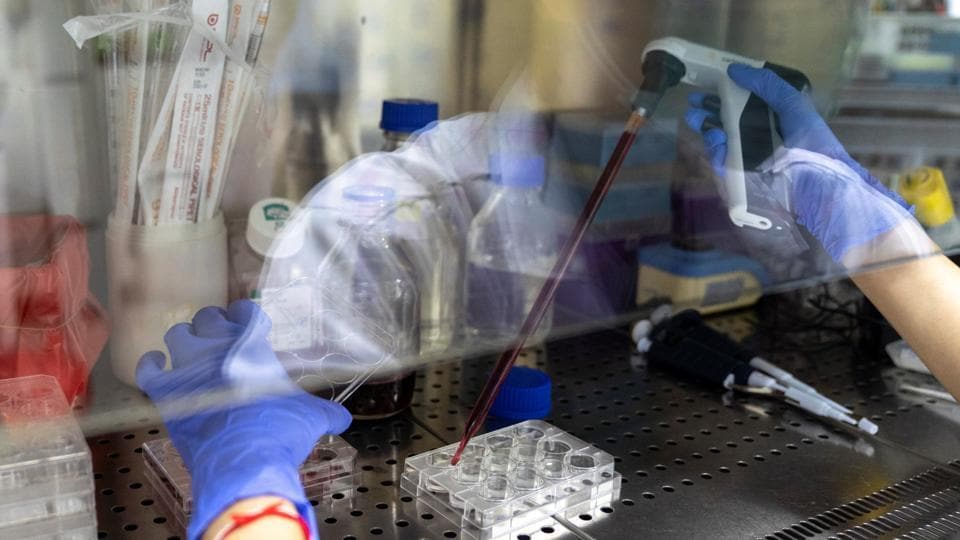
The research team from the University of Pennsylvania’s Perelman School of Medicine demonstrated that combining mRNA with a specialised lipid nanoparticle could reach areas of the lungs previously inaccessible to conventional treatments, according to their study published in Nature Communications.
“The lungs are hard-to-treat organs because both permanent and temporary damage often happen in the deeper regions where medication does not easily reach,” said study author Elena Atochina-Vasserman, research assistant professor at Penn and scientist at the Penn Institute for RNA Innovation.
The breakthrough in the paper builds on the rapid work in mRNA as a platform for therapeutics and inoculation since the landmark mRNA Covid-19 doses. Those doses earned Perelman School professor and a co-author of this study, Drew Weissman, and his former colleague Katalin Kariko the Nobel prize in medicine in 2023.
Traditional pulmonary treatments primarily target the upper airways through nebulisation and inhalation, leaving a critical gap in addressing damage to the lower lung regions. Drug delivery to these areas has historically faced challenges of poor specificity and uneven distribution.
Explaining the mechanism, the research team pointed to a key component of the life-saving mRNA Covid vaccines: unique lipid nanoparticles that acted as a courier for the mRNA. In the current study, the researchers used one unique lipid nanoparticle –ionizable amphiphilic Janus dendrimers (IAJDs), derived from natural materials, in order to deliver transforming growth factor-beta (TGF-β) mRNA to the lower lungs. These IAJDs were discovered by Virgil Percec, P Roy Vagelos professor in chemistry at the University of Pennsylvania.
Previous research had already established that IAJDs are organ-specific, making them ideal candidates for targeted lung delivery. Once delivered, the mRNA instructs the immune system to create TGF-β, a crucial signalling molecule that helps repair tissue damage.
The study delivers “anti-inflammatory cytokine mRNA, transforming growth factor-beta, to produce transient protein expression in the lower regions of the lung,” according to the research paper. When introduced early in the inflammatory response, TGF-β can accelerate healing and potentially reduce the incidence of complex lung injury and disease.
This approach could prove vital for treating lung damage caused by various factors including respiratory viruses like Covid-19, influenza and RSV, as well as physical trauma. Viruses can trigger an inflammatory response that leads to fluid build-up in airways, excess mucus production, cell death, and damage to the lining of the lungs—all potentially life-threatening conditions when affecting the deeper lung regions.
Weissman, who serves as the Roberts Family professor in vaccine research and director of the Penn Institute for RNA Innovation, highlighted the advantages of this new platform.
“While using other lipid nanoparticles works great to prevent infectious diseases, in addition to being specific to the lung, this new platform does not have to be stored at such extremely cold temperatures and is even easier to produce,” Weissman said.
The significance of this breakthrough extends beyond respiratory conditions and contributes to the broader progress of genetic nanomedicine. According to Percec, while this research focused on lungs, “this method is also being explored for therapies for other organs.” The team is currently investigating a similar approach against infections in the spleen.
Respiratory diseases were the third leading cause of death worldwide even before the pandemic, according to research published in The Lancet, underscoring the critical need for innovative treatments.
The study was supported by the National Institutes of Health Institute of Environmental Health Sciences, the National Science Foundation, and the Wellcome Leap R3 programme.

Catch your daily dose of Fashion, Health, Festivals, Travel, Relationship, Recipe and all the other Latest Lifestyle News on Hindustan Times Website and APPs.


