
 E-Paper



Square brackets and sleepless nights: What really happens inside a UN climate summit
From the opening agenda to the closing gavel, two experts walk through how nearly 200 countries negotiate a climate deal, and how even the verbs matter.

 Prefer HTon Google


Every year, nearly 200 countries gather at the Conference of the Parties (COP), the annual meeting of the 1992 United Nations Framework Convention on Climate Change (UNFCCC), to negotiate global action on limiting global warming. Discussions include mitigation (cutting emissions), adaptation, climate finance, loss and damage (support for countries already harmed by climate change), and carbon markets.
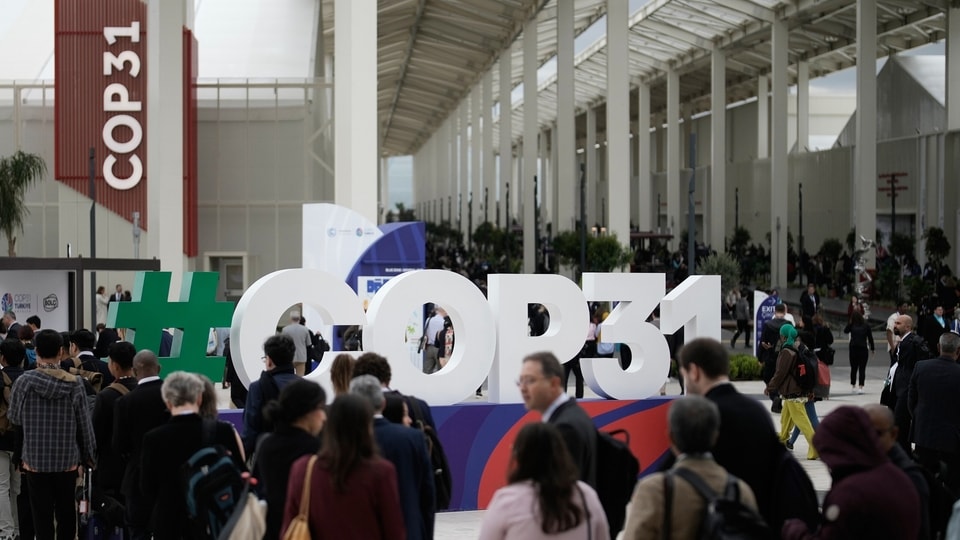
The 31st COP is underway in Antalya (November 9 to 20), with Türkiye as the host and COP president, and Australia leading the negotiations.
The two-week summit involves competing priorities and complex decision-making. Demystifying this step-by-step process reveals how sovereign powers navigate intense disagreements to negotiate a workable middle ground.
Laying the groundwork
Before the COP, mid-year negotiations are held every June in Bonn, Germany, where national negotiating teams construct an ‘early draft text’. Whatever remains unresolved in Bonn is carried forward to the COP. This ensures that delegations arrive at the summit knowing exactly where the primary friction lies.
The opening plenary session takes place on the first day of the COP, where nations must agree on the official agenda before formal talks begin. Though seemingly routine, this is often the first major flashpoint. Because an issue must be officially placed on the agenda to be negotiated, disputes over agenda framing have historically stalled talks for hours or days. At Antalya, the fight was settled in late-night consultations before the opening plenary, which began an hour-and-a-half late; a standalone item on tripling adaptation finance and climate-related trade measures was left off the agenda.
How do countries negotiate?
The venue is divided into two zones: the Blue Zone, a UN-managed space for official negotiations and accredited participants; and the Green Zone, open to the public for exhibitions, discussions, and events.
Each country sends diplomats, officials, and technical experts to the COP. Observers, including activists, scientists, industry representatives, and journalists, can watch the formal proceedings but have no say in the decisions.
Within the Blue Zone, countries negotiate through diplomatic blocs rather than individually, leveraging their collective strength. The largest grouping is the G77 and China, representing more than 130 developing nations. Other key blocs include the African Group, the Alliance of Small Island States, the Least Developed Countries, and the Like-Minded Developing Countries (including India). Each morning, these blocs assemble behind closed doors to align on shared positions before a single spokesperson presents their stance.
During the first week, technical delegates examine draft texts across more than 100 agenda items, including emission reduction targets, climate finance, adaptation strategies, scaling clean energy while ensuring a just transition, and carbon markets.
Unresolved text is placed in square brackets, and early drafts can contain hundreds of them. Progress is measured by how many brackets are removed. Disputes often centre on single words, as terms such as ‘shall’ in a treaty create legal obligations, whereas words like ‘should’ or ‘invites’ merely recommend actions. These distinctions decide what governments can be held responsible for.
By the second week, technical teams hand over unresolved questions to arriving government ministers. What remains are political questions: who pays, how much, and who must cut emissions fastest. Pairs of ministers, one from a developed country and one from a developing country, are typically appointed to broker compromises. They begin circulating draft texts, each an attempt to give every bloc something it can defend back home.
Also read: COP 31: UN launches $3 billion disaster financing platform, brings together its six agencies
What happens when countries disagree?
Because decisions require consensus rather than a majority vote, a single determined country can hold up progress. When open sessions stall, talks shift to closed-door meetings and private conversations with key players.
Negotiators employ three mechanisms to break deadlocks. The first is constructive ambiguity, wherein flexible wording is crafted to let opposing sides interpret the text to suit their audiences. At COP28, a standoff over ‘phasing out’ fossil fuels ended with an agreement on ‘transitioning away’ from them.
The second is a package deal, wherein issues are linked so every negotiating bloc gains something. At COP21, small island states secured a standalone article on loss and damage in the Paris Agreement, while developed countries, led by the US, obtained accompanying language stating that it provides no basis for liability or compensation.
The third is sheer exhaustion. Summits almost never end on schedule, and many compromises are struck after sleepless nights. As official deadlines pass, negotiators rely on informal consultations, gathering in huddles on the plenary floor to haggle over specific phrases and resolve bracketed text.
How is a deal sealed?
In the closing plenary, the COP president presents each decision for adoption, invites objections, and brings down the gavel. At COP26, a last-minute intervention by India and China changed a pledge to ‘phase out’ unabated coal power to ‘phase down’. At COP29, the finance deal was greenlit before India could object, prompting a strong protest from its delegation.
Previous COPs have produced historic legal and political turning points, including the Kyoto Protocol (COP3) and the Paris Agreement (COP21), along with recent agreements on loss and damage funding and transitioning away from fossil fuels. Most decisions, however, cannot be enforced in any court. Their weight is political: they set shared expectations to guide actions.
Thereafter, agreements move towards real-world adoption: legally binding treaties require formal ratification by national governments, while non-binding political declarations set the benchmark for global accountability and shape investment flows.
Also read: Nations must turn climate promises into practical action: COP31 prez
How is progress tracked?
Every five years, countries must submit more ambitious Nationally Determined Contributions, detailing their emission reduction and climate adaptation plans. Collective progress towards the Paris Agreement’s goals is assessed on the same cycle through the Global Stocktake; the first concluded at COP28 with a call to transition away from fossil fuels, and the next is due in 2028.
A COP rarely delivers a breakthrough. What it delivers is a text that nearly 200 countries can live with, and a yardstick against which each can be measured. So, when headlines from Antalya announce a ‘historic deal’ or a ‘collapse’, look past them to the verbs. The difference between ‘shall’ and ‘should’ or ‘phase out’ and ‘phase down’ tells you what was actually agreed.
Dr Indu K Murthy heads the Climate, Environment and Sustainability sector, and Pooja Verma is senior analyst in the Sustainability team at the Center for Study of Science, Technology and Policy (CSTEP), a research-based think-tank. Views expressed are personal.


