
 E-Paper



They hunt, wait, then dive: The 'loitering munitions' former CDS Chauhan referred to in his Op Sindoor remarks
The class of drones that General Anil Chauhan (retd) described is the same documented in the Ukraine-Russia war, and the West Asia conflict.

 Prefer HTon Google


Speaking at an event in New Delhi on Tuesday, former chief of defence staff General Anil Chauhan (retired) said India had sent "a lot of loitering munitions" to Sargodha in Pakistan during Operation Sindoor in the aftermath of the Pahalgam terror attack last year. The weapons were hunting radars around the Pakistan airbase, but because these have a "lifetime", they will "loiter for about two hours", after which – if they don't find a target – they come down "somewhere", he said.
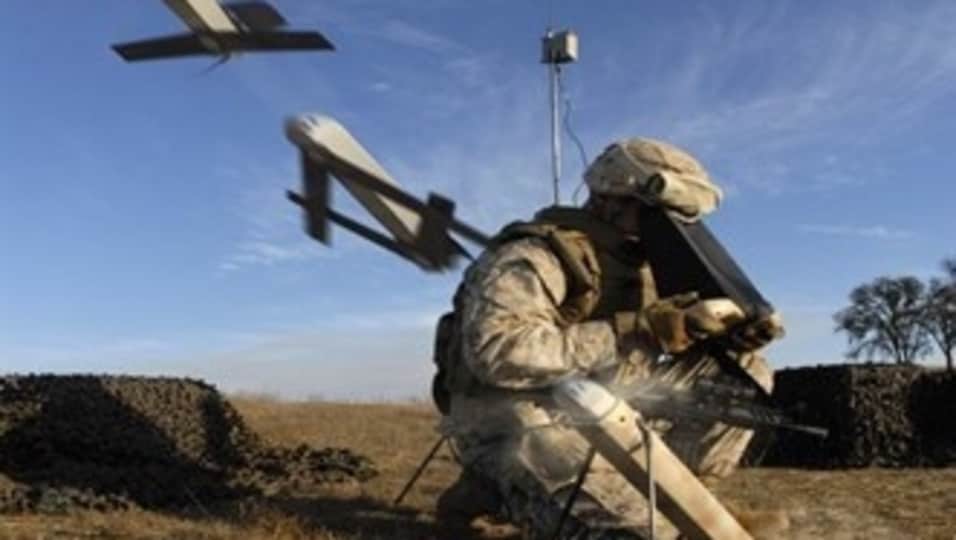
In this case, according to the former CDS's account, a loitering weapon came down near Kirana Hills, which is believed to house a Pakistan nuclear facility, though India did not target it.
India carried out Operation Sindoor against nine terror infrastructure sites in Pakistan and Pakistan-Occupied Kashmir (PoK) in May 2025 after the April 22 Pahalgam terror attack in Kashmir.
General Chauhan's remarks refer to loitering munitions, which have – over the past decade – become one of the defining classes of weapons used in the Russia-Ukraine war and the West Asia conflict.
The weapon in between
In the spectrum of weapons, a loitering munition would be somewhere between a cruise missile and a reconnaissance drone. Like a missile, it carries a warhead and terminates itself on the target. Like a drone, it can circle over a target area for minutes or hours, feeding video back to an operator, and can be redirected, retasked or aborted in flight.
Its defining trait is that it waits for a target, or for a human operator to confirm one, and then dives.
Sizes of these weapons range from a 2kg tube-launched weapon that an infantry section can carry to a 200kg airframe with a range of more than 2,000km.
How they work
A typical mission involving the weapon has four phases. The munition is launched from a tube, canister, rail or aircraft. It goes to a target area, sometimes hundreds of kilometres away, and then loiters, using electro-optical, infrared or anti-radiation seekers to search for a target such as a radar, an artillery piece or an armoured vehicle. Seekers are sensors that pick up visible-light imagery, heat signatures or radio-frequency emissions from an active system.
When a target is confirmed, either by an operator watching the video feed or by the seeker, the weapon dives and detonates.
Higher-end systems carry fail-safes, which means that when no target is found within the endurance window, the weapons may self-destruct in the air, abort the mission and return, or dive into what may be considered a safe impact area. Lower-end systems may just expend themselves when the fuel runs out.
Strengths and weaknesses
Cost is key to the use of these weapons.
A Russian Shahed-136 kamikaze drone – a loitering munition – costs an estimated $20,000 to $50,000 per unit, against several hundred thousand dollars for a modern surface-to-air interceptor missile, and millions for a cruise missile, according to the Centre for Strategic and International Studies (CSIS) in Washington.
Since these weapons are relatively cheaper, they can be launched in swarms of dozens or hundreds, saturating the enemy's air defences that may be built to shoot down a handful of expensive missiles at a time.
Another benefit is patience. Older anti-radiation missiles had to be fired at a radar that was already emitting signals. A loitering munition, though, can wait in the air for the radar to switch on.
This allows the weapon to confirm the position of a target before striking it.
But, loitering munitions are slow, typically flying at 150 to 200 kmph, which makes them vulnerable to point air defence, fighter aircraft and even small-arms fire once spotted. Their warheads are also small, ranging from one to fifty kilogrammes, so they cannot destroy hardened targets such as fortified underground bunkers.
Optical seekers struggle in bad weather too. And they depend on data links and satellite navigation that can be jammed. A 2025 paper by Arie Aviram for the Institute for National Security Studies in Tel Aviv noted that electronic warfare, including broad GPS jamming, has one of the most effective counters to Russian loitering munitions in Ukraine.
According to CSIS, Russia scaled up its Shahed launches from about 200 a week in September 2024 to more than 1,000 a week by March 2025, and has sustained mass nightly attacks since. To counter them, Ukraine has been using domestically produced Sting interceptor drones, which were credited with destroying more than 3,000 Russian Shahed and Gerbera munitions in May this year, according to open-source reports cited by the Institute for Science and International Security in Washington.
From Bekaa Valley to Alabuga
Israel Aerospace Industries (IAI) built the Harpy, an autonomous anti-radar drone, in the late 1980s, drawing on the lessons of the Israeli air force's destruction of over a dozen Syrian surface-to-air missile batteries in Lebanon's Bekaa Valley in a single afternoon in 1982. The episode is still studied as the template for modern Suppression of Enemy Air Defences, or SEAD.
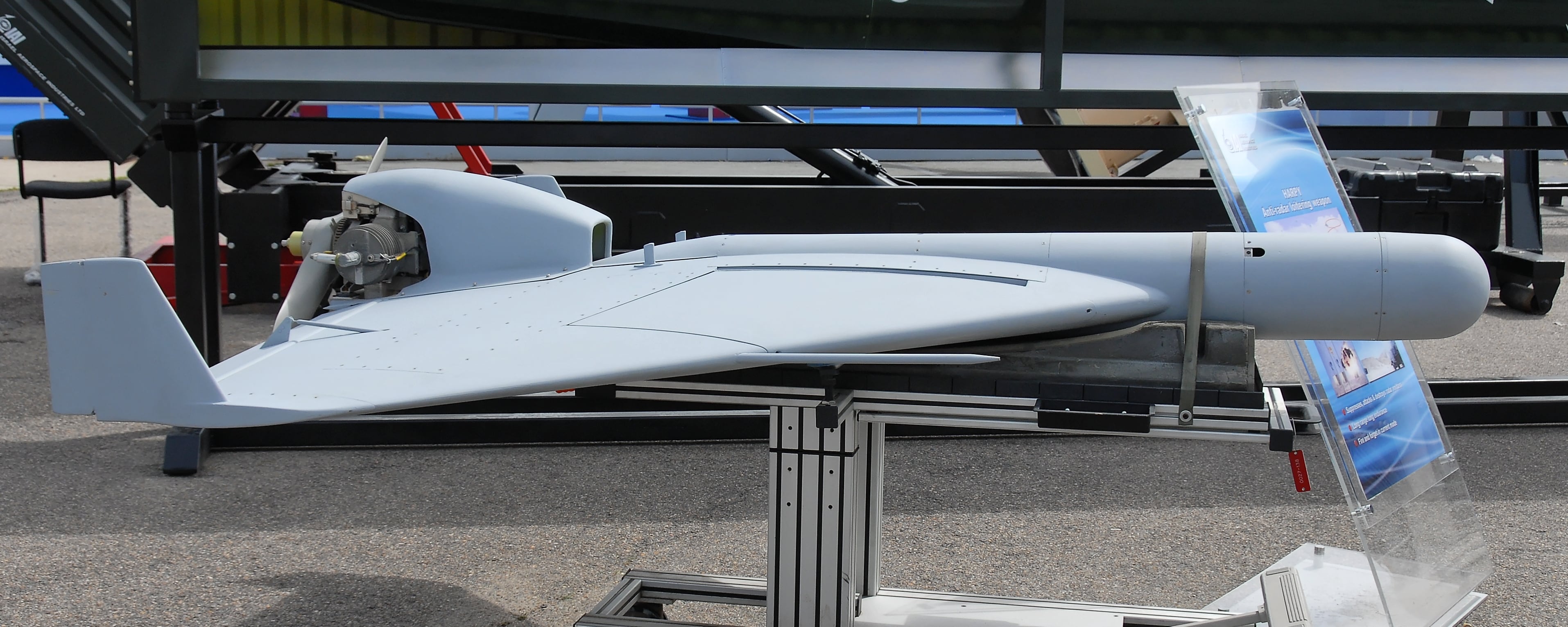
The larger and more sophisticated Harop, developed in the 2000s, added an electro-optical seeker and a human operator, turning the weapon from a fire-and-forget anti-radar drone into a general-purpose loitering munition.
The US then miniaturised the concept in the 2010s with the Switchblade family of tube-launched munitions, small enough for a soldier to carry in a rucksack.
The 2020s brought two shifts. Iran's Shahed-136, produced in Russia as the Geran-2 at the Alabuga special economic zone in Tatarstan pushed the range past 2,000 km, according to the US-based defence market research firm Teal Group and the Institute for Science and International Security.
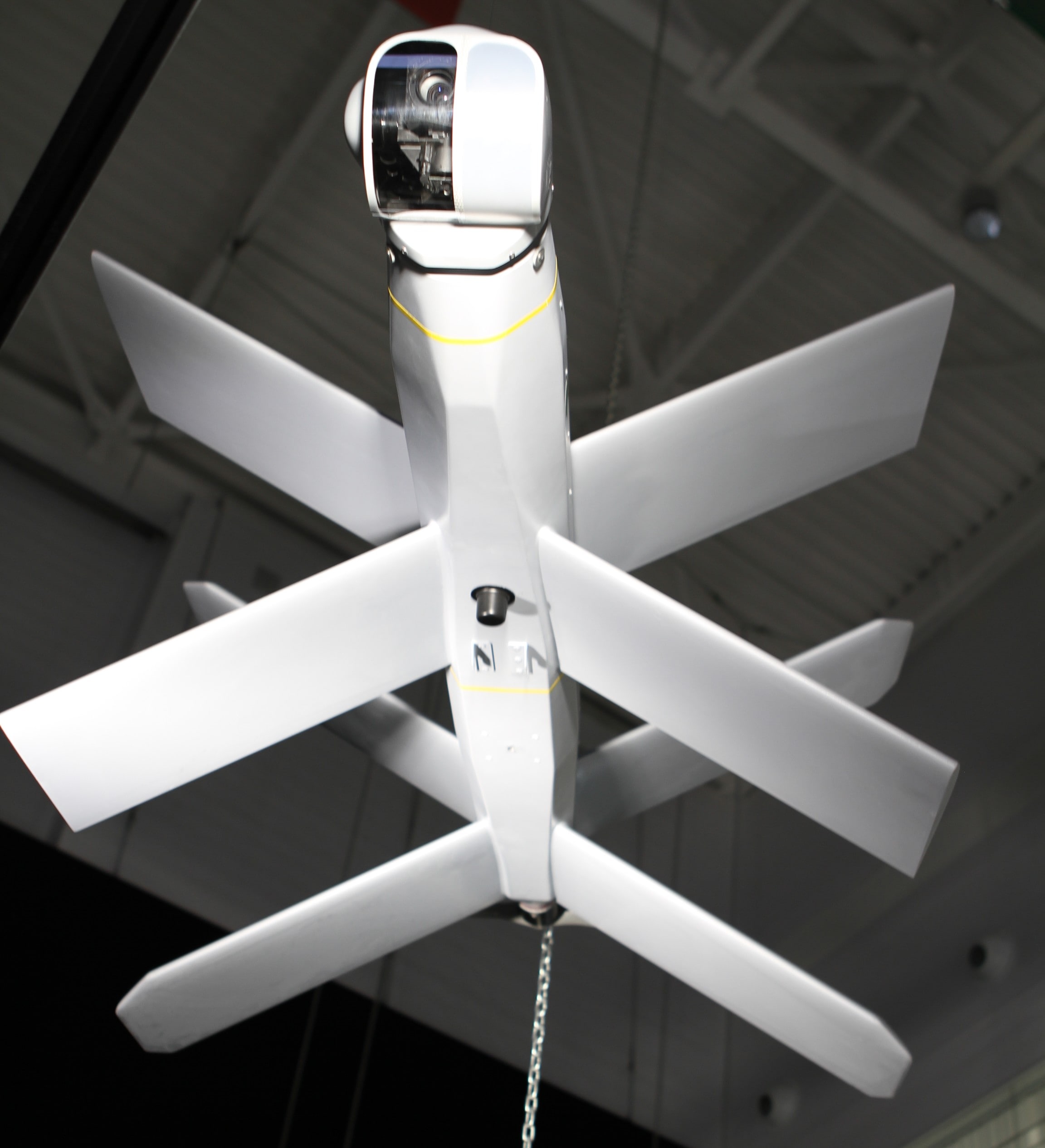
Thereafter, artificial intelligence began to migrate into the seekers. Russia's Lancet-3, made by ZALA Aero, has been reported to use onboard AI for target recognition in its later variants, analysts say.
India's arsenal
India's inventory has both imports and indigenous munitions.
Operation Sindoor, according to a March 2026 assessment by the Centre for Joint Warfare Studies (CENJOWS) in New Delhi, saw combat employment of the IAI Harop and Harpy, the Polish Warmate, the Adani-Elbit SkyStriker built in Bengaluru, the Nagastra-1 developed by Solar Industries in Nagpur, and the Tata ALS-50.
The Warmate is a small tactical munition made by Poland's WB Group, the SkyStriker is an electrically powered, canister-launched munition, the Nagastra-1 is an indigenous vertical-takeoff loitering munition with a 60-minute endurance, and the ALS-50 is a Tata Advanced Systems vertical-takeoff munition with a 50km range and a 5kg warhead.
The Indian Army has also contracted 450 Nagastra-1R units, an upgraded night-capable variant with improved electronic-warfare resistance, and has awarded a ₹5,000 crore emergency procurement package for further loitering munitions, the CENJOWS assessment said.
Solar Industries opened a dedicated loitering-munition testing range in Nagpur in March 2025, with the inauguration by Prime Minister Narendra Modi.
The Harop is nonetheless the workhorse. First ordered in 2010, it has an endurance of about nine hours and is designed to automatically steer itself towards radiation signatures of enemy radars.
Also Read: Ukraine backers gather as war escalates, air defence runs low
Ukraine and Iran, the two ongoing wars
The Russia-Ukraine war, ongoing since 2022, has seen the largest use of this class of weapons so far.
Russia's Shahed campaign against Ukrainian energy infrastructure is the most sustained use of loitering munitions in any conflict to date, according to CSIS. The Lancet, a Russian tactical loitering munition, has also been one of Moscow's most effective drones against Western-supplied artillery in Ukraine, destroying the powerful HIMARS launchers, Caesar and M109 self-propelled guns, and M777 howitzers, according to data compiled by open-source analysts and cited by the Teal Group.
This year has seen loitering ammunition used in the US-Israel and Iran war in West Asia. The Royal United Services Institute (RUSI), in a commentary published in May, said it was "the first major inter-state war in which both sides have employed loitering munitions and drones since the start of hostilities".
Israel is believed to have used loitering munitions to blind Iranian radars ahead of manned strikes. And, on the other side, Iran and its proxies have fired Shahed drone variants, combining them with ballistic and cruise missiles in a saturation pattern seen earlier.

The way forward
Experts say the weapon's counter-drone capability, especially for cheap interceptors, electronic warfare and directed-energy weapons, is a decisive investment for any modern military. RUSI had warned in its commentary that "allied air defences remain inadequate" against loitering-munition saturation.
The second debate is over how much authority a machine should be given to pick and strike targets on its own. Discussions at the United Nations Group of Governmental Experts on Lethal Autonomous Weapons Systems have not produced binding rules, even as the Shahed, Lancet and Harop families are already moving further along the autonomy curve with each generation.


