
 E-Paper



Tiger Shroff attack: How Lawrence Bishnoi gang’s overseas network operates
Before Shroff, the transnational gang targeted Bollywood stars Salman Khan, Ranveer Singh, and Aamir Khan

 Prefer HTon Google


Jailed gangster Lawrence Bishnoi, who has regularly targeted high-profile celebrities, singers, and politicians, and his overseas network of operatives, are again in the news after three assailants fired at actor Tiger Shroff’s car in Mumbai on Sunday. Two alleged operatives of the Lawrence Bishnoi gang claimed responsibility for the attack in social media posts.
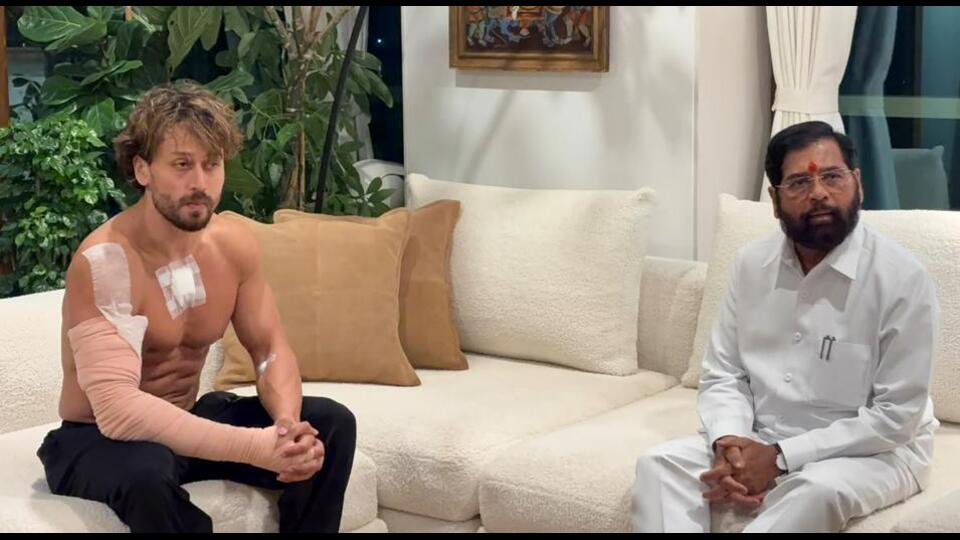
Before Shroff, the transnational gang targeted Bollywood stars Salman Khan, Ranveer Singh, Aamir Khan, and director Rohit Shetty. Renowned Punjabi singer Sidhu Moosewala was assassinated in May 2022, and Maharashtra politician Baba Siddique in October 2024.
US-based Anil Pandit took responsibility for the attack on Shroff. He has lately sought limelight on behalf of the gang to keep focus away from Bishnoi’s deputy in the US, Satwinder Singh alias Goldy Brar, as the Federal Bureau of Investigation (FBI) looks for him.
Deep Dive

Intelligence officials said Pandit’s social media claim of targeting Shroff appears genuine even as the investigators are examining the wider network, including the alleged use of encrypted messaging applications and the supply of sophisticated foreign-made weapons to shooters.
The FBI has termed the gang the Lawrence Bishnoi Organized Crime Group (OCG). The gang has shown the ability to operate across international borders, recruit local shooters from abroad, and target high-profile persons to threaten businessmen to fund its operations.
Who is Anil Pandit?
A native of Rair Kalan village in Haryana’s Panipat, Pandit, 32, is believed to have fled from India in 2023 and travelled to Thailand, Canada, and finally the US. He is closely associated with gangster Randeep Malik and Canada-based Ravinder Singh Dhanda, who works with Lawrence Bishnoi OCG, according to a US indictment in July this year.
Indian investigators say that Pandit operates from California and is suspected to be in touch with Goldy Brar as well. Before targeting Shroff, his name surfaced in firing and extortion-related incidents this year, including the firing at a gym owner associated with singer Guru Randhawa in west Delhi, a shooting at a jewellery showroom in Pune, and two attacks in Bhiwadi and Sonipat. The Delhi and Haryana Police are investigating these incidents, including the use of Signal, an encrypted messaging application, for contacting the shooters and organising delivery of foreign-made weapons.
Who is Harman Sandhu?
Another key suspect in the latest attack is Harmanveer Singh alias Harman Sandhu, who was also put on the FBI’s wanted list in June. A member of the Ravinder Dhanda network, which works with the Bishnoi gang, Sandhu is said to have been taken into custody by the FBI in July in California. It is being investigated how his name has appeared in the Shroff shooting.
On June 23, a federal arrest warrant was issued for Sandhu in the United States District Court, Central District of California, Los Angeles, California, after he was charged with conspiracy to distribute and possess with intent to distribute, conspiracy to export, and possession with intent to distribute controlled substances.
Investigators say that Sandhu was allegedly involved in identifying targets, coordinating shooters, arranging weapons, or facilitating communications.
What have the FBI and US prosecutors said about the gang?
In July, US authorities announced Operation Hard Ball, a coordinated law-enforcement action involving the US, Canada and Europe in which 37 gangsters from India were charged across three federal indictments while 24 of them were arrested. These individuals are associated with Lawrence Bishnoi, Jaggu Bhagwanpuria, and Ravinder Singh Dhanda networks.
The US prosecutors said that Lawrence Bishnoi runs his criminal operations from prison in India (Gujarat) using contraband mobile phones and voice-over-internet-protocol devices. It listed activities as targeted killings, shootings, extortion, kidnappings, drug trafficking, and human smuggling.
Apart from Lawrence Bishnoi, the FBI named Goldy Brar and Rohit Godara, saying they served as his senior lieutenants and helped direct members and associates across countries. The US authorities said that the gangs use high-profile violence and online claims of responsibility to cultivate fear, particularly in India and among Indian diaspora communities, and then exploit that fear to extort victims.
The US prosecutors mentioned the June 2023 assassination of Sikh separatist leader Hardeep Singh Nijjar in Surrey, British Columbia, by the Bishnoi gang. The FBI linked the criminal enterprise to involvement in international cocaine trafficking and the theft of drug shipments from rival criminal groups.
How did the Bishnoi network become so big?
According to Indian investigators who have probed gangsters, the Bishnoi syndicate is a geographically dispersed network in which jailed gangsters, overseas handlers, local shooters, and financiers are involved.
The National Investigation Agency (NIA), in a March 2023 charge sheet, outlined how the North India-based gangsters are also closely associated with pro-Khalistan elements. The agency identified the 2015 Bargari agitation and the 2016 Nabha jailbreak as important moments in the evolution of the nexus.
It said that pro-Khalistan elements needed experienced shooters, weapons, and logistical support, while gangsters sought access to sophisticated weapons and new sources of funding. This is where the Bishnoi gang offered help.
The agency said that the Bishnoi syndicate spread across Punjab, Haryana, Chandigarh, Rajasthan, Delhi, Uttar Pradesh, Madhya Pradesh, Gujarat, Maharashtra, Bihar and Jharkhand. The money generated through criminal activities was transferred to countries including Canada, the US, Thailand and Australia to support overseas gang members and fund pro-Khalistan elements.
The agency compared the network’s reach and connections with the underworld model associated with Dawood Ibrahim’s D-Company in the 1990s.
Accessibility challenge
The targeting of Shroff and other celebrities by Pandit and the wider Bishnoi network points to the accessibility challenge faced by Indian agencies, as these handlers operate outside the country, while the shooters hired in the thousands carry out attacks locally. “The shooters, mostly jobless youth recruited online, know nothing about the whereabouts of the handlers and larger operation. They get their money and weapons and carry out attacks to make a name in the crime world,” said a police officer in Delhi, who asked not to be named.
This officer added that establishing the chain of communication between the suspected handler and the people who execute an attack, identifying how weapons and money moved, and determining whether separate incidents are connected to the same criminal network becomes a challenge. “Then the biggest challenge is access. We cannot reach these guys and the US, Europe and Canada don’t respond very often unless the crimes take place on their soil,” he added.


