
 E-Paper



Trump wants US to vote like India: What the SAVE Act would actually do, and why the analogy may not hold up
The US president has held up India's photo-ID system as the standard America should meet in its elections. But the two countries’ election processes differ.

 Prefer HTon Google


When US President Donald Trump called on Congress on Monday to pass the Safeguard American Voter Eligibility, or SAVE, Act, he leaned on India as a data point.
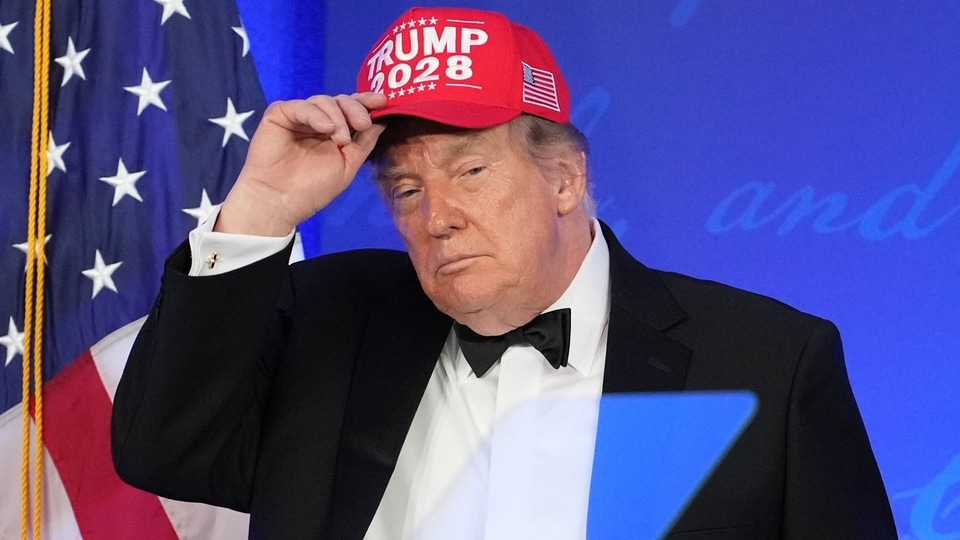
India had 646 million voters in its last general election, Trump wrote on his Truth Social platform. Less than 1% cast postal ballots, and each carried a valid photo identity document. The point had been put to his administration, Trump said, by India's chief election commissioner Gyanesh Kumar.
"We need to pass THE SAVE AMERICA ACT, now!" the US President went on.
The endorsement was amplified within hours by Sergio Gor, the US ambassador to India, who had met Kumar in New Delhi on August 12 to discuss cooperation on election management and training of election officials. "President Donald J. Trump is absolutely correct! 646 MILLION voters, every single one required an ID in India's last election," Gor said on X.
Back home, the remarks drew a sharp response, with Congress leader Pawan Khera saying on X that India should send Kumar and its electronic voting machines – EVMs – to the US. The response referred to Opposition parties' allegations that the Kumar-led Election Commission of India's exercise to revise voter rolls across Indian states was done to disenfranchise some groups and favour the Bharatiya Janata Party (BJP).
The BJP and Kumar have repeatedly dismissed the accusations as the Opposition's excuses after being unable to win the elections.
The transatlantic comparison may be politically useful, but it is also a poor fit. Elections in the two countries are carried on almost entirely different architectures. India has a centralised election commission, an electoral roll and a document at the booth for identification. The US, with 50 states, has a patchwork of rules that vary from state to state.
How India verifies its voters
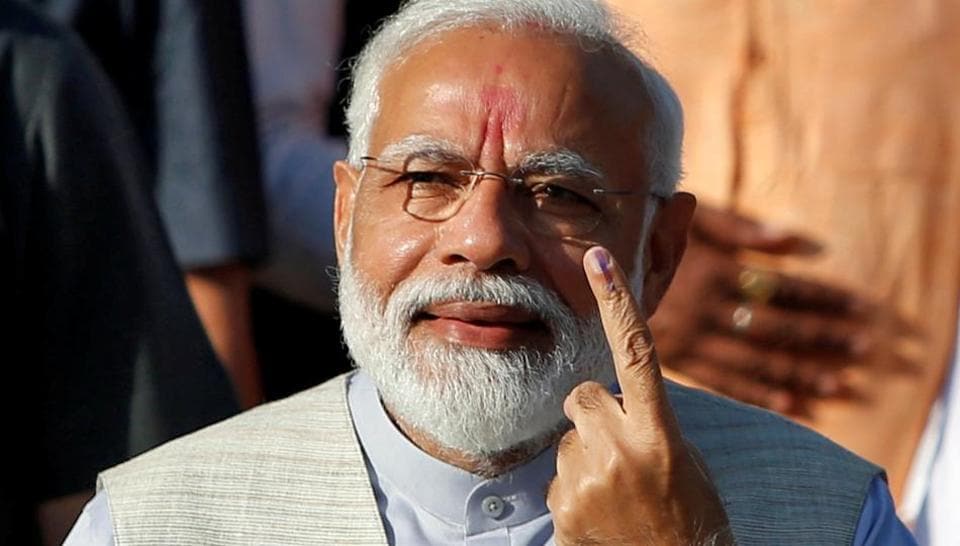
India runs a single national election through the ECI, a constitutional body that oversees a unified electoral rolls system — prepared constituency-wise but under national framework — and issues one photo document: the Elector's Photo Identity Card, or EPIC.
Voters who arrive without EPIC can produce any of 12 alternative photo documents to establish identity: passport, driving licence, PAN card, Aadhaar, MGNREGA job card, bank or post office passbook with photograph, health insurance smart card issued under the labour ministry's scheme, pension document with photograph, service identity card issued to central or state government or PSU employees, Registrar General of India (RGI) smart card under the National Population Register, the identity card issued to MPs, MLAs and MLCs**, and the Unique Disability ID (UDID) issued by the Ministry of Social Justice and Empowerment**.
The list was set out in the commission's order of February 28, 2019**, and expanded in subsequent notifications**.
Verification at the booth confirms that the voter's identity matches the entry in the electoral roll. It does not, controversially, establish citizenship.
That check is carried out at the time of enrolment on the electoral roll, under the Representation of the People Act, 1950, and the Registration of Electors Rules, 1960, which permit only Indian citizens above 18 who are ordinarily resident in the constituency to be added to the list.
Also read: 'Take Gyanesh Kumar to US': Congress after Trump invokes Indian electoral system
For the 2024 Lok Sabha election, ECI counted 979.75 million registered electors, ran the poll over seven phases at nearly 1.05 million polling stations, and recorded 646.4 million votes in total, according to the commission's reports.
Postal ballots, according to Rule 27A of the Conduct of Elections Rules, 1961, are limited to service voters, election-duty staff, notified essential-services personnel, senior citizens above 85, electors marked as persons with disabilities, and those in preventive detention. They accounted for 4.28 million of that total — about 0.66% — according to the ECI's data.
How the US verifies its voters
The US has no national election authority for elections. Its constitution leaves administration to the states. Voter identification rules are consequently a patchwork.
As of January 2026, 21 states required a photo document to vote in person, 12 required a non-photo document, and the rest did not routinely ask registered voters for identification, according to the National Conference of State Legislatures (NCSL) classification carried on Ballotpedia and the NCSL's own tracker.
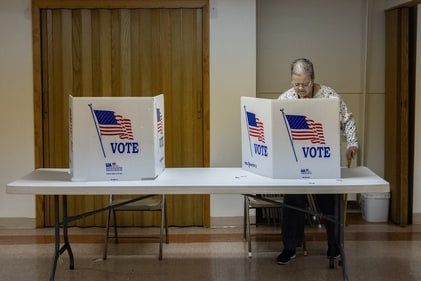
The eligibility check happens at registration. Under the National Voter Registration Act of 1993, applicants attest to US citizenship under penalty of perjury on the federal registration form. States cross-verify against motor vehicle department records, social security records and, in some states, Department of Homeland Security records.
Registering and/or casting a ballot as a non-citizen are federal crimes.
Voting by mail is a mainstream option, and the postal share is many times higher than in India. Roughly 30.3% of all ballots in the 2024 US presidential election — more than 48 million votes — were cast by mail, according to the US Election Assistance Commission's Election Administration and Voting Survey published in June 2025.
Eight states and the District of Columbia conduct their elections primarily by mail. Nationally, election-day in-person voting accounted for 37.4% of ballots, and 35.2% was cast in person before election day, the EAC survey said.
The comparison
Institutionally, a nationwide photo-ID directive is a routine ECI notification in India. In the US it would require an act of Congress that survives the Senate filibuster (a delay tactic under which debate on a bill can continue indefinitely), or a durable executive order.
Trump's March 2025 executive order on election integrity was blocked in key parts by a federal district court in Washington DC. While the Justice Department has appealed the court’s decision, Trump issued a further executive order on the same subject on March 31, 2026.
India had built EPIC in the 1990s because a large share of the electorate held no other government photo identification and impersonation was a documented problem.
The US voter-ID push is grounded in the claim that non-citizens vote in appreciable numbers, but successive audits have not found that. A review by the American Immigration Council of the Heritage Foundation's database counted 68 proven instances of non-citizen voting dating to 2000, against roughly a billion ballots cast across seven presidential elections in that period — an incidence below 0.0001%.
In Utah, Republican lieutenant governor Deidre Henderson released the final report of a citizenship audit of her state’s voter rolls on May 27. Her office confirmed 27 non-citizens among the 2.07 million voter records reviewed, of whom 13 had cast ballots in some elections. Another 25 were flagged as probable non-citizens.
“This demonstrates that there is not a widespread problem," Henderson had told reporters at the time.
The Brennan Center for Justice — a nonpartisan law and policy institute at New York University's School of Law — has cited the audit as further evidence against the case for the SAVE Act.
Separately, EPIC coverage in India is close to universal. Ahead of the Bihar assembly elections in November 2025, the ECI said that EPICs had been issued to nearly 100% of electors in the state and in eight other assembly constituencies going to by-elections at the same time.
Also read: After Trump, US envoy cites India's 660 million voters to push voter ID
In the US, roughly half of adults do not hold a passport, and an estimated 21.3 million eligible citizens lack documentary proof of citizenship readily available, with 3.8 million holding no such document at all, according to research by the Brennan Center with VoteRiders and the University of Maryland.
SAVE Act and what Trump wants
Trump's bill has moved through the Congress in two forms. The House passed House Bill 22 (H.R. 22) in April 2025 by 220-208. A reworked version, H.R. 7296, cleared the House 218-213 in February 2026, with its language substituted into S. 1383 and sent to the Senate. Two floor pushes in March and April 2026 fell short of the 60 votes needed to break a filibuster, according to Congress.gov records and the Vote.org tracker.
The Senate adjourned earlier this month for its five-week recess without moving it further.
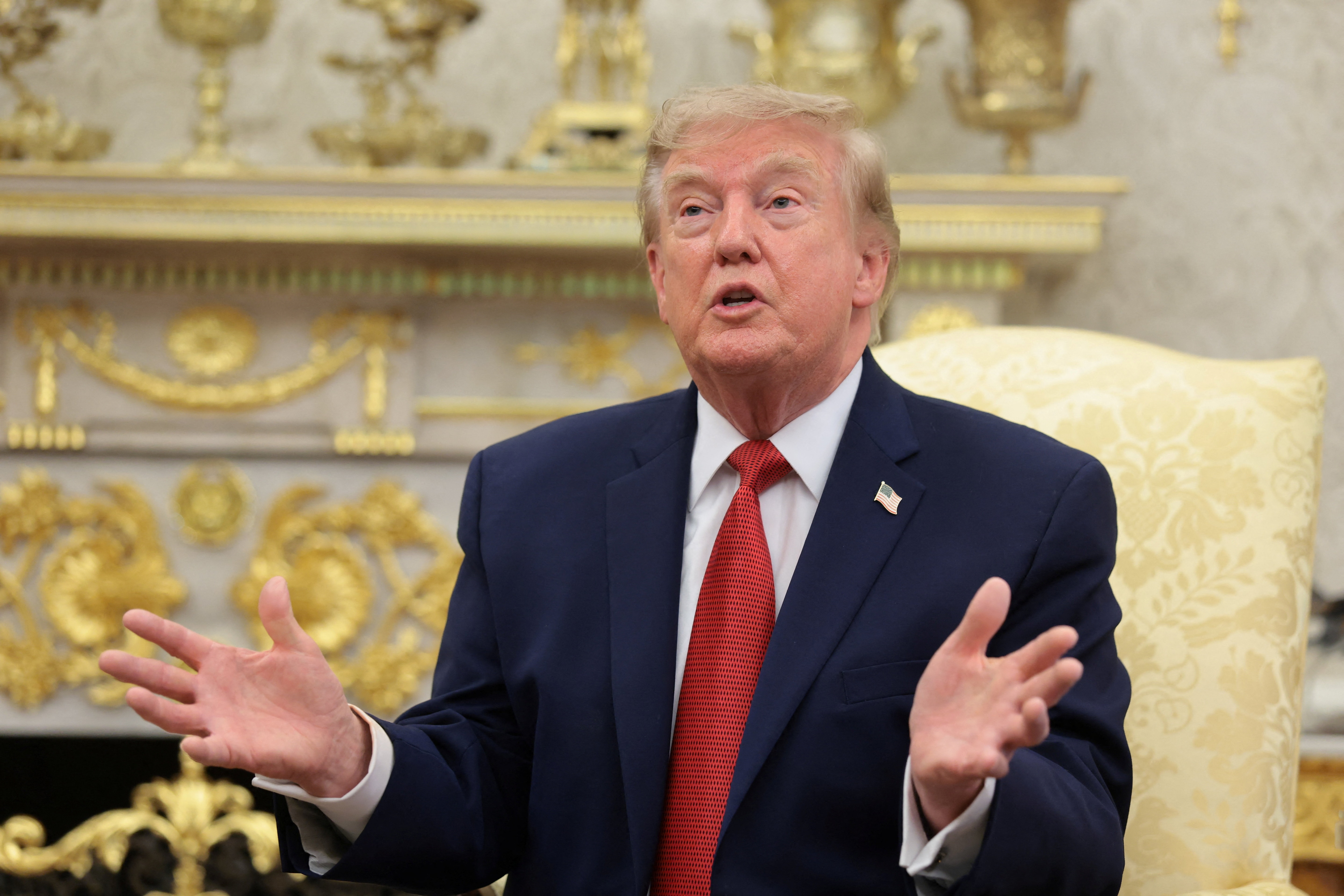
The bill would amend the National Voter Registration Act of 1993 to require documentary proof of US citizenship — a passport, a REAL ID marked as indicating citizenship (few currently are), a certified birth certificate, or naturalisation papers — at the point of voter registration, presented in person.
It would require states to remove non-citizens from their rolls using federal databases, direct states to share unredacted voter rolls with the Department of Homeland Security, and expose election officials to civil and criminal liability for registering ineligible voters, according to the text of H.R. 7296.
It would, however, not impose the nationwide photo-ID-at-the-polls rule that Trump invoked in his Indian comparison on the Truth Social post.
That is a separate policy that the White House is pursuing through an executive order and companion legislation in states such as South Dakota (2025) and Utah (2026), both of which passed proof-of-citizenship laws for state elections, according to the Brennan Center.
The pushback
Voting-rights groups — the Brennan Center, the American Civil Liberties Union, the League of Women Voters and VoteRiders — argue that the bill would only solve a rare problem at the cost of disenfranchising eligible voters at scale, with disproportionate impact on women who have changed their names on marriage, naturalised citizens, rural and low-income voters without passports, and transgender voters whose documents may not match.
The Center for American Progress estimates that about 69 million married American women have changed their surname. The SAVE Act does not specify how a name mismatch between a birth certificate and current legal identification would be reconciled, leaving that to state implementation.
Election officials' associations flagged the administrative costs too. The Bipartisan Policy Center, in a note last updated in July, wrote that ensuring only citizens can register to vote was an important goal but that "there are easier, more cost-effective ways to improve citizenship verification that don't create new barriers for eligible voters".
In India, Trump's endorsement has landed in the middle of a separate quarrel over CEC's stewardship. An initial notice to remove Kumar, submitted in March by 130 Lok Sabha members and 63 Rajya Sabha members, was rejected by Lok Sabha Speaker Om Birla and Rajya Sabha chairman CP Radhakrishnan on April 6. A fresh notice was submitted in April, citing partisan asymmetry in enforcing the model code of conduct, and that has not been acted on, Opposition leaders have alleged.


