
 E-Paper



Why FRRO asked Imran Khan to leave India: The law, the notice, and the actor's options
Five days after the October 10 demonstration, FRRO sent notices under the new Immigration and Foreigners Act 2025 to actor Imran Khan

 Prefer HTon Google


The Foreigners Regional Registration Office (FRRO) in Mumbai has directed actor Imran Khan, a US citizen holding an Overseas Citizen of India (OCI) card, to leave the country by October 28, citing alleged violations of the Immigration and Foreigners Act, 2025.
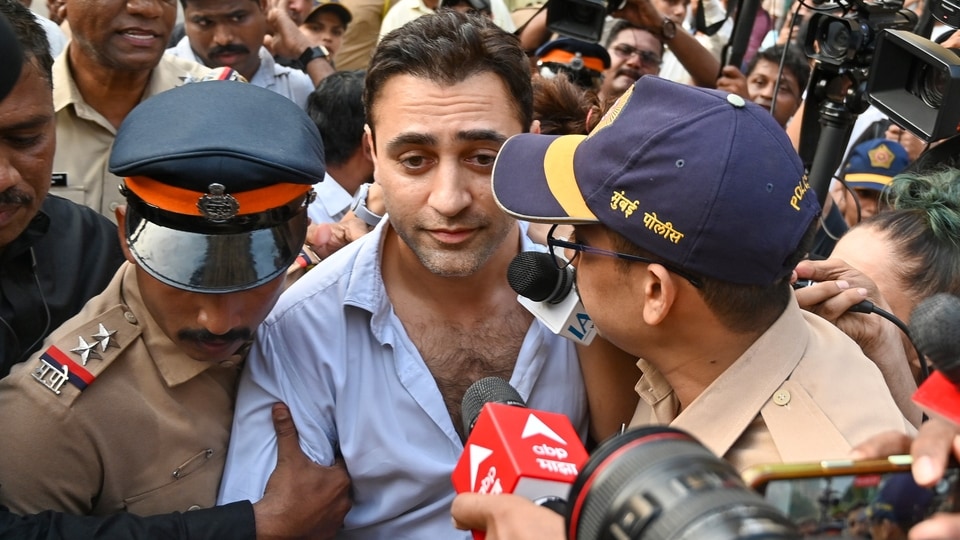
The FRRO, an agency under the Ministry of Home Affairs (MHA), warned Khan that failing to comply with the directive would make him liable for criminal prosecution under immigration laws.
The notice, issued on Thursday, has divided legal experts over the Union government's powers to deport the actor for participating in a peaceful public demonstration, and the legal remedies available to him
The Mumbai demonstration
On October 10, Khan joined a protest at August Kranti Maidan organised by Mahatma Gandhi’s great-grandson, Tushar Gandhi, supporting a campaign by Citizens for Justice and Peace (CJP) demanding the resignation of chief election commissioner Gyanesh Kumar.
Local police detained several participants, including Gandhi, Khan, his partner Lekha Washington, mother Nuzhat Khan, and cousin Zayn Marie, stating that the demonstration lacked prior police permission.
Speaking to reporters before his detention, Khan said, “I am here as a citizen, to see why freedom of movement has been restricted and why people’s voices are being oppressed.”
The law
Five days after the demonstration, the FRRO sent Khan a notice under the new Immigration and Foreigners Act, which took effect on September 1, 2025.
The legislation, which consolidated India’s immigration laws and strengthened provisions governing the entry, stay, and departure of foreign nationals, replaced four legacy statutes: the Passport (Entry into India) Act, 1920; the Registration of Foreigners Act, 1939; the Foreigners Act, 1946; and the Immigration (Carriers’ Liability) Act, 2000.
The FRRO notice invoked two primary provisions empowering the executive to deport foreign nationals:
Section 7(2)(c): Empowers the Union government to issue directions prohibiting, regulating, or restricting the entry, presence, or continued stay of foreign nationals in India.
Section 29: Authorises the removal of a foreigner for contravention of any provisions of the Act, breach of visa/OCI conditions, or upon an adverse security report.
Legal experts divided: Sovereign rights vs free speech
Former Punjab special chief secretary KBS Sidhu said fundamental rights under Article 19 do not extend to foreign nationals.
"Cine star Imran Khan holds an American passport and an OCI card. As a person, he is protected by Articles 14 and 21, which guarantee equality before the law and personal liberty, but the freedom of speech and assembly under Article 19 belongs to Indian citizens alone," Sidhu said. "If he has breached the conditions of his stay, the Union home ministry's immigration machinery, acting on the Mumbai Police's report, is well within the law and India's sovereign right to ask him to leave."
Senior advocate Majeed Memon, a former Rajya Sabha MP, disagreed, contending that the government's case against Khan is weak.
"How can Imran be a threat to the administration? He was one among thousands of people who gathered peacefully," Memon said. "Without any specific allegation against him, his mere presence in the crowd should not cause restlessness for the establishment. The government panicked because he happens to be a public figure. He can challenge this in a court of law—unless there are specific findings that he breached the law, he cannot be made to leave India."
Advocate Ankur Sharma of the Jammu and Kashmir High Court noted that foreign nationals are expected to refrain from political activity. "As a foreign national, he should not be indulging in any protest or campaign against the Indian government. This constitutes a breach of the rules under which he was granted OCI status," said Sharma, who represents the Pakistani wife of a former CRPF constable ordered to leave India upon the expiry of her visa, an order subsequently stayed by the Jammu and Kashmir High Court.
A Delhi-based defence lawyer, speaking on the condition of anonymity, added that an adverse intelligence report from the Mumbai Police Special Branch would strengthen the government's stance in court: “The Special Branch likely submitted an adverse report. If challenged, the FRRO will present that report in court, making Khan's legal position difficult despite his participation being peaceful.”
Legal challenge planned
Khan’s counsel, advocate Parvez Memon, senior partner at MZM Legal, said the legal team is drafting a writ petition to challenge the FRRO order before the Bombay High Court on Friday.
Khan was born in 1983 in Wisconsin, USA, to Nuzhat Khan, cousin of film star Aamir Khan, and California-based software engineer Anil Pal. He was granted Overseas Citizen of India (OCI) status under the Citizenship Act, 1955, which allows him a lifelong multiple-entry Indian visa.
Khan made his Bollywood debut in 2008 with Jaane Tu... Ya Jaane Na and subsequently starred in hit films including I Hate Luv Storys, Mere Brother Ki Dulhan, and Delhi Belly.


