
 E-Paper



Road to a Naxal-free India
This article is authored by Anuj Gupta, MD, BowerGroupAsia.

 Prefer HTon Google


In 2006, Prime Minister Manmohan Singh publicly acknowledged Naxalism as the single biggest internal security threat the country had ever faced. At its peak, the Red Corridor stretched from Nepal's border down through Bihar, Jharkhand, Chhattisgarh, Odisha, and Andhra Pradesh, covering 40% of the country's landmass.
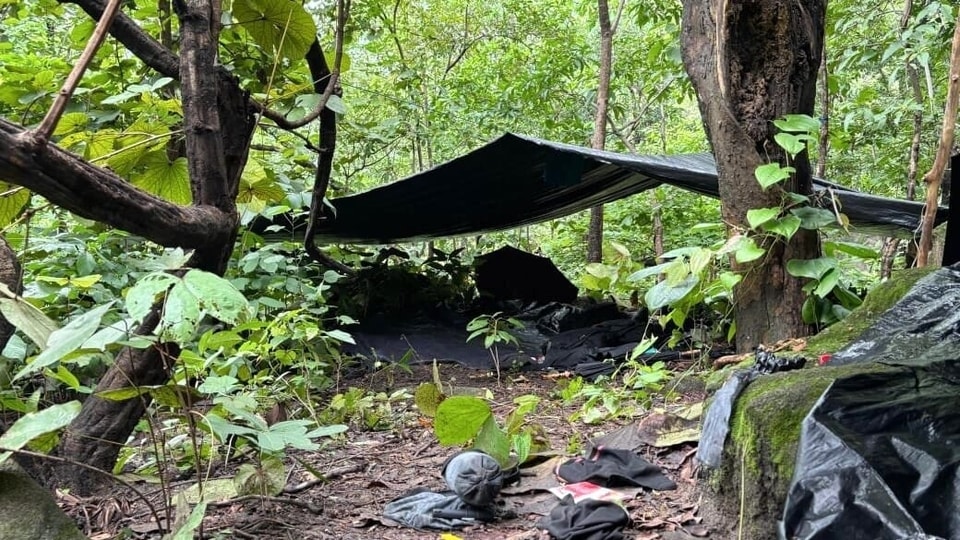
Between 2004 and 2014, Naxal violence claimed 1,824 security force personnel and 4,684 civilians. The Dantewada ambush of 2010 killed 76 Central Reserve Police Force jawans in a single afternoon. The response was fragmented, reactive, and ultimately ineffective. Security forces operated without coordination, intelligence was rarely shared, and the movement survived each setback by regrouping in territory the State could not easily enter.
What followed was not a single breakthrough. It was a change in how India chose to fight.
The strategy was rooted in three principles: Dialogue, security, and coordination. Central agencies, state governments, and security forces were brought into alignment. The response shifted from reacting to attacks to dismantling the entire ecosystem that kept Naxalism alive, its leadership, its finances, and its hold on territory.
Since 2019, 40 senior commanders were removed from the field, including two successive general secretaries of the movement. As leadership thinned, the movement lost its ability to plan, coordinate, and execute.
Operations Octopus, Double Bull, and Chakrabandha secured crucial Red Corridor zones and liberated areas that had been under Maoist control for nearly three decades. The People's Liberation Guerrilla Army was forced to abandon its core area in Bijapur-Sukma, territory it had held for decades. When the movement launched its tactical counter-offensive campaign in 2024, its last attempt to reclaim ground, it failed completely.
The National Investigation Agency pursued the financial networks sustaining the movement. Assets were seized, support systems identified, and the infrastructure that had kept the movement alive for decades began to give way.
Alongside the operations came a physical reclaiming of territory that had long provided cover for insurgent activity, removing the geographical advantage the movement had relied on for decades.
Over 12,000 km of roads were laid, 594 fortified police stations constructed, and 406 new security camps established across affected regions. Mobile towers ended the communication blackouts that had shielded Maoist movements for years. For communities that had lived under the shadow of the movement, the change meant the possibility of a life without fear
The Bastariya Battalion was raised, a specialised unit of the Central Reserve Police Force. Its recruits drawn from Bijapur, Sukma, and Dantewada, from the very communities that had lived inside the insurgency for a generation. Young men and women from the movement's own heartland, who were ready for a different future, chose to build one.
Rehabilitation programmes ensured financial assistance, vocational training, and guaranteed employment made the choice to leave easier and more practical for cadres.
The surrenders came in increasing numbers. By 2024, 2,714 cadres had surrendered. Papa Rao, one of the movement's last standing senior commanders, surrendered along with 17 Maoists on March 25. The test will be whether surrendered cadres remain in the mainstream. Recidivism is a risk that post-insurgency contexts have historically struggled with, and India will need to remain attentive to this.
What began as isolated operational successes became a pattern, then an irreversible momentum. Out of the 126 districts that once defined the Red Corridor, none remain. Sustaining what has been achieved will require the same political will and institutional coordination beyond the declaration as it took to get here.
The challenges ahead, however, still merit attention. Rehabilitation of surrendered cadres is underway, but social reintegration into communities that lived through years of insurgency will take time and continued commitment. The ideological front presents a parallel challenge. Those who continue to propagate Left-wing extremism, whether through political discourse or organised networks, will require the government to remain as coordinated and vigilant as it was during the military campaign itself.
For a nation of 140 crores, what has been achieved here is a statement about the India that is emerging, one that does not leave its hardest problems unfinished, one that meets complexity with patience and persistence, and one that does not cower from threats within or outside its borders.
This article is authored by Anuj Gupta, MD, BowerGroupAsia.


