
 E-Paper



India’s Eurovision via PM Modi’s tour
This article is authored by Rajiv Bhatia, Distinguished Fellow, Gateway House and former Indian ambassador.

 Prefer HTon Google


Prime Minister (PM) Narendra Modi’s visit to four European countries – the Netherlands, Sweden, Norway, and Italy – from May 16–20 (preceded by a stopover in the UAE) has underscored the growing proximity between India and Europe. The third India-Nordic summit on May 19 in Oslo was a valuable opportunity to connect with leaders of three other nations – Finland, Iceland, and Denmark. India’s pivot to Europe is now in full bloom.
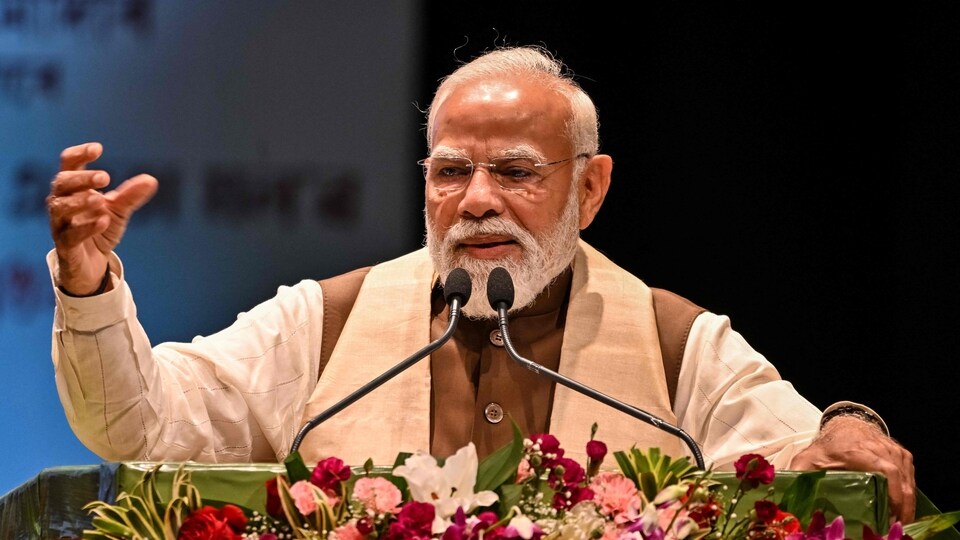
Traditionally, India’s ties with Western Europe have been a blend of the sweet and the bitter, marked by appreciation for Europeans’ numerous achievements and disdain for their colonial past, which is perceived as concealing their superiority complex. This began changing in a rapidly transforming geopolitical context, post-Ukraine, and especially as the second term of the Trump administration commenced. Seeds sown during the rare visit of the European Union (EU) College of Commissioners to Delhi, in February 2025, turned into green shoots. Finalisation of negotiations for the India-EU Free Trade Agreement (FTA) in January 2026 was a crucial achievement. During the eight months from October 2025 to May 2026, a long procession of VVIP visits from Europe to India took place. This included the top leaders of the UK, France, the EU, Germany, Finland, and Cyprus. This established Europe as a keen suitor. Modi’s visit was a well-conceived move, marked by ample responsiveness.
Understandably, there were many common features in PM Modi’s programmes in the four countries. Attention, however, should be paid to the special characteristics and outcomes of his tour in each country.
In the Netherlands, the principal agreement was to elevate the ties to the level of a Strategic Partnership. Leaders adopted a roadmap to deepen structured cooperation across diverse areas, including defense and security, critical and emerging technologies, climate, energy transition, and people-to-people connections. Special importance was attached to WAH, which covers water, agriculture, and health sectors. A major development was the signing of an MOU between Tata Electronics and the Dutch giant ASML to support semiconductor fabrication in Gujarat. Sixteen other bilateral documents were also signed.
On the political side, the Dutch government decided to join the Indo-Pacific Oceans Initiative (IPOI) and co-lead the capacity-building and resource-sharing pillar, along with Germany and the EU. In a separate development, PM Rob Jetten told local newspapers that the government had concerns about the freedom and rights of the minorities in India. A senior Indian official dismissed it as emanating from those who lack an understanding of modern India.
The visit to Sweden was framed by a joint op-ed authored by PM Modi and Swedish PM Ulf Kristersson, which asserted: “Our partnership reflects shared conviction that industrial transformation can be driven through collaboration between governments, industry, innovators, and financial institutions.” Defence cooperation has been on a growth trajectory, with the parties moving beyond a buyer-seller relationship. Modi stressed the significance of combining Sweden’s strengths in innovation and sustainability with India’s scale, talent, and growth momentum “to create solutions for the 21st century.”
The two governments agreed to elevate bilateral relations to a Strategic Partnership. A joint plan for 2026–30 to implement the strategic partnership was adopted. It has four pillars: strategic dialogue for stability and security; next-generation economic partnership; emerging technologies and trusted connectivity; and ‘Shaping Tomorrow Together – People, Planet and Resilience'.
At the European business roundtable in Gothenburg, addressed by the two PMs, the President of the European Commission, Ursula von der Leyen, made a fervent plea for an investment pact between India and the EU, calling it “a missing piece of the puzzle” in bilateral cooperation plans.
Modi’s visit to Norway, the first visit by an Indian PM in 42 years, drew considerable attention. Official talks resulted in upgrading the bilateral relationship to a Green Strategic Partnership, like the one India had established earlier with Denmark. It would cover climate action and energy transition, blue economy and Ocean governance, research and higher education, Arctic and polar cooperation, and talent mobility. Trade would be expanded under the Trade and Economic Partnership Agreement (TEPA) signed in March 2024 between India and the European Free Trade Association (EFTA), comprising Norway, Iceland, Switzerland, and Liechtenstein.
Modi observed that, at a time when uncertainty and turbulence prevailed due to the conflicts in Ukraine and West Asia, India and Europe were poised to enter “a new golden era of their relations.” Welcoming the Norwegian decision to join IPOI, he stressed that, as the two major maritime nations, they would strengthen their cooperation in the marine economy and maritime security.
Norwegian PM Jonas Gahr Store conceded that there were differences between the two countries on some issues, such as Ukraine, but as respectful democracies, they would handle them “in ways that live up to democratic standards.” Besides, Norway hosted the third India-Nordic summit, at which a series of important decisions were made. Leaders of five Nordic nations – Norway, Sweden, Denmark, Finland, and Iceland – participated.
At the media event addressed by the two PMs, Helle Lyng, a young Norwegian journalist, tried to ask PM Modi a question, in violation of press protocol. Later, she threw up a provocative question – “Why should we trust you (India)?” at the media briefing. A senior Indian official provided a comprehensive and somewhat passionate answer. He received a mix of bouquets and brickbats on social media. This episode showed how much public diplomacy and diplomatic communication have changed in our age, dominated by X, Facebook, and Instagram.
The last stop in the European tour was Italy, representing one of the ‘Big Four’ countries, the others being the UK, France, and Germany. Four key points are noteworthy about the discussions in Rome.
One, the two governments have been working to implement the joint strategic plan for 2025–29. It was now decided that the foreign ministers would lead the review mechanism. India-Italy relations were elevated to a Special Strategic Partnership. The visit resulted in 16 outcomes. Two, the prime ministers “reaffirmed their commitment” to cooperate on the India-Middle East-Europe Economic Corridor (IMEC). Based on preliminary discussions to date, the first IMEC ministerial meeting in 2026 is expected to take “concrete steps to advance this initiative.”
Three, there was agreement to work together on trilateral initiatives with African countries as partners in areas like technology, agriculture, education, and health care. Four, while noting much convergence in their views on Ukraine and the Gulf conflict, the two leaders emphasised the importance of cooperation in such fora as the UN and G20 “to protect multilateralism and uphold a rules-based international order.”
Clearly, PM Modi’s visit to Europe has been productive and successful. It also reveals much about the changing attitude of European governments towards India.
But the European media is still lagging. Eric Solheim, a former Norwegian minister, asserted that not a single Norwegian journalist closely followed India, “the world‘s most homegrown and impressive democracy.” His conclusion: “We are entering the Asian century. Unless we Europeans become more curious to civilisation, history, politics, and economy in the Global South, we will become big losers of history.”
(The views expressed are personal)
This article is authored by Rajiv Bhatia, Distinguished Fellow, Gateway House and former Indian ambassador.


