
 E-Paper



Making the India-EU trade deal work for Tiruppur and Moradabad
This article is authored by Komal Karwa, public policy researcher, Policy, Politics and Governance Foundation (PPGF) and South Asia Monitor.

 Prefer HTon Google


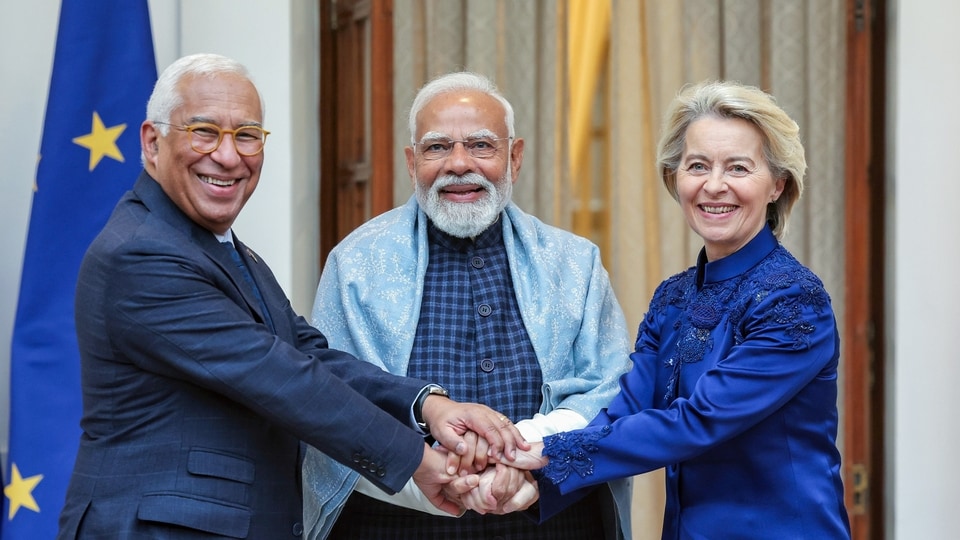
On January 27, 2026, at the 16th India–EU Summit in New Delhi, Prime Minister (PM) Narendra Modi and European Commission President Ursula von der Leyen announced the conclusion of the India–EU free trade agreement, nearly two decades after talks first began. It is a landmark achievement. Under the deal, more than 99% of India's exports to the EU by value will receive preferential entry, while the EU will remove or reduce tariffs on 96.6% of its goods exports to India, according to Down To Earth. The two sides are expected to sign the agreement on December 16, and it could come into force in early 2027.
For Indian textiles, leather, engineering goods, marine products and pharmaceuticals, this is a significant opportunity. The next task is to make sure that the businesses which stand to gain the most, many of them small firms in clusters such as Tiruppur, Moradabad, Ludhiana and Rajkot, are ready to use it.
India's experience with earlier trade agreements offers a useful lesson. A study by the Global Trade Research Initiative (GTRI), released in June 2026, found that only 20 to 30% of India's eligible exports actually claim the tariff benefits available under its trade agreements, compared with 60 to 70% for partner countries exporting to India. The reasons are practical. For many small exporters, the cost and effort of proving where a product was made, and of completing the necessary certification, can outweigh the duty saved.
This matters because trade agreements work best when both sides use them fully. If Indian firms can raise their use of the EU deal well above past levels, the agreement will deliver the export growth and jobs it promises.
The most important rules Indian exporters will face in Europe are not tariffs but standards, and the biggest of these concerns carbon. The EU's Carbon Border Adjustment Mechanism (CBAM) entered its definitive phase on January 1, 2026. It applies to imports of steel, aluminium, cement, fertilisers, electricity and hydrogen, and requires importers to account for the carbon emitted in making these goods.
Indian producers are already adjusting. According to GTRI, India's steel and aluminium exports to the EU fell by 24.4% in 2024-25, even before any charge was levied, as European buyers prepared for the new system. The reason lies partly in emission levels. Indian steel production emits about 2.54 tonnes of carbon dioxide per tonne of crude steel, above the global average of about 1.91 tonnes.
Accurate data will be the key to managing this. Firms that cannot report their actual emissions must use EU default values, which carry a mark-up of 10% in 2026, rising to 20% in 2027 and 30% from 2028. The European Commission has also proposed extending CBAM to about 180 downstream products made from steel and aluminium from 2028, which could bring many engineering and auto-component exporters into its scope.
The agreement provides a helpful starting point. The EU has offered €500 million over two years to support India's industrial transition, and has given an assurance that any CBAM flexibilities granted to other countries will also apply to India. Both sides have agreed to cooperate on recognising carbon pricing systems and emission verifiers. These provisions give India a strong base on which to build.
First, India should build a trusted system for measuring and verifying industrial emissions. Plants that can submit verified data will avoid the default mark-ups and pay less. This will need a larger pool of accredited verifiers and a credible national registry, ideally linked to the Indian Carbon Market. The first joint review of the agreement could be used to agree clear timelines for mutual recognition.
Second, India would benefit from regular, public reporting on how well its trade agreements are being used. A simple sector-by-sector picture of which preferences are being claimed, and which are not, would help policymakers spot problems early and help industry bodies target their support.
Third, help must reach exporters where they work. A garment maker in Tiruppur or a brassware exporter in Moradabad is more likely to use the agreement if there is a trained adviser at a district export hub, working with the state government and export promotion councils, who can explain rules of origin and carbon reporting in simple terms.
Fourth, the €500 million in EU support could be directed where it will make the most difference. Shared emissions-monitoring facilities in small-industry clusters, supported by concessional finance through institutions such as the Small Industries Development Bank of India, would help many small firms at once, rather than a few large ones.
There are encouraging signs that India is learning to make its trade agreements work. The India–UK Comprehensive Economic and Trade Agreement entered into force in July 2026, and the India–New Zealand agreement took effect on October 20. Each is an opportunity to test and improve the support systems that exporters need.
India's negotiators showed great patience in securing the EU agreement. The same steady effort, now directed at helping small firms meet Europe's standards, can ensure that the benefits reach factory floors across the country. When December 16 arrives, the signing will mark not the end of a long journey, but the beginning of a new and promising one.
(The views expressed are personal)
This article is authored by Komal Karwa, public policy researcher, Policy, Politics and Governance Foundation (PPGF) and South Asia Monitor.


