
 E-Paper



New Delhi Declaration: Turning point for women-led development in BRICS
This article is authored by Ruby Sinha, President, BRICS CCI WE (Women Empowerment) and Founder, sheatwork.

 Prefer HTon Google


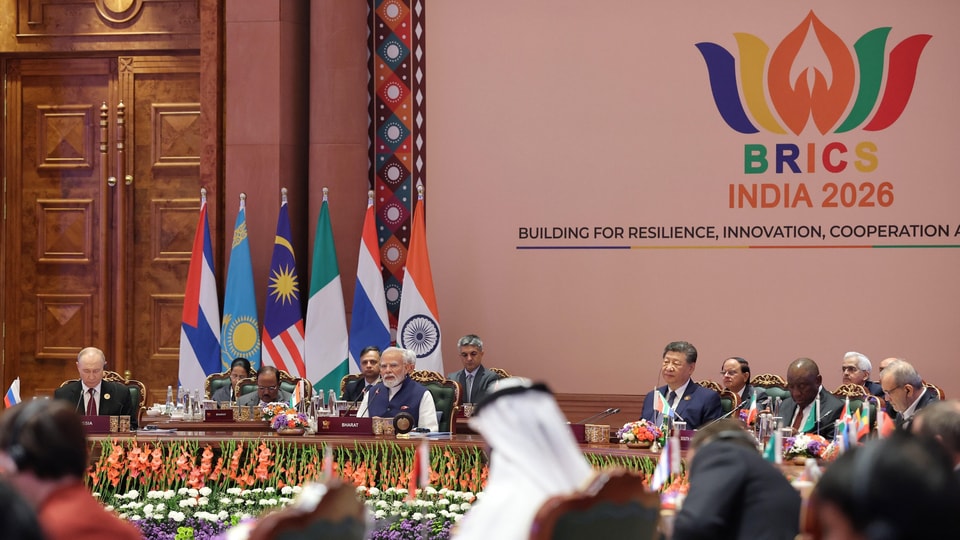
The BRICS Summit which concluded on September 13 was notable for several issues. The New Delhi Declaration which reflects Prime Minister Narendra Modi's consistent commitment to place women at the centre of the growth outlined the framework for the trajectory of the grouping over the next decade. And for the first time, it recognised that women’s involvement and leadership roles in the economy has to be one of the issues centre-stage to the vision of BRICS going forward, it can no longer by on the peripheries.
That is not a shift in name only. It is the result of the painstaking and thorough work done by women across the BRICS economies. They are the ones who have made sure that inclusive growth means something in which everyone participates and no one is excluded on the basis of socio-economic status, class, geography or gender parameters.
It welcomes the outcomes of the BRICS Women Ministerial held in Kochi earlier this year, but this goes beyond mere diplomatic words. It was a signal that BRICS as a prominent Global South grouping recognises women’s role as leaders, decision-makers and drivers of economic growth and social transformation. This makes it very clear that women are a vital engine pulling the BRICS engine forward and that without their participation, BRICS cannot hope to bring about positive change through a grouping which encompasses almost half of humanity.
It recognised the crucial role that women play in governance, financial and digital inclusion, capacity-building, skill development and entrepreneurship. Add to that we now have recognition of the need for greater women’s participation in climate action, food security and the women, peace and security agenda. This suggests that there is growing realisation in BRICS that women cannot be reduced to mere beneficiaries of growth but must be considered as decision-makers and authors of economies.
The next frontier is ensuring women's leadership in innovation and science gets institutional recognition within BRICS. Development that does not fully mobilise the talent of women in science, technology and enterprise is development that is running on half empty. Women Empowerment in Tech represents a powerful force for positive change - driving advancements, creating economic opportunities and inspiring future generations. Across the BRICS bloc, women are increasingly visible as entrepreneurs, scientists and innovators, yet leadership in the institutions that shape innovation and funding bodies, remains disproportionately male. Women continue to be underrepresented in tech with only around 28% of leadership positions globally. Women-led startups receive less than 2% of global venture capital funding, and hold approximately 15.4% of partner or decision-making roles at VC firms with only 4.9% of VC firms have a majority of female partners.
The shift from margins to mainstream requires a focused institutional design, not just visibility. What is needed is access to capital for women-led ventures, networks that connect them across borders, and policy frameworks that treat their contribution as a crucial cog in the wheel of economic strategy.
BRICS CCI WE’s Women in Innovation, Science & Entrepreneurship (WISE) initiative built on three core pillars of innovation & collaboration, access to funding, and policy advocacy has already found recognition among countries like South Africa and Brazil and offers exactly the kind of framework BRICS could build on.
I want to be very clear about what has been achieved. It is a game changer that BRICS leaders have, in a formal Summit document, named women as drivers of growth rather than recipients of welfare. It is significant that a Women Ministerial process now has a recognised place in the BRICS calendar. These are the building blocks of institutional change, and they came about through the perseverance and dedication of women in the BRICS ecosystem.
But the measure of the New Delhi Declaration will not be the sentiments expressed or the language it contains — it will be the architecture, structural changes and financing that follows from it. New Delhi has set the direction. What comes next must be to institutionalise these outcomes of the 18th BRICS Summit.
(The views expressed are personal)
This article is authored by Ruby Sinha, President, BRICS CCI WE (Women Empowerment) and Founder, sheatwork.


