
 E-Paper



Why migration may matter more than fertility
This article is authored by Rajan Gupta, executive director, Canonicus Capital.

 Prefer HTon Google


Delhi-National Capital Region’s (NCR) residential market is being shaped by a demographic paradox: Slower natural household formation is coinciding with strong housing demand. Data cited in Canonicus Capital's Annual Partner Letter 2026 show Noida's average residential prices rising 125% between 2019 and Q2 2026, while Gurugram recorded a 117% increase. The distinction matters because the next phase of NCR's residential market may depend less on population growth itself and more on who is moving into the region, what those households can afford and whether developers can build for that demand.
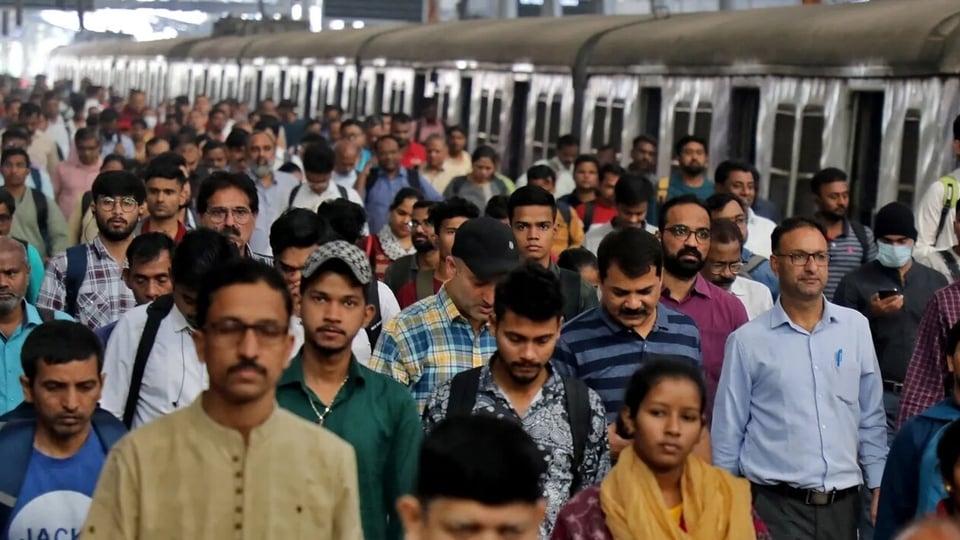
For decades, residential demand was closely linked to population growth and urbanisation. That framework is becoming less sufficient. The demographic question is increasingly about who lives in NCR—their age, income, household structure and mobility.
A region can experience slower natural population growth and still generate housing demand if it attracts economically productive households from elsewhere.
How fast will household formation slow? That is where fertility becomes important. Delhi's 1.2 fertility rate, cited in the Annual Letter, is a long-term structural signal. Fewer births eventually mean fewer naturally formed households. But fertility operates over decades, while migration can change residential demand much faster. This creates the central tension for NCR: Natural household formation may be slowing even as incoming households continue to support housing demand.
The sustainability of that demand depends on whether migrants establish durable roots—families developing longer-term economic and social ties to the region and eventually becoming permanent households.
Not all migration creates the same housing demand. A senior professional relocating to Gurugram may buy a ₹5 crore apartment. An Information Technology (IT) employee moving to Noida may eventually target a ₹1–1.5 crore home. An industrial worker moving towards Greater Noida may seek a more affordable home closer to employment. These are fundamentally different demand pools.
The critical variable is therefore not migration alone, but the income profile of the migrant.
This makes affordability increasingly important. A household may be economically drawn to NCR but still find ownership beyond its immediate purchasing power. The sustainability of residential demand will therefore depend not simply on the number of migrants entering the region, but on whether their incomes can support the housing being supplied.
The central question is whether NCR can continue attracting economically productive households whose purchasing power supports its increasingly expensive housing stock.
Developer execution: Demand is only half the equation. The other half is supply—and this is where the residential market is becoming more selective. Luxury developments such as DLF's The Dahlias demonstrate the depth of high-end demand, while projects such as Prestige's Ghaziabad development point to demand at substantially lower ticket sizes. These are not competing narratives. They illustrate the same principle: Developers must identify the right income cohort and match the product to its purchasing power. The Annual Letter also highlights pressure on project economics from rising construction costs, noting that the West Asia conflict pushed certain input costs up by more than 10%.
In a rising market, appreciation can conceal poor execution. In a selective market, it cannot. Balance-sheet strength, construction discipline, appropriate pricing and regulatory execution increasingly determine whether residential projects create value. That risk is not uniform across NCR. Gurugram operates under Haryana's framework, while Noida and Ghaziabad fall under Uttar Pradesh. Differences in approvals, development charges and transaction costs can materially affect project timelines and economics.
What could derail the cycle? The outlook is not without risks. Elevated mortgage rates could push EMIs beyond household income growth and delay ownership. Regulatory delays could disrupt otherwise viable projects, while developers with weak liquidity could struggle even where underlying demand remains healthy.
The point is not that NCR faces a uniform downturn. The next phase is unlikely to reward every location, product or developer equally.
The four forces ultimately converge on one question: Where will NCR's next generation of residential demand come from? Falling fertility points to slower natural household formation. Economic migration can offset part of that pressure—but only if incoming households have the incomes to support NCR's rising housing costs and establish durable roots.
For developers, the test is no longer simply owning land in the right location. It is identifying the right household, pricing the right product and executing through changing costs and market conditions. That is the central message emerging from Canonicus Capital's Annual Partner Letter 2026: NCR's next residential cycle is likely to be defined less by broad-based price appreciation and more by the intersection of demographics, purchasing power and execution.
The question is ultimately not simply how many people NCR will have, but who will move here, what they can afford—and which developers can build what they need.
(The views expressed are personal)
This article is authored by Rajan Gupta, executive director, Canonicus Capital.


