E-Paper



Kargil Vijay Diwas | Actor Nikita Dutta reflects on ‘extremely tense days’ during Kargil War
For actor Nikita Dutta, her family’s deep roots in the Indian armed forces, days like Kargil Diwas evoke a powerful mix of overwhelming emotions

 Prefer HTon Google


For actor Nikita Dutta, her family’s deep roots in the Indian armed forces, days like Kargil Diwas evoke a powerful mix of overwhelming emotions and patriotism. Having been just six years old during the Kargil conflict in 1999, Nikita vividly recalls the tense atmosphere.

“Known as Operation Vijay, we were based in Mumbai, and my father was posted at the Naval Dockyard, Mumbai,” Nikita explains. “The Navy during Kargil Conflict was basically responsible for blocking ports of Pakistan, specially Karachi. I remember him coming back very late or sometimes not even returning back home. My elder sister would still put a brave face on but I would often feel scared and cry. I was in a navy school where there were only children from the armed forces. Those days were extremely tense. Every time my father came back home was a huge relief for us.”
Nikita shares that for families of soldiers, wars and conflicts represent the toughest phase. “The stories we got to hear about our young officers and jawans who conquered those mighty peaks of Himalayas, and laid down their lives defending them filled us with pride,” she says. “But as a child I do vaguely remember those days being very gloomy. There would always be news about someone getting martyred. There was an emotion which is a mix of being brave but also anxious because you knew anything can happen.”
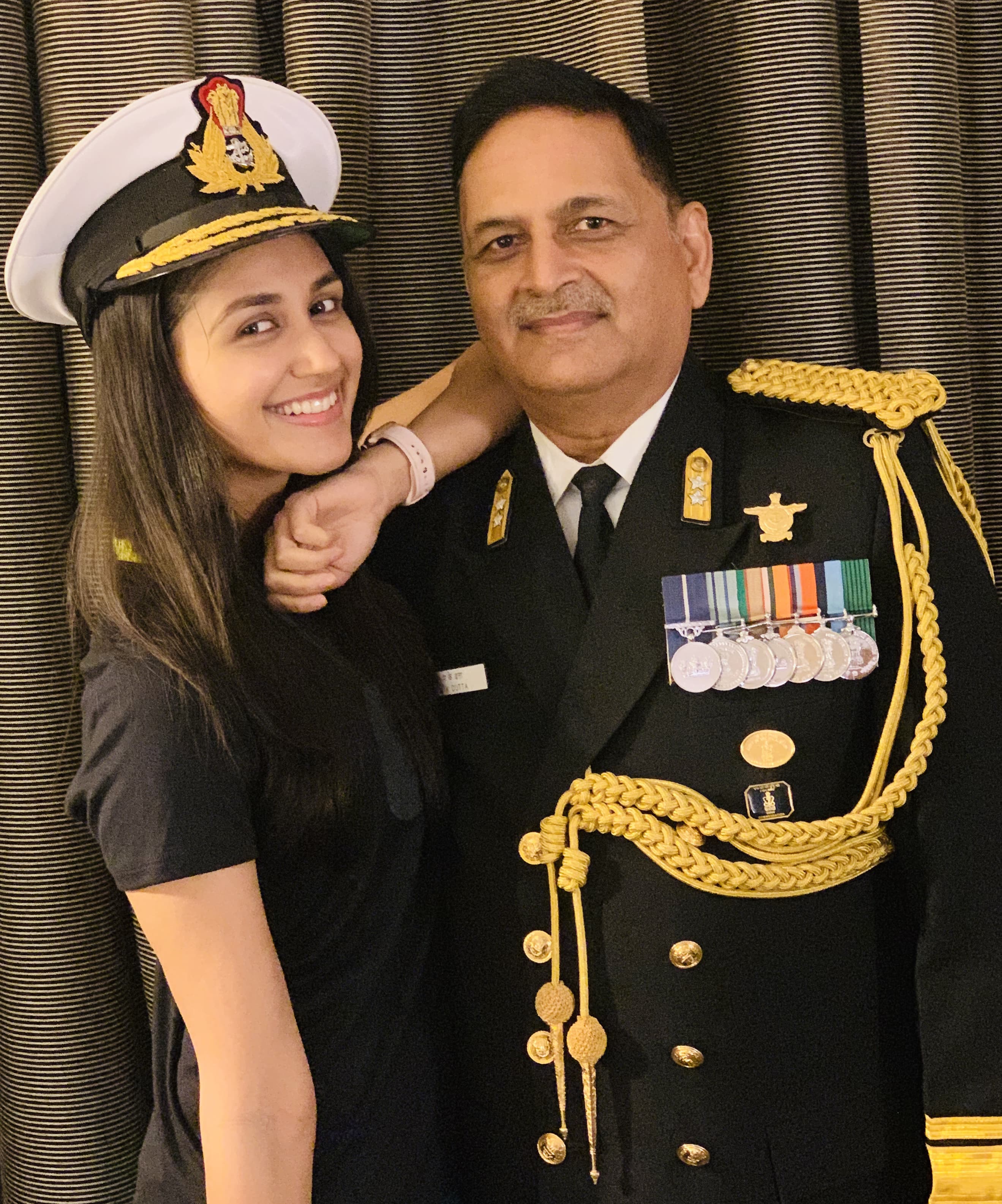
The actor further elaborates on her father’s significant role during that period. “My father, Rear Admiral A K Dutta (retd), who as a naval architect, has been responsible for the design, building and maintenance of warships and submarines,” she explains. “He was a part of a technical branch trained in India and abroad to undertake these tasks. So, per se that’s not a fighting arm of the Indian Navy but a crucial one in ensuring that our warships remain fighting fit, always.”
On the Indian Navy’s broader role, Nikita emphasises, “We know 80 to 90% trade of a country takes place through sea routes, and during conflict or war situations, the first action is always to cut the supply chain of your adversary. That is what the Indian Navy did during Kargil and did very successfully. The role of the organisation where my father worked was to ensure that all our ships and submarines are fit enough for long deployments out at sea, and in case any problem arises, to address it in double time.”
Not only her father, but Nikita also shares that her father’s brother, her uncle, was also part of the conflict. “My uncle Major General SK Dutta belonged to the regiment of artillery, which played a significant role during Kargil. So we as a family were completely connected with war scene back then,” she states.
For Nikita, Kargil Diwas holds significant meaning, especially for her father and uncle who served. “I feel once you have grown up in the environment of armed forces, every victory or loss attached to it feels personal. And a day like the Kargil Diwas is exactly that,” she quips. “What makes it etched in our memories is that my father was awarded the Nausena Medal. Being a commander he was a part of the submarine overseeing team so he was also awarded a medal for Operation Vijay for being involved in the operations on the technical front.”