
 E-Paper



Drumming up the spirit of Ganesh Chaturthi: Inside Maharashtra's Dhol Tasha pathak tradition
As the festival nears, Dhol Tasha Pathaks enter their busiest stretch. But behind the thunderous beats is a tradition that takes commitment to master

 Prefer HTon Google


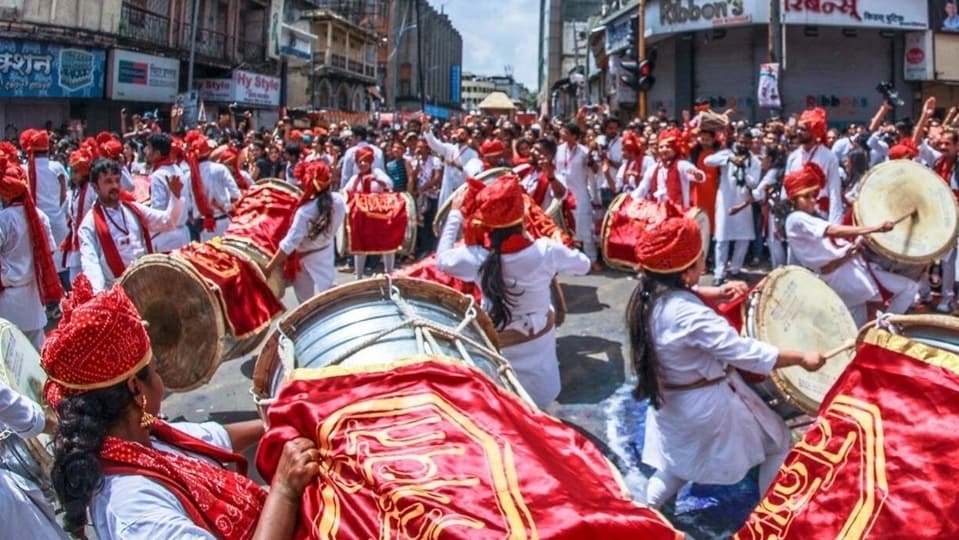
The reverberating beats of the dhol and tasha are integral to Ganesh Chaturthi celebrations. With the festival now just over two weeks away, Dhol Tasha pathaks across Maharashtra are stepping up preparations for the processions. But beyond the spectacle of hundreds of players performing in sync, the tradition has a long history. From its roots in Pune’s schools to the pathaks attracting professionals and actors, here’s a look at what goes behind becoming part of a Dhol Tasha pathak.
Dhol Tasha: What is it and where did it originate?
The dhol and tasha are traditional percussion instruments from Maharashtra. The dhol is a large, double-headed cylindrical drum suspended around the player’s neck and played with two different sticks to create a layered sound. Traditionally made of hollowed wood with leather heads, modern dhols often feature steel or brass bodies with synthetic heads.
The tasha is a shallow, kettle-shaped drum held at waist level and played with two thin, flexible bamboo or cane sticks. It produces a high-pitched sound that complements the deeper beats of the dhol.
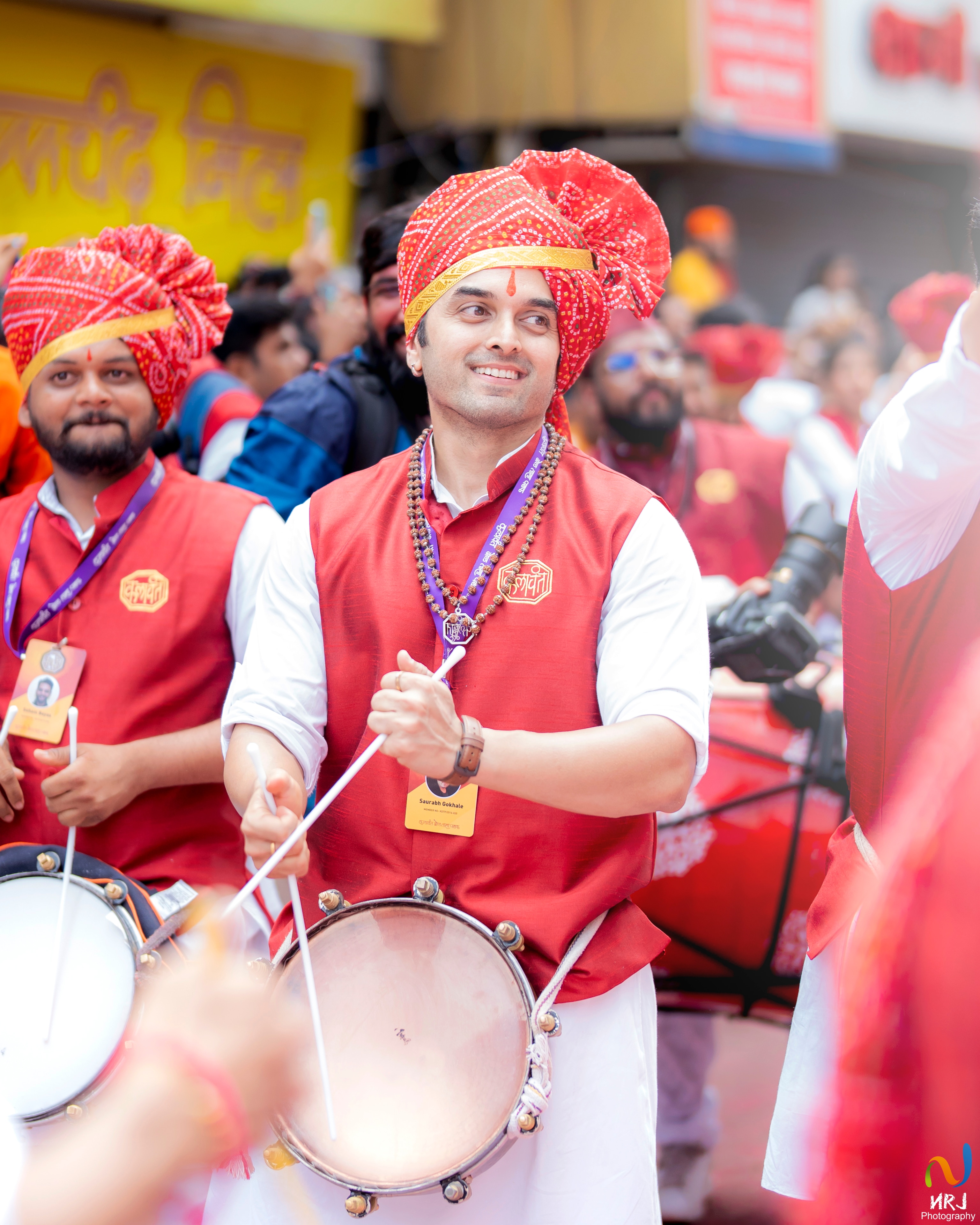
While variations of the dhol and tasha have existed in rural Maharashtra for centuries and were traditionally played at village festivals, the organised and disciplined pathak format seen today took shape in Pune in the 1960s.
In 1964, Dr Vinayak Vishwanath 'Appasaheb' Pendse, founder of Pune-based educational institution Jnana Prabodhini, introduced a disciplined percussion ensemble for school students. The initiative was soon adopted by other schools, helping establish the organised pathak culture associated with Pune today.
“Appa Pendse was one of the teachers who started the Dhol Tasha culture in school, and then it was picked up by three other schools — Ramanbag, Garware Prashala, and N.U.M.V. Later, around 1999-2000, the first commercial pathak started. Till then it was limited to just the schools,” says Saurabh Gokhale, actor, Founder Member and Chairman, Kalaawant Trust.
From school groups to year-round communities
Today, Dhol Tasha has moved well beyond its school-based origins. While Ganesh Chaturthi remains the biggest season for most pathaks, several groups conduct classes and participate in performances throughout the year.
Milind Vichare, Pathak Pramukh of the Mumbai-based Vandan Dhol Tasha Dhwaj Pathak, says, “We have classes the entire year, but proper practice begins 3-4 months before Ganpati. We have basic practice on alternate days in the week for 3-4 hours, and the specific dhol tasha practice happens at weekends from 9am to 2pm.” He adds, “We perform during other religious events too, year-long, such as Navratri and Gudi Padwa,” says Vichare.
The groups are also drawing people from a range of professions and age groups. “College students, those doing jobs like doctors, policemen, government servants are among those who join," he says. Neelesh Bharankar, founder of the Tilak Nagar-based Gajashree Dhol Tasha Pathak, sees a similar mix among his members. “Most of the members are working professionals. I myself am a vice president of an IT company. Plus there are a few doctors, engineers, and college-going guys as well,” he says.
Women, too, are well represented. Both Bharankar and Gokhale say their groups have an almost equal gender split, with women making up around 50% of participants.
When actors pick up the dhol
For Gokhale and several other Marathi actors based in Pune, Dhol Tasha is a tradition they grew up with in school. Their connection to it eventually followed them into the entertainment industry, leading to the formation of Kalaawant Trust, a Pune-based group of people from the arts and entertainment industry who participate in Dhol Tasha processions around Ganesh Chaturthi.
“When we entered the entertainment industry, we got invitations from different pathaks and mandals to join them in their processions. That’s when we thought, why don’t we start our own pathak for the Ganeshotsav period?” says Gokhale.
The group was also conceived as a way of expressing gratitude to Ganesha. “Ganesha being ‘Kalechi Devta,’ meaning the deity of arts, crafts, and skills in Marathi culture, just to pay a tribute and say thanks to Ganpati Bappa, we started this activity in 2013,” he says.
What began as a small group has since grown substantially. “In 2013, we had around 10 people. Most of us were actors, singers, and a few music composers. Now we are in our 13th year and we have 300 people,” says Gokhale.
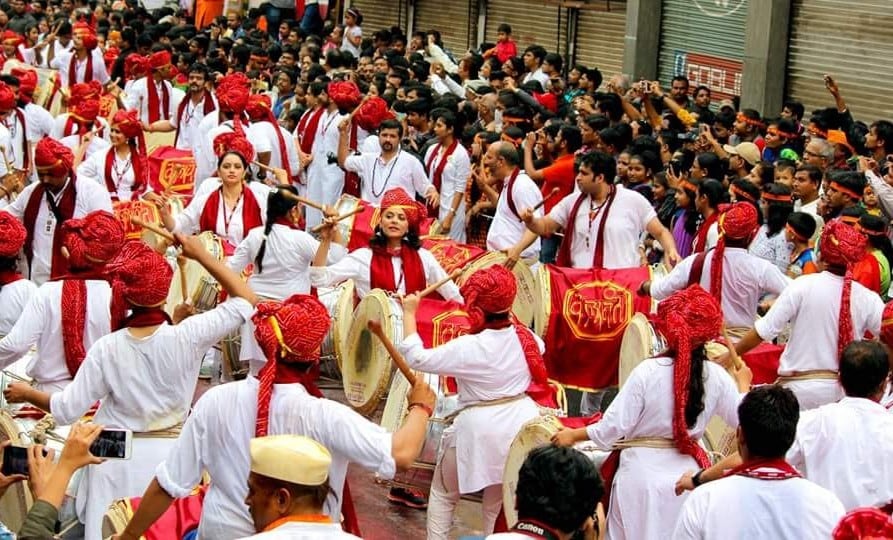
The group remains rooted in the arts and entertainment community. “Anyone related to art and entertainment can join our group. Either we approach someone if we see them interested online or the ones who are part of the group get their references to join.”
Learning the beat
For those picking up the instruments for the first time, the dhol and tasha come with different learning curves.
“If you have a knack of ‘taal’, it is not that difficult to pick up. Dhol gives beats, and the tasha gives lead. Tasha is way more difficult than dhol. For dhol, a month of practice is enough, but to perfect the tasha, one can take up to 3-4 years,” says Gokhale.
At Gajashree Dhol Tasha Pathak, beginners do not immediately get an instrument. The focus initially is on getting the technique right. “Initially, a beginner isn’t handed an instrument. First, hand movements are taught and only once that comes naturally is an instrument given,” says Bharankar.
The scale and volume of the instruments, meanwhile, can make finding a suitable practice space in Mumbai a challenge. Residential areas are often not feasible, leading groups to look for open spaces under flyovers and bridges.
Bharankar says the group practises around the Eastern Express and Western Express highways. “I practise under the Ghatkopar bridge,” he says.


