
 E-Paper



Digicam diaries: Why blurry pap shots of 2007 are back
Move over filters and perfection — grainy mirror selfies, flash glare, and retro red-eye are back — and Gen Z is making them cool again

 Prefer HTon Google


Grainy mirror selfies are back. So is the sharp flash that catches every shimmer of dewy makeup. Digital cameras — once staples of school trips and awkward farewells in the 2000s — are having a moment again. And this time, it’s Gen Z turning the flash on.
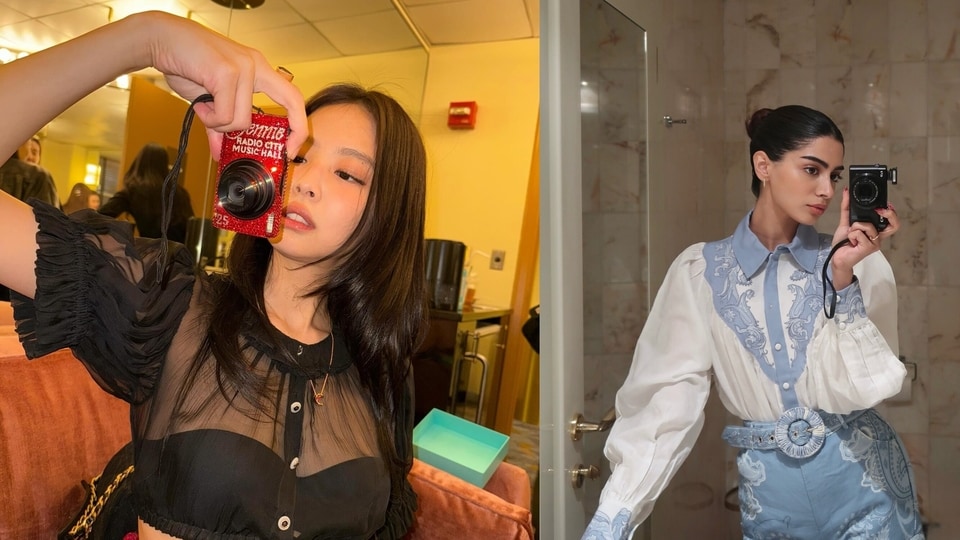
Spotted in the hands of actors Khushi Kapoor, Ananya Panday, and even businesswoman Kylie Jenner, the humble point-and-shoot has returned to social media grids. On Google Trends, searches for “digi cam” have steadily climbed from mid-2024 to mid-2025, with spikes in January and May.
Why the sudden surge? It’s the aesthetic. Think overexposed shots, soft blur, flash flares, and casually framed candids. In a sea of ultra-edited images, digicam photos feel... real.
“The flash makes everything look like a magazine from the 2000s,” says Mahima Awasthi, 24, a fashion student in Delhi. “iPhone photos are too polished. That is not what I want anymore.”
The timing pairs perfectly with fashion’s current Y2K wave. Low-rise jeans, baby tees, and butterfly clips glow perfectly under the harsh yet nostalgic built-in flash. Even fashion houses are on board: Balenciaga’s Le City bag campaign looked like a paparazzi scrapbook, while Bottega Veneta went for slow, analogue-style visuals.
A different kind of memory
It’s not just how the photos look, it’s how they make people feel. Unlike smartphones, digicams come with no pressure to edit, post, or perfect the click.
“When I use my old Canon, I just click and forget about it,” says 22-year-old design student Sarah Bhagat. “The photos feel more real. They are closer to the memory than to the idea of how I wanted to look,” she adds.
There’s freedom in the wait. Users often scroll through photos days or weeks later, and embrace blurry frames, red eyes, and awkward poses. It’s nostalgia, yes. But also rebellion against curation.
“I carry mine to parties now,” says 21-year-old Rohan Pillai, adding, “People act differently when they see it. They laugh, they stop posing. The pictures feel like real memories.”
Pointers for when you buy a digicam
Even tech influencers are fuelling the comeback, not just by posting grainy dumps, but by recommending exactly what to buy. Creator Abhinav Panwar suggests models like the Sony Cybershot DSC-W800, Canon Ixus 105 and 185, Fujifilm X100VI, and Kodak PIXPRO FZ45.
“These older cameras use CCD sensors instead of CMOS, which is why the colours and flash feel more cinematic,” he says, adding ,“You also don’t get stuck with endless settings. Just point, shoot and let the imperfections stay.”
The price of digicams starts at around ₹6,000 and can go up to several lakhs, depending on their vintage value and quality.


