
 E-Paper



2018 Kerala floods: CAG report points to flaws in state’s preparedness
The CAG report was tabled in the state assembly on Thursday and said there was a lack of real-time data on rainfall, water levels in important dams, and poor communication

 Prefer HTon Google


A Comptroller and Auditor General (CAG) report has pointed out flaws, including failure in issuing mandatory alerts when the situation deteriorated, in Kerala’s flood preparedness and dam management during the 2018 deluge that left over 480 people dead. It added that most flaws were yet to be addressed. The findings of the government auditor have prompted demands from the opposition Congress for a probe.
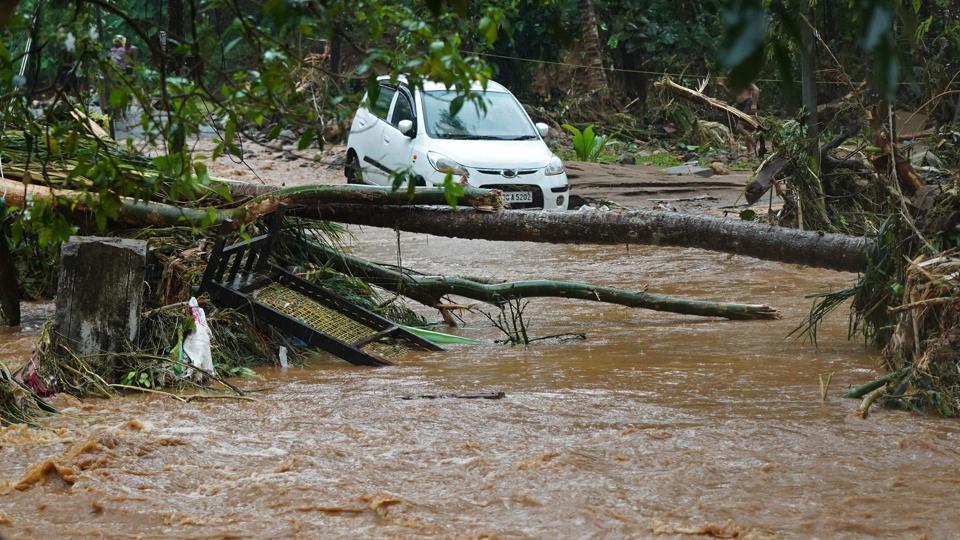
The report was tabled in the state assembly on Thursday and said there was a lack of real-time data on rainfall, water levels in important dams, and poor communication. “Communication infrastructure was non-functional in some areas including dam sites and government offices during or subsequent to the 2018 floods,” it said. It added the Kerala Water Policy 2008 was not updated in accordance with the National Water Policy.
The report said 7,000-odd works for immediate repair and restoration of damages after the 2018 floods were approved under the State Disaster Response Fund. But it added only 18% of the work was completed even after three years. “The responsible authorities failed to issue mandatory alerts or warning when the rain situation deteriorated in 2018.”
Also Read: Chennai deluge: Stories of hardship come flooding back
The report said no flood hazard map was available in the state. It added the flood susceptibility map also was not in conformation with the Central Water Commission criteria. “Siltation studies also found significant levels of siltation in many dams and works were very slow.”
The report said that only six rain gauges were in place instead of 32 and highlighted unauthorised construction and mining in hilly terrains. It added no periodic capacity surveys or sedimentation studies were done for dams.
The report comes as the state has faced flash floods and landslides for three years. In August 2019, 48 people died after a portion of a hill came down in Malappuram following heavy rains and flash floods. A year later, 74 people were killed in the Idukki district after a landslide followed by a flash flood in August 2020. In October, 42 people died after flash floods and landslides hit Kottayam and Idukki districts.
The state government faced criticism over how water was released from dams simultaneously in 2018. E Sreedharan, who has since joined the Bharatiya Janata Party, was among those who moved the high court for a probe into the lapses.
Congress sought the probe into the CAG findings saying the government, which is bound to protect lives and property, endangered the lives of people due to its inept handling. V D Satheesan, the leader of the Opposition, said it was a grave error on the part of the government and responsibility should be fixed.
“The CAG has pointed out serious errors in flood management policies. The government even failed to constitute a probe after the deaths of many people. Even after the tragedy, the government’s track records show it is least bothered,” he said. He added the state’s floods plains have not been demarcated and flood zoning legislation was not done.
M M Mani, who was the power minister in 2018, rejected most of the findings and suspected a political angle to the report. “In 2018, the state received the highest rainfall of the century. Some areas in Idukki received over 300 mm of rainfall in just two days. There is no mention of heavy rainfall in the report. It is easy to blame without understanding the ground situation,” he said. He added the government averted dam failures due to its effective handling.
Dam expert James Wilson, who is a former member of the Mullaperiyar Dam Cell, cited changing rain patterns and threats of climate crisis while calling for the need to have experts’ teams for every day dam to monitor the situation. “We need a real-time decision. And we have to expedite dam and river-basin-related works and repairs on war footing.”


