E-Paper



60% Covid cases limited to 5 states, says health ministry
Maharashtra alone has contributed 23,000, and Andhra Pradesh 10,000 to date. The number of active cases in the country stands at 919,018, close to 75% of which are in the nine worst hit states.


Nearly 60% of the Coronavirus disease (Covid-19) cases in India are from five states, according to the Union health ministry. Maharashtra alone has contributed 23,000, and Andhra Pradesh 10,000 to date.
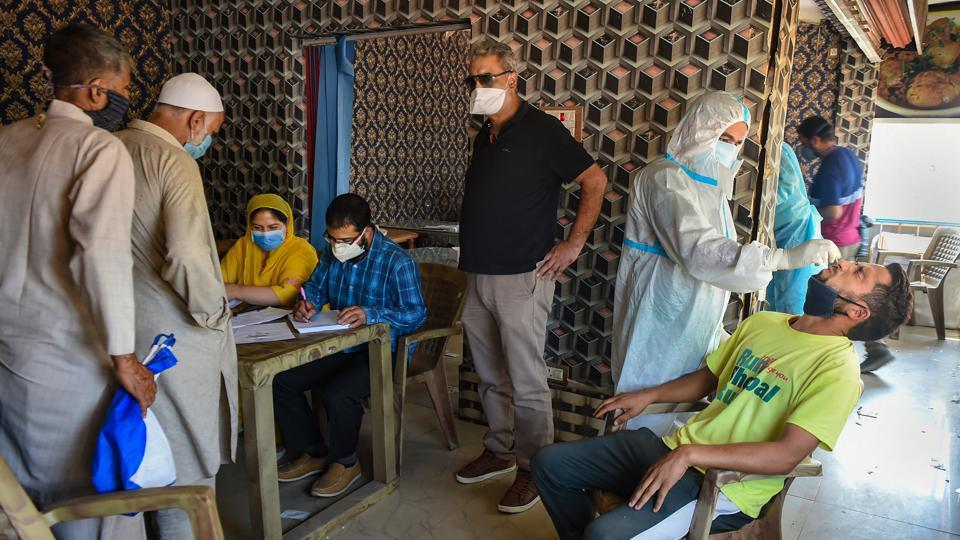
The number of active cases in the country stands at 919,018. Close to 75% of the active cases are in the nine worst hit states.
Maharashtra, Karnataka and Andhra Pradesh presently contribute about 49% of the active cases. Maharashtra is leading the tally with about 250,000 cases, whereas Karnataka and Andhra Pradesh follow with about 97,000 cases each.
On an average, at least 1,000 deaths also continue to get reported each day, with about 1,172 deaths reported on Thursday from across the country. With that, the number of deaths in the country has reached 75,062 and the death rate is at 1.68%. About 70% of the total deaths are being reported from five states.
“The infection and deaths are limited to certain states and the government is making all efforts, including rushing central teams for assistance on ground, to assist in the worst affected states,” said the ministry.
The five worst affected states in terms of Covid-19 related deaths are Maharashtra, Tamil Nadu, Karnataka, Delhi and Andhra Pradesh.
The first death due to Covid-19 in India was reported on March 12 from south India.
Meanwhile, Covid recoveries in India have also seen a steady growth, with at least 100% increase in patients recovered and discharged in the past three weeks, from about 1.6 million on August 13 to about 3.4 million recoveries on September 10.
Speaking during the 73rd session of WHO South East Asia Region on India’s public health measures to prevent and contain spread of SARS-CoV-2, the virus that causes Covid-19, Union health minister Harshvardhan had, on Thursday, outlined the pre-emptive and proactive measures undertaken by the Indian government much before the epidemic reached the country.
The measures included issuing of travel advisories, creation of facilities for quarantine of persons returning from countries that reported Covid -19 cases, issuing of guidelines for community level surveillance and also scaling up of testing facilities, and tracking and testing of all suspect cases. He also talked about establishment of the three tier health infrastructure in the form of Covid Care Centres, and Dedicated Covid Health Centres for asymptomatic and mild to moderate cases, and Dedicated Covid Hospitals for serious and critically ill patients.
“India has increased domestic production capacity of personal protection equipment (PPE), ventilators and other medical items required for treatment of Covid-19 patients which has resulted in India’s resilience in the health sector. India has developed guidelines for infection prevention and control, testing protocol, clinical management and bio–medical waste management as well as the guidelines to be followed by Covid-19 and non-Covid health facilities,” he said.
India focused on three key interventions that has resulted in the rate of growth of positive cases and deaths to one of the lowest in the world. The measures include scaling up testing in a short span of time, effective clinical management, and providing non-Covid essential health care.