
 E-Paper



A Covid-19 twist in Delhi’s fight against bad air?
Experts say that while the Covid-19 pandemic has restricted activities, it has resulted in fewer people using public transport, leading to more use of personal vehicles.

 Prefer HTon Google


A study based on real-time pollution data during the Covid-19 lockdown this April helped Delhi get its baseline pollution levels -- the minimum pollution when major polluting sources are shut. Now, with most restrictions removed in a phased manner, the pandemic may be causing deterioration of air pollution in the Capital.
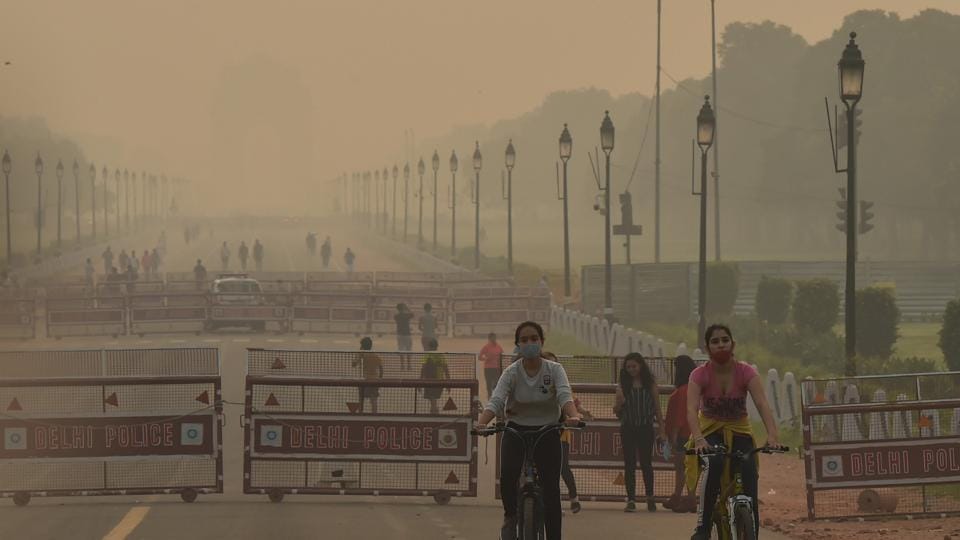
Experts say that while the Covid-19 pandemic has restricted activities, it has resulted in fewer people using public transport, leading to more use of personal vehicles. More vehicles on road means more emissions, which, coupled with poor dispersal due to slow wind speed, leads to higher ambient air pollution levels.
Air quality in Delhi and neighbouring cities of Ghaziabad, Noida, Greater Noida and Gurugram was recorded in the “very poor” category on Thursday.
According to the data by the Delhi Metro Rail Corporation, the ridership in the past fortnight has been 78% of the number of people who took the Metro during same period last year due to Covid restrictions. Even though ridership is rising, a Metro spokesperson said that it would take some months before the passenger level reaches pre-Covid levels.
Also Read| Covid-19: RT-PCR tests at a high, positivity rate crosses 6% in Delhi
Similarly, the Delhi Transport Corporation (DTC) has recorded a dip in daily bus ridership. Transport minister Kailash Gahlot had said last week that there was about 54% dip in ridership due to Covid restrictions which allows filling only half of the seats.
While several people are working from homes, traffic on Delhi roads is rising. Data from Google’s community mobility trends shows traffic on Delhi roads was just 30% less than the pre-Covid period baseline of January 3 to February 6, this year. In August, this dip was 67%, and in April 80%.
As only limited public transport was available, Delhi also witnessed a spike in vehicle sales after Covid unlock guidelines were implemented from June 8. According to Society for Automobile Manufacturing (SIAM), Delhi, has seen an increase of about 16% in sale of new passenger vehicles -- cars and two-wheelers – as compared to same period last year. The overall vehicles sales increase in August in India was 14.6%. SIAM is yet to release data for September.
“The pandemic outbreak has changed people’s preferences. and we believe they will opt for personal mobility solutions rather than shared mobility,” co-founder and CEO of CarDekho Amit Jain said.
A scientist at Indian Institute of Technology, Kanpur, who asked not to be named, said more vehicles on road is one main reasons for bad air quality in and around Delhi. Most of the pollution load is coming from within and around 70km of Delhi, he said.
“Yes, the higher number of vehicles on road contribute to air pollution but very low wind speed, which causes localised heat islanding, is the main cause for air being foul,” the scientist, who has earlier done pollution source appropriation study for Delhi, said.
Also Read| Delhi: Blame game erupts as bad air worsens
The scientist predicted that there could be some respite in the next three to four days because of improvement in wind speed. The pollution levels will rise again in later part of October and remain high till Diwali --- that falls on November 11, he said.
Anumita Roychowdhury of Centre for Science and Environment (CSE) said the Covid pandemic has thrown new challenges for air pollution management. “We cannot intensify public transport as Covid restrictions will remain. We may need to reinforce work from home option to prevent unnecessary travel to cope with rise in winter pollution,” she said.
(With inputs from Vijdan Mohammad Kawoosa)


