
 E-Paper


After 14 years, 26 schools reopen in Chhattisgarh’s Maoist-hit Bastar
The schools were among over 300 schools that were closed down in district amid an escalation in violence, according to the state education department records.

 Prefer HTon Google


The Chhattisgarh government has over the last month re-opened 26 schools, which were shut for 14 years due to Maoist violence in the Bastar region’s Bijapur district, state government officials said on Thursday.
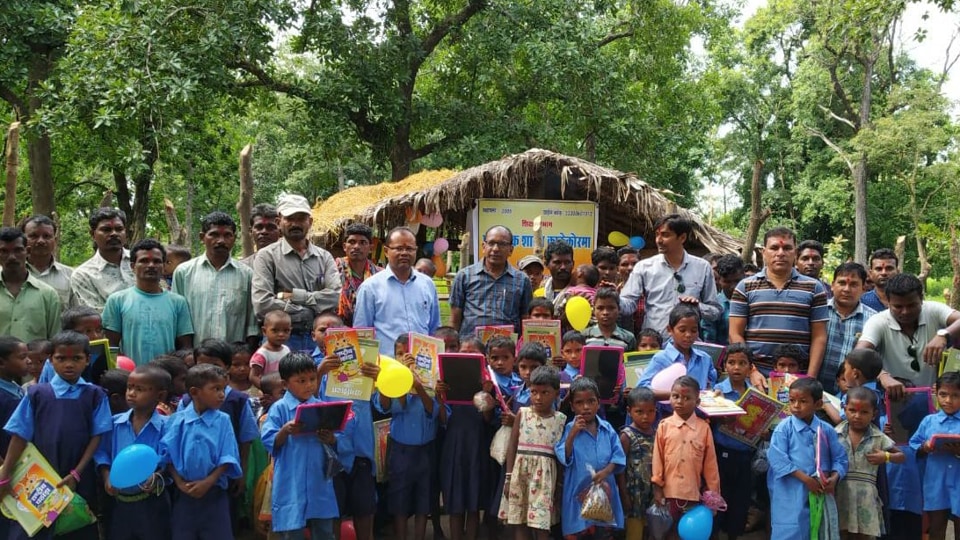
The schools were among over 300 schools that were closed down in district amid an escalation in violence, according to the state education department records.
The violence in Bijapur peaked in 2007 when 155 people, including 98 security forces personnel, were killed in 51 incidents of violence, as per the data maintained by South Asia Terrorism Portal. The fatalities this year so far are down to 20.
The Maoists had called for a boycott of government operations in the Bastar region after clashes with state-sponsored Salwa Judum militia, which was disbanded on the Supreme Court orders in 2011.
Officials said that the local administration reopened the schools with the help of local tribals as the Maoist violence has waned and 700 students have so far enrolled there.
“We have taken this initiative [reopening of schools] to connect extremely-sensitive and far-flung villages with the mainstream through education. The revival of schools has been done with the support of villagers in the extremely-sensitive areas and to provide proper education facilities to the children,” said Bijapur district collector K D Kunjam.
Kunjam added that slates, textbooks, notebooks, and midday meals were being provided in these schools.
“Before starting classes at these schools, discussions with villagers were held and they were informed about the importance of education. A survey of children was done and local unemployed people were offered teaching jobs.”
The district administration has also appointed local residents as Shiksha Doots (teachers), who are given an honorarium sum monthly for the District Mineral Fund, which mining companies in the region contribute to for its socio-economic development.
Suresh Kursam, a shiksha doot, said that the kids and their parents were excited about reopening of a school in their Garona village. “The school was shut in 2007 and since then, most of the kids of this village were not studying. But now we have enrolled 55 kids over the last 15 days and more are getting enrolled.”
Munna Apka, a local tribal who has enrolled his six-year-old son at a reopened school, is hopeful for his child’s future. “I am happy that my kid can now study near our village,” Apka, whose child earlier studied at a school in Bijapur town.
Kursam said that most parents could not afford to send their children to places like Bijapur town for education. “…therefore, the illiteracy rate was high in these remote villages.”
The literacy rate in Chhattisgarh’s urban areas—80.27%—was higher than the national average of 74.04 as per the 2011 census. In remote villages like Kerpe, Sendra, Bhairamarh, Madpal and Hallur, where the schools have reopened, the literacy rate is less than 50%.
K D Kunjam said that the reopening of these schools would gradually restore the trust of villagers in the government. “…now people of other villages have also started demanding re-opening of schools in their villages.”
He said running these schools in far-flung, Maoist-affected remains a challenge even as they plan to open more over the next few months.
Chhattisgarh’s public relations department director Taran Prakash Sinha said that the state government is working for the education and nutrition of tribal kids of Bastar. “…more school will be re-opened in the next few months….”
-kW0H-U20214218012MgB-250x250%40HT-Web.jpg)


