
 E-Paper



After three months, Centre clears appointment of Manipur HC Chief Justice
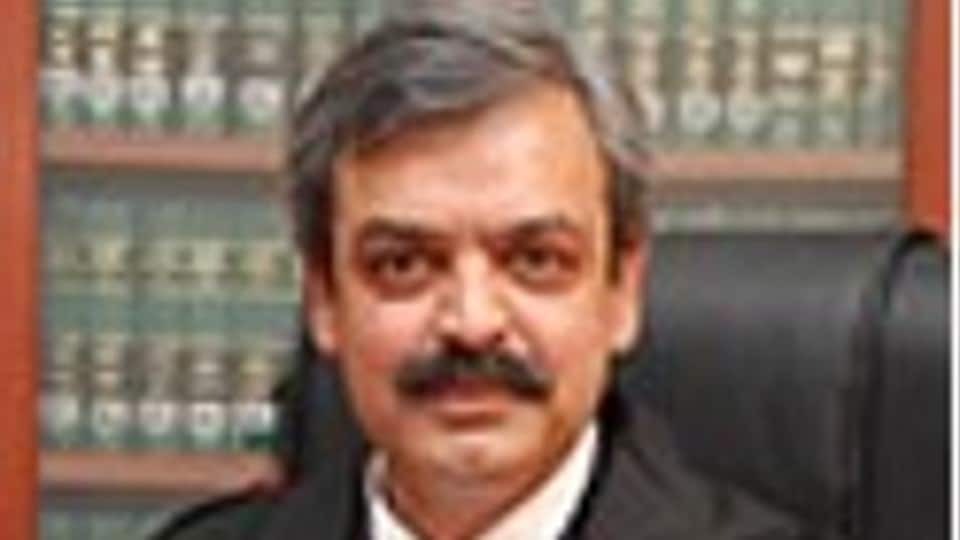
The Indian government has finally appointed Siddharth Mridul as the new chief justice of the Manipur high court, more than three months after his nomination.

 Prefer HTon Google


The Union government on Monday notified the much-delayed appointment of Delhi high court judge Siddharth Mridul as the new full-time chief justice of the Manipur high court, more than three months after the collegium’s recommendation.
HT had on October 5 reported first that there was progress on the transfer and appointment of justice Mridul as the chief justice of the Manipur high court with the N Biren Singh-government replying to the Centre’s correspondence after withholding its opinion for three months. The recommendation to appoint justice Mridul as the Manipur high court chief justice was made on July 5.
On Monday, Union law minister made the announcement on platform X (formerly Twitter). “In exercise of the power conferred by the Constitution of India, President of India, after consultation with Chief Justice of India,is pleased to appoint Sh Justice Siddharth Mridul, Judge of the Delhi High Court, as Chief Justice of Manipur High Court. I convey best wishes to him,” Meghwal posted.
The notification to appoint the new chief justice came a week after the government assured the Supreme Court that the collegium’s recommendation will be acted upon soon. On October 9, when the Supreme Court took up a contempt plea complaining against inordinate delay by the Centre in clearing names, attorney general R Venkataramani informed the bench, led by justice Sanjay Kishan Kaul, that justice Mridul’s notification will be issued soon. Responding, the bench cautioned the government against any further delay, setting a deadline of October 20 when the case will be heard next.
A day after the government’s assurance, the collegium recommended the transfer of MV Muralidaran, acting chief justice of Manipur high court, to the Calcutta high court. The collegium’s recommendation, issued on October 10, also recorded its rejection of justice Muralidaran’s request to either let him continue in the Manipur high court or shift him to his parent high court at Madras.
The Supreme Court collegium comprised Chief Justice of India Dhananjaya Y Chandrachud and justices Kaul, Sanjiv Khanna, BR Gavai and Surya Kant.
The office of the chief justice of the Manipur high court had fallen vacant in February 2023, following the elevation of justice PV Sanjay Kumar to the Supreme Court. Justice Muralidaran has since been functioning as the acting chief justice of the high court.
A judicial order issued by a single-judge bench of justice Muralidaran on March 23 had become the trigger point for the ethnic clashes between the Meiteis and the Kukis in the northeastern state. Justice Muralidaran passed the controversial order for the Manipur government to consider including the Meitei community in the Scheduled Tribe (ST) list. The clashes started in Churachandpur district of Manipur on May 3 after a group of tribals took out a march to protest against justice Muralidaran’s order and the Meitei community’s demand to be included into the ST category.
Over two separate hearings in May on a clutch of petitions relating to the ethnic strife in Manipur, a Supreme Court bench, headed by the CJI, had also taken a grim view of justice Muralidaran’s order, saying that any direction on inclusion or otherwise of a community in a SC/ST list was beyond the remit of a court and that justice Muralidaran should have corrected his order after the top court cited the legal flaws.
As on date, as many as 26 recommendations on transfer of judges from one high court to another remain pending with the Centre. During the hearing on October 9, the A-G had informed the court that 14 of them had been processed while the remaining were still being examined.



