
 E-Paper



Ahom dynasty's Moidams in Assam get UNESCO World Heritage status: 5 facts about mound-burial system
The Ahom era ‘Moidams’ in Assam was declared India's 43rd World Heritage Site, making it the first cultural property from the Northeast to get the coveted tag.

 Prefer HTon Google


The Ahom era ‘Moidams’ in Assam was declared India's 43rd World Heritage Site, making it the first cultural property from the Northeast to get the coveted tag. The decision was taken during UNESCO's 46th World Heritage Committee session on Friday in New Delhi.
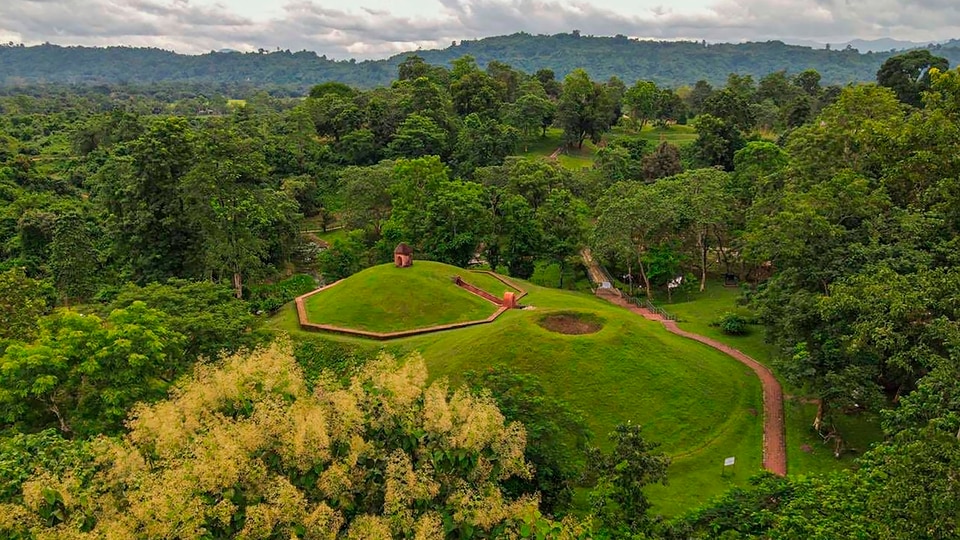
On July 4, ‘Moidams’ was submitted as India's nomination for inclusion in the UNESCO World Heritage List for the year 2023-24.
What are ‘Moidams’?
The ‘Moidams’, situated in Assam's Charaideo, are the burial grounds of Ahom kings and queens. The name ‘Moidam’ is derived from the Tai words ‘Phrang-Mai-Dam’ or ‘Mai-Tam’ - meaning to bury and the spirit of the dead. These are comparable to the pyramids of Egypt and substances of wonder seen through the brilliant architecture and expertise of the artsmen and masons of Assam of the medieval era.
Also read: Day etched in golden letters, great gift to India: Shekhawat on 'Moidams' getting UNESCO tag
‘Moidams’ are vaulted chambers (chow-chali), often double-storied, that have an arched passage for entry and layers of bricks and earth are laid atop the hemispherical mud mounds. According to UNESCO, the base of the mound is reinforced by a polygonal toe-wall and an arched gateway on the west.
History, significance of the Ahom era 'Moidams
- Moidams are unique burial mounds built by the Ahom Dynasty rulers in Assam from the 13th to the early 19th century. They were used by the Tai-Ahom dynasty that ruled Assam for around 600 years.
- They primarily serve as the burial sites for Ahom kings, queens, and nobles. Inside the vault, the dead were buried with their belongings, including clothes, ornaments, and weapons. The burial also included valuables and, at times, living or dead attendants. However, the practice of burying people alive was later abolished by King Rudra Singha.
- Moidams are found throughout upper Assam, with Charaideo, the first Ahom capital, being the main necropolis.
- This burial tradition began with the first Ahom king - Chau-lung Siu-ka-pha - who was buried at Charaideo. However, with the influence of Hinduism overtime, the Ahoms began creating their dead.
- ‘Moidam’ burials are still practiced by some priestly groups and the Chao-dang clan (Royal bodyguards).


