
 E-Paper



Air crisis engulfs both Houses of Parliament
Members of the Lok Sabha and Rajya Sabha united across party lines to call for long-term action as they rued the human and the economic costs of a problem that has now become an annual occurrence, despite a clutch of interventions from the highest levels of the government and the courts.


Lawmakers on Thursday agonised over the pollution crisis confronting large parts of north India, especially the Capital, and mused over potential solutions, holding a rare simultaneous discussion in both houses of Parliament even as the air outside continued to slide back to unhealthy levels after an all-too-brief respite.
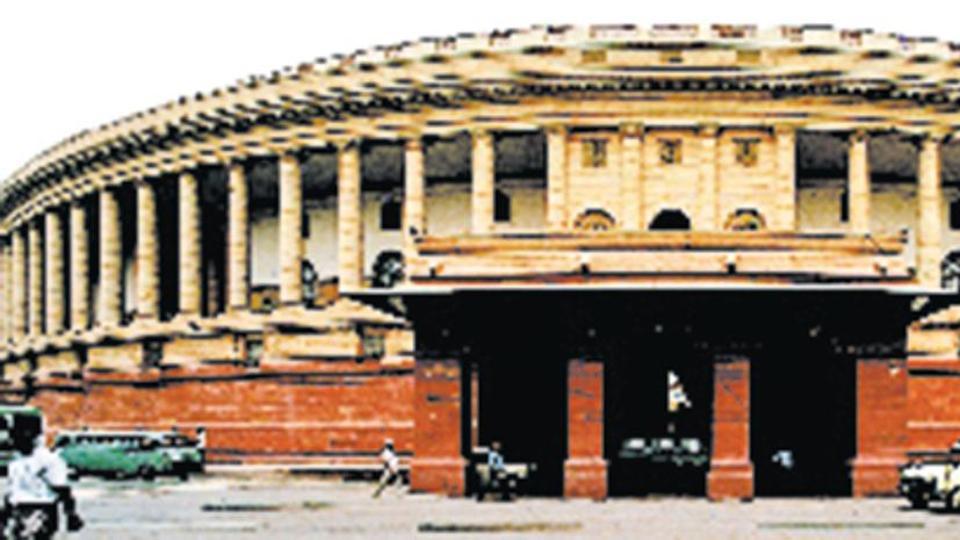
Members of the Lok Sabha and Rajya Sabha united across party lines to call for long-term action as they rued the human and the economic costs of a problem that has now become an annual occurrence, despite a clutch of interventions from the highest levels of the government and the courts.
The debate, which began in the upper house after a calling-attention motion by ruling Bharatiya Janata Party MPs Vijay Goel and KJ Alphons, lasted nearly three hours during which members spoke about the perils of living with bad air and urged concerted efforts to fight the problem.
Outside, a thick layer of haze returned and blocked out the Sun by late afternoon. The air quality index (AQI) jumped from 301 on Wednesday to 366 on Thursday, according to the Central Pollution Control Board’s 4pm bulletin. By Friday, the index is expected to cross 400, the threshold above which pollution is considered ‘severe’.
The spike in pollutants is largely believed to be a consequence of weather conditions: a lack of wind and colder night temperatures. A scientist from the Union government’s System of Air Quality and Weather Forecasting and Research (SAFAR) said the current spike came mainly from local sources.
“There was an accumulation of pollution from local sources. This means that because of low wind speed, the outlet of pollutants was not as fast as the inlet, thus the equilibrium was not maintained,” a SAFAR scientist said.
The discussion in Parliament was also divided on political lines, with some BJP members in the Lok Sabha as well as the Rajya Sabha accusing Delhi chief minister Arvind Kejriwal and his administration of not taking adequate steps.
Members of Kejriwal’s Aam Aadmi Party (AAP) said the blame lay with the Union government, which had not done enough to tackle the problem of farm fires in neighbouring states.
Despite a request made by Rajya Sabha chairman M Venkaiah Naidu to all MPs to be present in the House during the discussion on air pollution, a majority of the MPs did not attend the session.
In Lok Sabha, where the discussion has been on since Tuesday, BJP member Sanjay Jaiswal said pollution in Delhi had peaked since Wednesday after winds slowed down. “We blame the farmers when the fault is ours,” he said, prompting a reaction from AAP member Bhagwant Mann.
Mann, who represents the Sangrur constituency in Punjab, said the BJP-led Union government must do more to help paddy farmers manage the stubble left behind after the harvest. “Why give MSP (minimum support price) for crops that produce stubble? More the rice production, more stubble produced. Provide us more funds, we will opt for substitute crops,” he said.
The MP’s reference was to the price guarantee offered on rice, which experts have said is a factor in farmers mostly opting to grow paddy. In Rajya Sabha, AAP leader Sanjay Singh listed measures such as curbs on polluting industries to defend the Delhi government’s initiatives in tackling the problem.
BJP’s Goel and Alphons targeted Singh’s party for, what they said, were a lack of interventions by the Delhi administration.
Venkaiah Naidu restrained Goel from attacking the Delhi CM, saying he couldn’t be named since he was not a member of the House, and advised him not to display items such as pollution masks that the MP sought to use while criticising the AAP leader.
Following the exchange of blame, minister Javadekar told members that a frenzied approach to the problem will not work and there was a need for systematic and scientific solution. “We need to look upon some issue rising above party level and have to prepare common minimum agenda,” he said.
Other members too largely backed calls for more long-term solutions.
“After and before Diwali the debate on the issue peaks up. But, it is a national issue, a perennial issue. It’s a perennial problem we must solve together I would urge to work so that we can give our children a decent air to breathe,” said Congress’s Shashi Tharoor in Lok Sabha.
“Many foreigners are scared to even come to Delhi. Foreigners have a choice, but Indians and Delhiites don’t. Bringing up children in Delhi is a crime against our children,” he added.
In the Rajya Sabha, Tharoor’s party colleague Ghulam Nabi Azad urged the Centre to convene a meeting of all chief ministers with the Prime Minister to discuss solutions.
Nationalist Congress Party’s Vandana Chavan said the problem stretches beyond Delhi. “India is home to 14 most polluted cities in the world...” she said.
BJP’s Alphons also referred to Swedish climate activist Greta Thunberg, who has campaigned for more focus on the climate emergency.
“In September, a 16-year-old girl thundered at the United Nations; ‘how dare you’. These words by Greta Thunberg, I feel, were addressed to each one of us even in this House,” he said.
Trinamool MP Mala Roy raised the issue of plastic pollution in the country and said Centre’s campaigns on the making India free of single-use plastics was “far from reality”. “The ministry should encourage alternatives like glass, wax coated cloth, wood, bamboo and earthen pots which would not only be eco-friendly but also address the need of common people,” said Roy.
Parliamentarians from the Bahujan Samaj Party, Rashtriya Janata Dal, Apna Dal and Biju Janata Dal too spoke on the issue, with several of them urging the government to find a solution to the farm fire problem.
Farmers in Punjab, Haryana and some parts of Uttar Pradesh set fire to remnants of crops after harvesting, a practice meant to cut costs and save time.
Javadekar separately tabled a report that said levels of pollution had gone down in Delhi over recent years and enumerated the measures taken by the Union government to curtail pollution. He is expected to file his reply on the debate in Lok Sabha on Friday.


