
 E-Paper



IAF night flies Chinook over DBO as PLA ramps up troops in occupied Aksai Chin
The decision to fly Chinook over DBO advance landing ground during night time was taken to test the Indian Army’s capability of rapid insertion of special forces and infantry combat vehicles in case the situation deteriorates.

 Prefer HTon Google


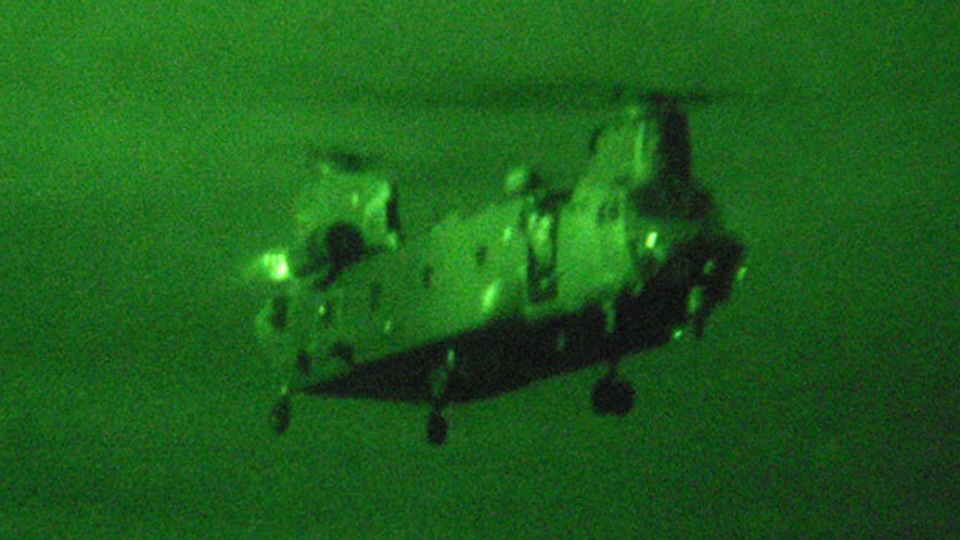
The Indian Air Force’s rapid deployment Chinook helicopters have flown in the night over 16,000 feet Daulet Beg Oldi, Indian Army’s last outpost near Karakoram Pass, after the deployment and road building activity of China’s People’s Liberation Army deployment increased in the area across the Line of Actual Control (LAC).
According to authoritative sources, the divisional commander level meeting at Teinweindien (TWD) post in occupied Aksai Chin was to lower the temperatures in the DBO sector with the Indian Army demanding that patrolling in Depsang Plains should be allowed unhindered. The DBO dialogue is separate from the military commanders on-going dialogue on Chushul-Moldo area with the specific task of disengagement and de-escalation of troops on the four friction points.
The decision to fly Chinook over DBO advance landing ground during night time was taken to test the Indian Army’s capability of rapid insertion of special forces and infantry combat vehicles in case the situation deteriorates in the sub-sector north (SSN) area. “ While Apache attack helicopters have been patrolling Chushul area, the US made Chinook flew over DBO to test its night fighting capabilities…..we have already deployed T-90 tanks and artillery guns in the area,” said a senior commander. The US built Chinook has a proven record of night flying in Afghan mountainous terrain and is used for rapid military retaliation by the special airborne forces. The twin rotor platform has two heavy calibre machine guns deployed at the front and back of the chopper to suppress ground fire.
While the Chinese have raised objections to the deployment of tanks and guns at DBO, the Indian Army have pointed to recent accretion of PLA troops in the area along with air activity across the SSN. Both sides are matching each other’s deployment in the area even as the PLA is indulging in fast paced construction of roads in the area for rapid deployment. The interesting part is that while China raises objections to India building border infrastructure, there is no slowing down of the same all along the LAC---from occupied Aksai Chin to Kibuthoo in Arunachal Pradesh.
At the divisional commander level meeting on Saturday, India has also raised the issue that both sides should be allowed to do unhindered patrolling of their respective claim lines in the area including the Depsang Bulge, south of DBO. This was a clear indication of the Indian intent that it is not going to back down from patrolling rights at the Bulge or at any other place on the LAC.


