E-Paper



Amid rising Covid cases, Odisha’s Jagannath temple may restrict devotees from other states
Seven servitors and three of their family members, 8 workers engaged at the shoe-stand at the main gate of the temple, a security personnel of Jagannath Temple Police, and a gardener were among those who tested positive

 Prefer HTon Google


The 11th-century Jagannath temple in Puri, Odisha, which is a famous tourist spot, may be kept shut on weekdays. Alarmed over 23 people on its premises, including a 13-year-old girl from Surat, testing positive for Covid-19 recently, temple authorities may also restrict the visit of devotees from other states.
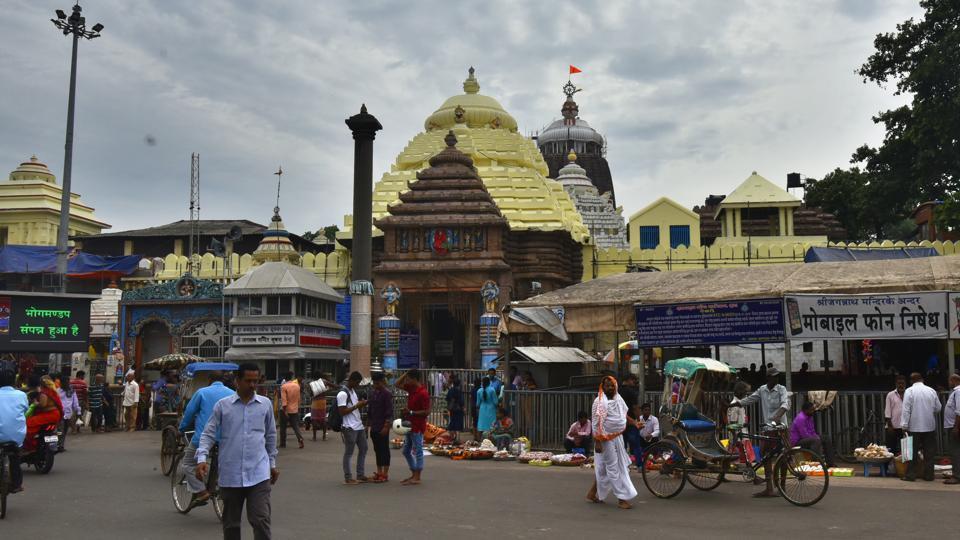
Ajay Jena, administrator (development) of Shree Jagannath Temple administration, said 7 servitors and three of their family members, 8 workers engaged at the shoe-stand at the main gate of the temple, a security personnel of Jagannath Temple Police, and a gardener were among those who tested positive.
The 13-year-old girl, whose antigen test report came positive, will undergo an RT-PCR test for further confirmation. “All the persons who have tested positive for Covid-19 have been asked to remain in home isolation for 10 days,” said Jena.
Though the temple doors are closed for devotees on Sunday, temple authorities are mulling Saturday closure too.“We would take a decision on this on Thursday. Besides, we are going to demand negative RT-PCR report for people coming from other states before allowing them inside,” said an official.
Also Read | Union minister proposes collection drive for beautification of Jagannath Temple
Meanwhile, Odisha saw 2,267 new cases and a total positivity rate rising from 6.36 to 6.81 on Tuesday. The number of active cases climbed to 12,444. The new cases, detected from all 30 districts, is the highest single-day spike recorded in the state in the last five and half months.
Former director of Bhubaneswar AIIMS, Dr. Ashok Mohapatra said if appropriate protocols are not followed, daily cases would rise beyond 10,000. “Though the fatality rate in the second wave of the virus pandemic is comparatively lower from the first phase, the rate of positivity is certainly higher...Right now, the surge is limited to a handful of states. Once the outbreak spreads to other states, the spike will be huge,” he said.
Meanwhile, Ganjam district administration shut all religious institutions in the district for the next seven days, beginning April 14. Ganjam district collector Vijaya Amrita Kulange said apart from religious institutions, all public places, such as parks, play grounds, sea beach and lake, would be closed for till April 21 for sanitisation. The celebration of Meru Jatra and Pana Sanskranti would not be held in the district.
In Bhubaneswar and Cuttack, the local municipal authorities have restricted religious congregations within the mosque to 100 persons or 50% of hall capacity during the month of Ramzan.
Shortage of vaccine doses has also caused alarm. Vaccination could not be held in 11 districts for want of stocks. While vaccination was on in 1,400 centres last week, only 495 centres were operational on Tuesday. Sambalpur, Puri, Jajpur, Bhadrak, Nayagarh, Boudh, Gajapati, Dhenkanal, Koraput, Jharsuguda and Sonepur were the districts where vaccination came to a halt. To be sure, while overall supplies may be there at the state level, individual centres may run out of stock on account of how the states manage their replenishment.