
 E-Paper



Anti human trafficking Bill: Civil society recognises urgency, but has concerns
The new Bill expands the scope of the powers of the National Investigation Agency and goes on to add transgender persons to the list of trafficked persons apart from women and children

 Prefer HTon Google


The draft anti-trafficking Bill, 2021, which is slated to be tabled in the monsoon session of Parliament, has mostly elicited a positive response from activists and organisations working to combat the threat, with a few recommending additional measures to the Bill after the ministry of women and child development sought public feedback.
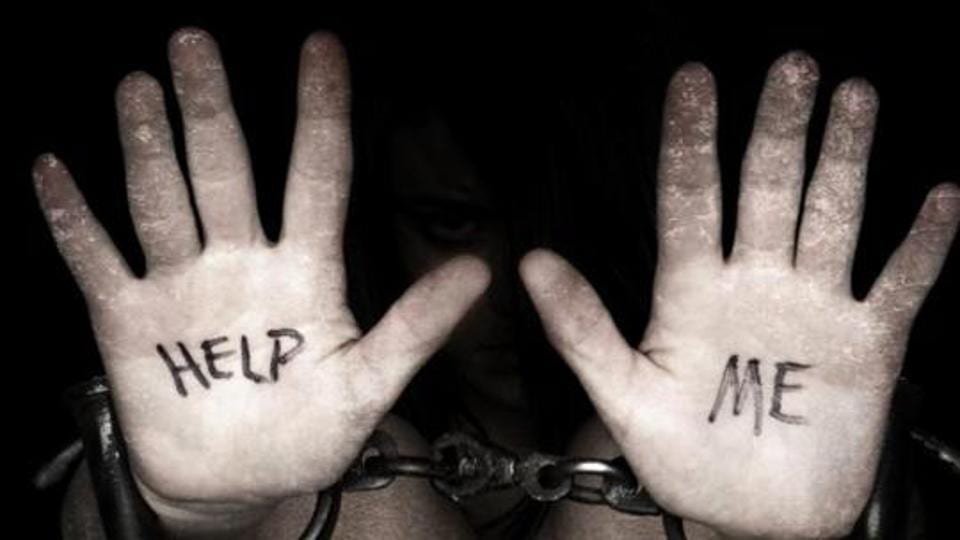
The new Bill expands the scope of the powers of the National Investigation Agency (NIA) and goes on to add transgender persons to the list of trafficked persons apart from women and children.
It also widens the punishment for offences, with persons found guilty of trafficking liable for a minimum term of seven years, which can be extended to 10 years. The provision will have implications for cross-border offences as well. The persons convicted will also have to pay a fine of ₹1-5 lakh, the Bill has proposed. It will also allow the properties of convicts, bought using money from trafficking, to be forfeited. The Bill also mandates the creation of a three-tier monitoring system, a national, state and district level anti human trafficking committee.
Also Read | Rights activists caution against child labour and trafficking during pandemic
As per the National Crime Records Bureau (NCRB) 2019, the total number of child victims of trafficking increased from 2,837 in 2018 to 2,914 in 2019, registering a marginal growth of 2.8% during the year. The top six states reporting child trafficking (below 18 years) were Rajasthan (653), Delhi (536), Bihar (294), Odisha (202), and Kerala (179), and Madhya Pradesh (124).
Social reformer Kailash Satyarthi has called for urgent passage of the Bill, citing the need for a strong anti-trafficking law. “A strong anti-trafficking law is the moral and constitutional responsibility of our elected leaders, and a necessary step toward nation-building and economic progress. As long as children are bought and sold at a lesser cost than cattle, no country can call itself civilised. Covid-19 has caused a rise in trafficking, especially of women and children. We cannot take this lightly. A law for prevention, timely investigation, punishment for traffickers, and the protection and rehabilitation of survivors is a matter of urgency,” he said.
But others such as the non-governmental organisation (NGO) HAQ: Centre for Child Rights, and Coalition for an Inclusive Approach on the Trafficking Bill, have cautioned against the increased scope of the Bill, stating that it may lead to confusion and even abuse of certain provisions.
“The Trafficking in Persons (Prevention, Care and Rehabilitation) Bill, 2021 (“Bill”) intends to prevent and counter trafficking in persons, especially women and children, to provide for care, protection, and rehabilitation to the victims, while respecting their rights, and creating a supportive legal, economic and social environment for them, and also to ensure prosecution of offenders,” HAQ: Centre for Child Rights has said in its submission to the ministry of women and child development on July 14.
The key provisions and concerns
With respect to the NIA, the Bill states that it will tackle all trafficking cases, including inter-state and international ones.
“The National Investigation Agency shall act as the national investigating and coordinating agency responsible for prevention and combating of trafficking in persons and other offences under this Act, as well as for investigation, prosecution and coordination in cases of trafficking in persons and other offences under this Act in accordance with the provisions of the National Investigation Agency Act, 2008, including cases which are inter-state or international in nature or such other cases as may be assigned to it by the Central Government,” states the draft Bill.
According to former director general of police, PM Nair, who was integral in setting up the government’s grassroots level anti human trafficking units (AHTUs), the expansion of the scope of NIA’s powers is welcome but a crucial gap that remains is the lack of rehabilitation, which remains beyond their remit. “NIA is an investigative body, it does not have a system of rehabilitation,” he said. “There needs to be a coordinated state level rehabilitation system that can accommodate those rescued, which can be supervised by the NIA.”
Nair also added that a dedicated wing should be set up with the NIA that looks after cases of human trafficking in particular, similar to the special crimes wing. He lauded the inclusion of section 370 of the Indian Penal Code into the Bill, stating that it will help in greater coordination as there will be common law, which has more utility.
But making NIA the sole authority to investigate the cases has not gone down well with everyone. The Coalition Coalition for an Inclusive Approach on the Trafficking Bill has challenged the provision stating it represents a threat to the federal structure of the constitution. “The proposal of NIA not only being the investigation agency, but also the applicability of the NIA Act to the investigation of offences under the Trafficking in Persons (Prevention, Care and Rehabilitation) Bill, 2021 should be a wake-up call for all states in the Indian Union… the NIA now will have a legal basis to enter states and even begin investigations for trafficking without the consent of the concerned state. In a federal set-up, any expansion of the authority of the NIA beyond what is already scheduled in the NIA Act should be viewed with the utmost concern,” it has said in its submission.
Another concern is Section 23 of the Bill, which explains what constitutes trafficking of persons, has also elicited a strong response from the community. The section notes that any person who “recruits, transports, transfers, harbours or receives another person; By means of threat or use of force or other forms of coercion, of abduction, of fraud, of deception, of the abuse of power or of a position of authority or of vulnerability, or of the giving or receiving of payments or benefits to achieve the consent of a person having control over another person”. It goes onto explain that “exploitation shall include, at a minimum, the exploitation of the prostitution of others or other forms of sexual exploitation including pornography, any act of physical exploitation, forced labour or services, slavery or practices similar to slavery, servitude or forced removal of organs, illegal clinical drug trials or illegal bio-medical research or the like.”
Terming it anti-migrant workers, HAQ explains how the Bill can adversely affect labourers, adding that it conflates trafficking with forced labour and migration. “The proposed Bill conflates trafficking with forced labour and migration. Inclusion of the word “forced labour” in the Explanation 1 on “exploitation” in section 23 allows all migrant workers in the unorganised sector to be treated as forced labour.
While this per se is not problematic and anybody who is subjected to forced labour should find recourse in law, the recruitment and movement for such labour, which is often a result of inducement and may also involve false promises and deceit, will bring them under the definition of trafficking as proposed in the Bill. The Bill further requires all persons perceived as “trafficked victims” to be rescued and rehabilitated, thus invariably implying that all migrant workers in the unorganised sector, who may be deemed as “forced labour” shall have to be rescued from their situation of work and institutionalised in the name of rehabilitation,” HAQ has said in its statement.
The Coalition, too, has warned against the dangers of an overbroad response, stating that it negates the consent of those the Bill is supposed to protect. “The Bill adopts a definition of trafficking which defines victims as those who cannot consent, in effect negates the autonomy of the so-called victims. Even those who had been trafficked have the right to make decisions about their current and future life. By empowering authorities to place persons who are trafficked in custodial institutions without their consent,3 the Bill fundamentally erodes the notion of individual autonomy guaranteed under the Indian Constitution,” it has said.
The three committees proposed by the Bill, says Nair, should instead be called authorities. “Committees come across as toothless, we need to establish a lexicon that gives them powers.”
The Coalition has also stressed the need to adopt a more welfarist approach and not just a “criminalization impulse”. “The Bill is fundamentally motivated by a criminalising impulse. Issues which have to be seen within the lens of development are sought to be dealt with by criminal law. The state instead of taking on welfarist/developmentalist functions chooses to focus on incarcerating the poor,” it has highlighted.
The way forward
The Bill, which was passed in 2018 in the Lok Sabha but lapsed before it reached the Rajya Sabha was revised after the ministry received a suggestion from a spectrum of stakeholders. It will now be reintroduced in the lower House, and if cleared, will be sent to the upper House before it becomes an Act.
While many remain concerned with certain provisions of the Bill, a push for its passage has been the focus for most of the organisations, which see it as a strengthening of the system to combat human trafficking.
Jyoti Mathur, executive director of the Kailash Satyarthi Children’s Foundation, said that there are a lot of positive features in the Bill. “It’s high time we have a law which looks at trafficking in a comprehensive manner,” she said. “Although trafficking is covered under ITPA, under POCSO Act, and Indian Penal Code, among others. But it is not just about the criminal aspect of it but also about the rehabilitation aspect of it.”
She added that trafficking is a continuous crime. “NIA’s scope being expanded is an advantage. Police investigation has seen delays and issues of jurisdiction in the past. NIA also has international jurisdiction. Making an amendment to their Act and adding trafficking under its ambit is a big step. It will keep traffickers from taking advantage of the gaps in the system,” she said.
Mathur added that one must not get lost in the details as the Bill overall is more positive in nature. “In pursuit of perfection, we cannot delay the law,” she said. “There will always be something missing. The Bill in its current form has plenty of good features. We need to focus on that,” she said.


