
 E-Paper



Assam, Mizoram were in talks in Delhi before their police forces fatally clashed
Assam and Mizoram had been talking through their chief secretaries in a Centre-chaperoned dialogue process to douse interstate border tensions before police forces of the two northeastern states fatally clashed on July 26, shocking the country

 Prefer HTon Google


Assam and Mizoram had been talking through their chief secretaries in a Centre-chaperoned dialogue process to douse interstate border tensions before police forces of the two northeastern states fatally clashed on July 26, shocking the country.
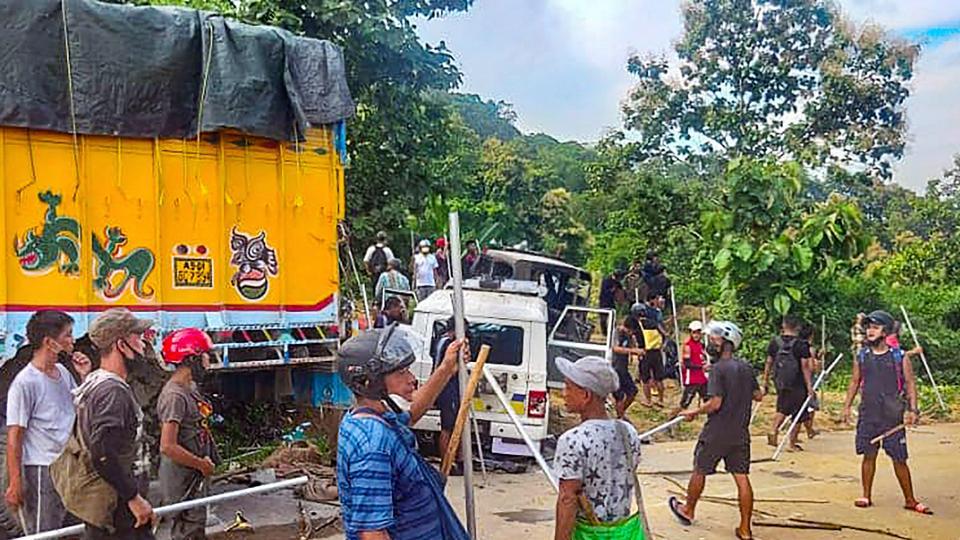
One round of talks in the national capital was held on July 8, an official aware of the development said. Assam chief minister Himanta Biswa Sarma, too, told the media on Tuesday, putting out his version of the dispute, that the talks failed at the final stage of a proposed memorandum of understanding.
Top bureaucrats and police chiefs of the two states on Wednesday were due to arrive in Delhi for fresh talks. Five Assam policemen and a civilian were killed in Monday’s clashes along a stretch in southern Assam, bordering Mizoram.
Several people and policemen were reportedly wounded on the Mizoram side, although Mizoram has not put out a number.
The official cited above said the talks between the two sides were focussed on some kind of “status quo ante”, which refers to a return to earlier positions. The process failed because differences persisted over what should be the point of the status quo ante, the person said.
Assam proposed a satellite-based mapping of the disputed interstate border, a proposal that found its way into a draft memorandum of understanding. Mizoram proposed chief secretary-level talks monitored by the Centre.
“My proposal to him (Mizoram chief minister Zoramthanga) was that we will carry out satellite photography of the borders as on the day of my swearing-in (May 10). In the talks, Assam had said that whatever is the status quo situation, be that on May 10 or six months ago or as on date, we should maintain status quo on the border as determined through satellite mapping,” Sarma said in one of his several media briefings on Tuesday.
Northeastern states have a history of ethnic strife. Internal border disputes go back at least a century. The triggers often are disputed claims over land, forest resources, encroachment, ethnic differences, and even rumours.
Assam’s border disputes have their roots in how the state was carved up to form other states in the region. Mizoram, which became a state 1987, was once part of Assam.
Mizoram’s home minister Lalchamliana declined comments on the talks but said: “Mizoram stands for peaceful resolution of the border dispute. Assam policemen first crossed into our areas and overran police posts,” he said.
A Mizoram government statement late on Tuesday said: “With the intervention of the Honarouable Union Home minister (Amit Shah), who spoke to both the chief ministers, Assam police have withdrawn from the place and the duty post have (sic) been handed back to CRPF (Central Reserve Police Force) personnel.”
In his version of the events, Sarma said he telephoned his Mizoram counterpart on the day of his swearing-in. “...I rang up Mizoram chief minister Zomramthangiji. During the conversation, I had told him friendly relations must go on so that economic development can carry on.”
The Assam leader claimed that a draft memorandum of understanding would have gone through had Mizoram agreed to sign it. HT could not independently verify this.


