
 E-Paper



At India-Japan Summit next month, Modi and Abe to sign off on key military pact
India and Japan have advanced the proposed Modi-Abe summit to September. The two countries had earlier scheduled to hold the virtual meeting in October

 Prefer HTon Google


The India-Japan summit between Prime Minister Narendra Modi and Prime Minister Shinzo Abe is scheduled for early next month, people familiar with the development said. The two leaders are also expected to sign off on a key military logistic pact, Acquisition and Cross Servicing Agreement (ACSA), and discuss the possibility of some Japanese manufacturing units shifting to India.
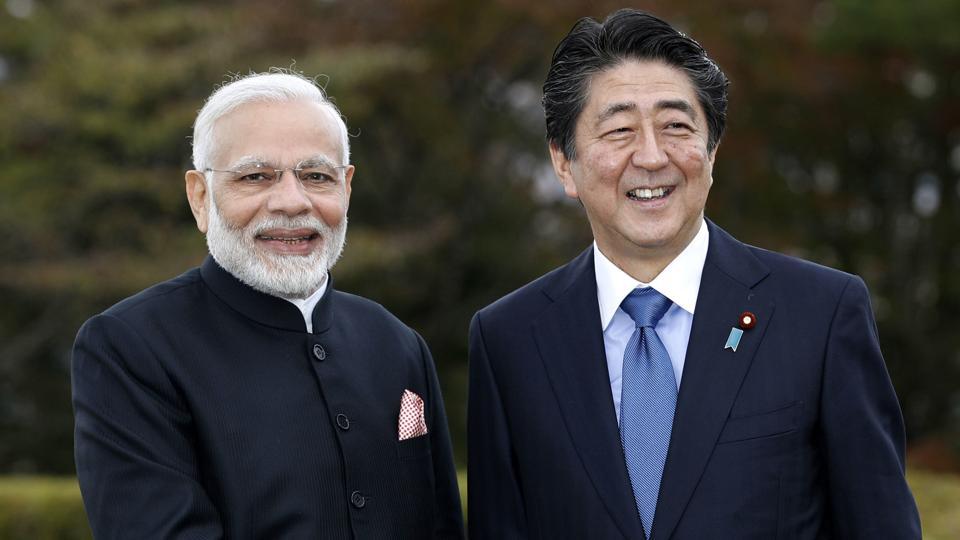
According to South Block officials, the two countries were earlier looking at the possibility of holding the meeting in October. It has since then been advanced tentatively to 10 September. The summit, initially proposed to be held in Guwahati on December 15-17 2019, was postponed due to protests against the anti-Citizenship Amendment Act (CAA) in Assam.
The summit comes against the backdrop of aggressive moves by the Chinese People’s Liberation Army (PLA) in India’s East Ladakh sector and Japan’s Senkaku Islands, respectively. Diplomats said the two leaders will not only discuss the Chinese aggression in Ladakh and the South China Sea but also cement the concept of Quad, the quadrilateral coalition of four countries - India, Japan, Australia and the US.
The four Quad countries have increasingly, focussed on countering Beijing’s wolf-warrior diplomacy and keeping the sea lanes of communication open for freedom of navigation.
The ACSA, which is key to India and Japan extending support and logistics to each other’s military, is expected to be initialled by the two leaders. New Delhi already has a similar agreement with other two Quad members, Australia and the US.
India’s formal decision to invite Australia to the Malabar naval exercises later this year is expected soon but officials have made it clear that it is a formality. Australia’s inclusion to the military drills that has in the past included the other three Quad members - India, Japan and the United States - would be the first time that the grouping will be engaged at a military level.
Officials said PM Modi and PM Abe will discuss at length the Indo-Pacific region and the challenges it faces from the Middle Kingdom.
According to senior government officials, the two leaders will further cement economic cooperation with India opening doors to Japanese manufacturing activity and perhaps, involve Tokyo in ramping up port infrastructure in the Andaman and Nicobar Islands.
While India has linked peace and tranquillity on its border with China to the bilateral ties, Prime Minister Shinzo Abe is also under pressure from his own Cabinet members to adopt a tough line with China.
The Beijing expansionist approach is not limited to Ladakh but has created security concerns with Japan over ownership of Senkaku Islands as China claims the same as Diaoyu Islands with any eye towards extending its exclusive economic zone and strengthening the hold beyond the South China Sea. The Japanese people are not only in favour of Chinese President Xi Jinping’s visit to Tokyo being cancelled but also want the Abe government to be more critical of Beijing on the new Hong Kong security law.


