E-Paper



Ayush ministry asks Isro for satellite help to gauge International Yoga Day ‘success’
The government now plans to make use of satellite imagery to get a sense of the number of participants in the events for the International Day of Yoga (IDY), to be held on June 21.


After weather forecast, communications, navigation system and others, the government now plans to make use of satellite imagery to get a sense of the number of participants in the events for the International Day of Yoga (IDY), to be held on June 21.
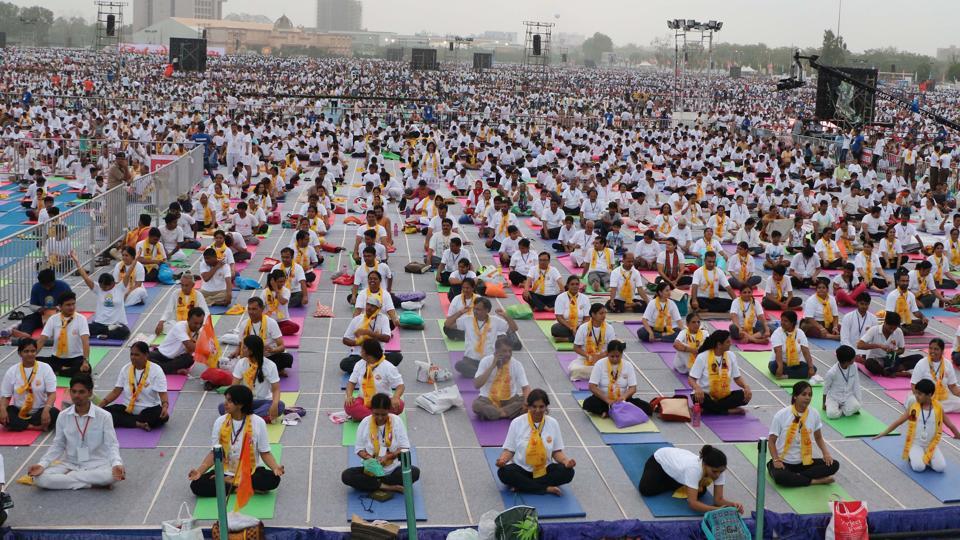
The Ayush (Ayurveda, Yoga and Naturopathy, Unani, Siddha and Homoeopathy) ministry has contacted Indian Space Research Organisation (Isro) for the satellite imagery of the main event.
“We have written to the ISRO chief and asked him if he could help us in mapping the event participation between 7am and 8am from across the country using their satellite. He is yet to formally respond to our request but he has given us in principle approval,” said Rajesh Kotecha, special secretary, Ayush.
Since its inception in 2015, IDY main event have taken place in Delhi, Chandigarh and Lucknow.
Close to 50 thousand people have participated in each event, and this year, too, a huge turnout is expected at the main event, scheduled to be held at Dehradun in Uttarakhand.
Prime Minister Narendra Modi will participate in the main event, that will be held at the Forest Research Institute grounds.
“As per our estimates, about 10 crore people had participated last year across the globe. We are expecting nearly 100% increase this year,” said Shripad Yesso Naik, Ayush minister.
The ministry has also developed a yoga protocol for 40 plus women in consultation with Indian Menopause Society (IMS).
“We are taking into account health conditions of peri-, pre- or post-menopausal women. The postures will help them deal with the changes their bodies are undergoing,” said Kotecha.