
 E-Paper



Before receiving people from outside, Assam govt decides to help those stranded across the state
The Assam government is ensuring that thousands stranded across the state travel from one district to another to reach their homes, workplaces or bring back family members.


With the Union Home Ministry allowing inter-state movement of persons stranded across the country due to the coronavirus lockdown, all states are bracing up to handle the task of screening and quarantining thousands.
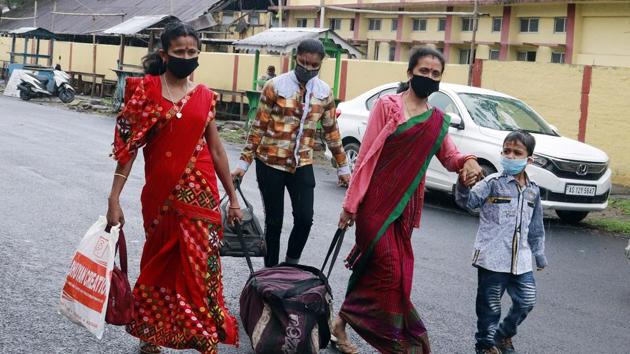
But before that happens, the Assam government is ensuring that thousands stranded across the state travel from one district to another to reach their homes, workplaces or bring back family members.
Inter-district travel within state
The process, which started on April 25 and will continue till May 2, involves coordination between various departments, huge logistical support and use of technology to ensure social distancing and safety norms related to Covid-19.
Till Wednesday, 48,770 people had taken permissions from district authorities and used their vehicles to travel from one district to another. Applications of 50,626 others are under process.
Similarly, around 28,000 persons were helped to reach their destinations within the state by over 1,200 buses belonging to the Assam State Transport Corporation (ASTC) till Wednesday. The free service, which will continue till May 2, will benefit 13,000 more people.
“This has eased one of the biggest problems we faced due to the lockdown. We will soon have to think about bringing back people stranded outside the state. But we need to be careful not to aggravate the Covid-19 situation in Assam,” Assam health minister Himanta Biswa Sarma said on Wednesday.
Assam has recorded 41 Covid-19 positive cases. While 1 patient has died, 29 others have recovered and 11 others are under treatment.
Transporting people while ensuring safety
The exercise to allow people to travel and also transport them from one place in the state to another was a huge task. A website was started for those travelling on their own to register themselves for passes. WhatsApp numbers for each of the 33 districts were also given for applicants to register. For those travelling in ASTC buses, the department gave a helpline number where people could call and register. This was followed by the allocation of e-tickets, coordinate routes of buses, ensure travel on particular dates etc.
“We have been able to undertake this challenging task in a short span of time due to a beautiful combination of human brain, technology and coordination between persons and departments involved,” said ASTC managing director Anand Prakash Tiwari.
“There were some routes on which there were just one or two travelers and it was not feasible to send a bus for that. We had to keep every data in mind without getting confused as it could hamper operations on the ground,” he added.
With a dedicated team of nearly 4,000 people - including call centre operators who handled queries to drivers and cleaners of buses who sanitized them - the department was able to plan routes of buses, passenger allocation and issue of e-tickets.
“Despite the scale of the exercise, there was no laxity in the compliance of safety norms. Every passenger was screened before they boarded the buses. The police were present to ensure order and only 15-20 passengers were allowed to travel in each bus while maintaining social distance,” said Tiwari.
Getting ready for those from outside
With travel and transportation of people stranded within the state done, Assam is now gearing up for the arrival of those stranded outside the state.
“Once lakhs of people start coming back to the state from outside, our health experts apprehend that a second wave of infections could close in on us in Assam,” Sarma said.
The minister had earlier said that the state government wanted to take care of those stranded within the state first before those from outside come in and the health machinery gets busy in screening and quarantining them, if needed.
The government’s initiative to reach-out to people stranded outside Assam has led to nearly 6 lakh people giving missed calls on a helpline number. It is assumed that 20% to 30% of them could return once travel between states is allowed.
Assam is already planning a staggered entry of people from outside. Those who want to return will have to register themselves first following which they will be given permits allowing their return on specific dates. This will help keep a check on the number of people coming back and also ensure that they were quarantined properly.



