
 E-Paper



Being treated as a criminal, argues P Chidambaram
Ranga and Billa were two hardened criminals who came to Delhi from Mumbai soon after their release from Arthur Road jail.


Former Union finance minister P Chidambaram, who has spent more than three months in custody, on Wednesday questioned the rationale adopted by the Delhi high court in rejecting his bail plea in the INX Media case lodged by the Enforcement Directorate (ED).
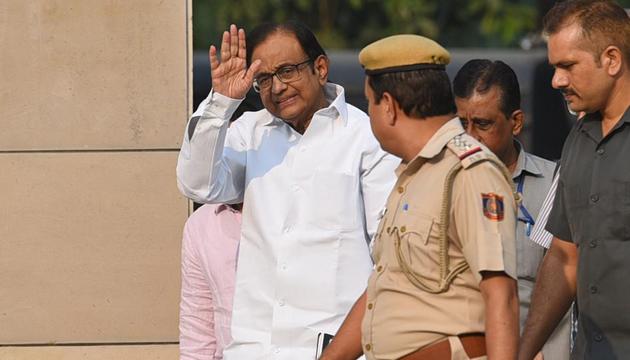
Senior counsel and Congress politician Kapil Sibal, appearing for Chidambaram, first arrested in the case on August 21 by the Central Bureau of Investigation (CBI), said his client was being treated like “Ranga/Billa” for an economic offence which has not been proved yet. It was a reference to a pair of notorious criminals executed in 1982 .
“It is as if I am some Ranga/Billa. If I am not released on bail, it will send a wrong message to this country,” said Sibal, speaking on Chidambaram’s behalf in the case. The hearing will continue on Thursday, when the ED, the anti-money laundering agency, will present its case
Ranga and Billa were two hardened criminals who came to Delhi from Mumbai soon after their release from Arthur Road jail. They kidnapped two teenaged siblings and brutalised them in August 1978. The siblings were on their way to the All India Radio building in the heart of the capital for a radio programme and had hitched a ride.
The torture and murder of the two children led to one of India’s biggest hunts for the criminals in the country four decades back. Two national bravery awards were also instituted in memory of the two siblings, Geeta and Sanjay Chopra. Ranga and Billa were eventually caught within days and hanged in 1982.
Sibal told the Supreme Court on Wednesday that there was no evidence connecting Chidambaram to the INX Media case and his incarceration would send a wrong message to the country. He told the court that Chidambaram, 74, was being portrayed as the kingpin in the case only because he was the father of Karti Chidambaram.
“According to them, corruption money of Rs 10 lakh was allegedly paid to Karti Chidambaram and since I am Karti Chidambaram’s father, I am (portrayed as) the kingpin.”
Sibal also pointed out that all the other accused in the case are either out on bail or have not been arrested.
Chidambaram was arrested by CBI on August 21 in the INX Media case which pertains to alleged irregularities in Foreign Investment Promotion Board (FIPB) clearance granted to the broadcasting group for receiving overseas funds of Rs. 307 crore in 2007 during his tenure as the finance minister.
During the investigation, the ED allegedly found documents linking INX Media to a company associated with Karti Chidambaram. The CBI registered a first information report against Chidambaram in 2017 for offences under the Indian Penal Code and Prevention of Corruption Act. The ED lodged separate case against him under the Prevention of Money Laundering Act in 2018.
The senior Congress politician, a Rajya Sabha member, was granted bail by the Supreme Court in the CBI case on October 22. However, the ED arrested him before that for separate offences under the PMLA Act in relation to the same case. Bail in the case by ED was rejected by Delhi high court on November 15. The Supreme Court is now hearing the appeal filed by Chidambaram against that judgment.
The Delhi high court, Chidambaram told a three-judge bench of the Supreme Court, had rejected the arguments of the ED on the triple test for grant of bail which says bail depends on whether an accused is a flight risk, whether would tamper with evidence or influence witnesses.
Despite rejecting these concerns, the high court had refused to grant bail to Chidambaram on grounds that economic offences are “gravest offences against the society at large” and are, hence, required to be treated differently when it comes to grant of bail. This reasoning was assailed by Chidambaram’s counsel.
“If their argument of gravity of offence is accepted, then I will never get bail,” Sibal told the bench led by justice R Banumathi on Chidambaram’s behalf.
Senior avocate Abhishek Manu Singhvi supported Sibal, arguing that bail can be denied based on the gravity of an offence only under extraordinary circumstances.
“Such an extraordinary case could be when accused is a habitual offender, a terrorist or a child molester and not a case like this”, said Singhvi.


