
 E-Paper



Benefit of lower GST will be passed on to consumers: Piyush Goyal
The minister further said the government has secured assurances from industry leaders that the benefits of lower GST rates would be passed on to consumers.

 Prefer HTon Google


Union commerce minister Piyush Goyal on Friday hailed the reform in goods and services tax (GST) as “one of a kind” since independence, describing it as a “gift” to the nation.
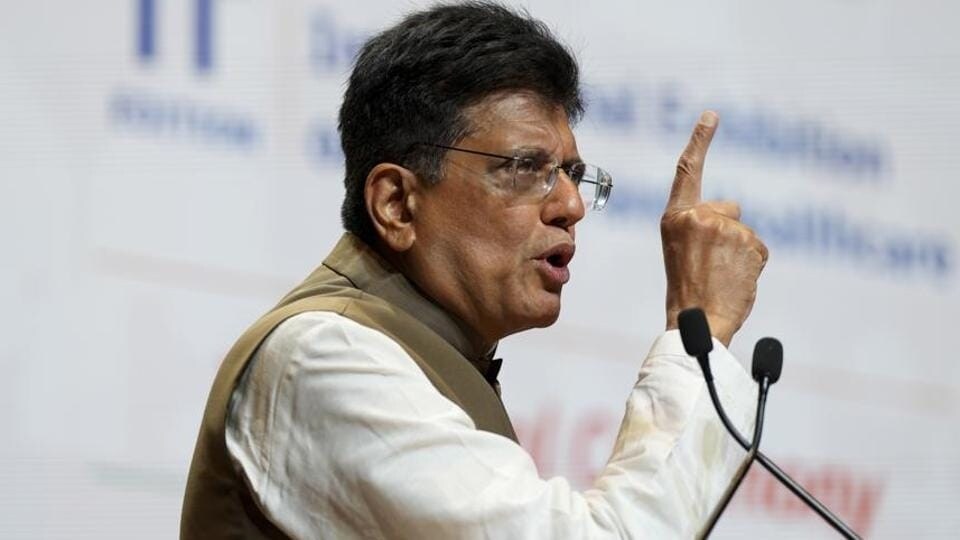
He also drew a sharp contrast with the Congress-led United Progressive Alliance (UPA) era, claiming that state governments back then lacked trust in the central government over compensation assurances tied to the rollout of a unified indirect tax.
“When Prime Minister Narendra Modi announced the GST in 2017, he committed to all states a 14% growth in the annual revenue. PM Modi had the confidence of all states and that’s how the one indirect tax was announced,” Goyal said while addressing mediapersons in New Delhi.
He asserted that the PM Modi-led government had honoured this promise, paying compensation to states with a 14% growth rate even during the Covid-19 pandemic when demands were severely hit.
Taking aim at the Opposition, Goyal dismissed allegations of mismanagement, arguing that indirect tax burdens on citizens had been substantially reduced since 2017.
He recalled the “burden” of multiple indirect taxes before 2014, claiming, “The 30%-35% of tax from the pre-2014 period has been significantly rationalised under the GST.”
The minister further said the government has secured assurances from industry leaders that the benefits of lower GST rates would be passed on to consumers.
Also Read: Cancer drugs among 33 life-saving medicines set to get cheaper after GST rate cut
“We have been assured by the industrialists that whatever profit is gained from lowering the GST rates will be passed on to the consumers,” he said, adding that the reform would boost demand and attract investments.
“It has a promising multiplier effect”, he said.
On Wednesday, the GST Council, the apex decision-making body on indirect taxes, approved a sweeping restructuring of the system. The existing four-tier structure of 5%, 12%, 18% and 28% has been replaced with a simplified two-rate model of 5% and 18%, along with a special 40% slab for select items.


