E-Paper



Bolstering cooperation, connectivity on agenda at India-Bangladesh virtual summit on Thursday
Officials of the two sides are giving final shape to nine memorandums of understanding (MoUs) expected to be signed during the summit.


India and Bangladesh are expected to sign nine agreements to boost cooperation in diverse areas and revive a railway link disrupted by the 1965 war with Pakistan during a virtual summit between Prime Minister Narendra Modi and his counterpart Sheikh Hasina on Thursday.
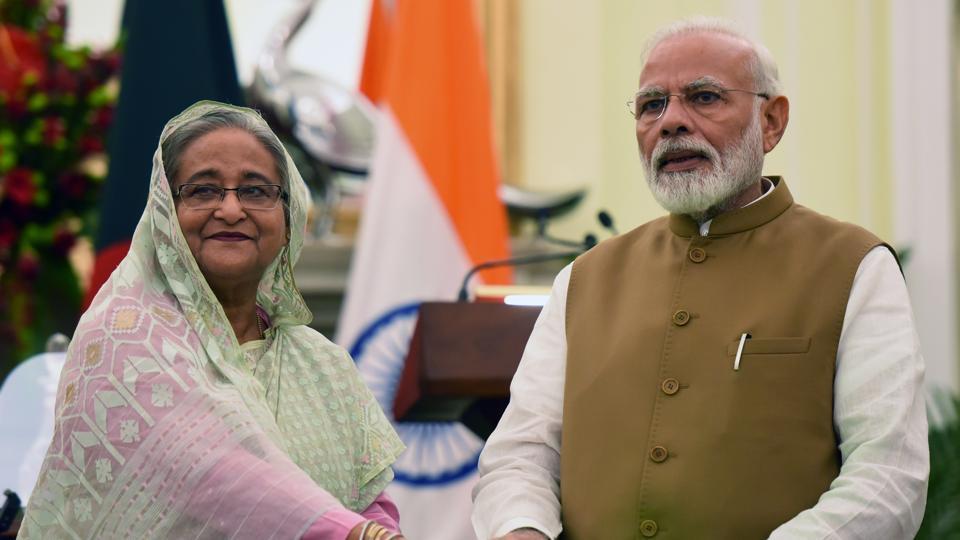
With Bangladesh focused on celebrations marking its Victory Day on December 16, the upcoming 50th anniversary of independence in March and the birth centenary of its founder Sheikh Mujibur Rahman, the two leaders will release a commemorative stamp and open the “Bangabandhu-Bapu Digital Exhibition”.
Officials of the two sides are giving final shape to nine memorandums of understanding (MoUs) expected to be signed during the summit, Bangladesh foreign minister AK Abdul Momen has said. He didn’t give details on the MoUs.
Also read: Govt sets up ‘trusted source’ bar for phone companies to shield them from attacks
The two premiers, who will be meeting virtually for the first time since the Covid-19 outbreak, will witness the reopening of Chilahati-Haldibari railway route, 55 years after it was snapped during the India-Pakistan war. At that time, Bangladesh was known as East Pakistan.
As part of efforts to enhance transport and connectivity, the two sides have already reopened four of six rail links that were suspended in 1965 – Petrapole- Benapole, Gede-Darshana, Singhabad-Rohanpur and Radhikapur-Birol. The Haldibari-Chilahati link was part of the main broad gauge route between Kolkata and Siliguri.
People familiar with developments said on condition of anonymity the Haldibari-Chilahati route will enhance connectivity to Assam and West Bengal from Bangladesh, and support bilateral trade. Initially, the link will be used to transport goods and passenger movement will start after infrastructure is developed.
With Dhaka on Tuesday extending the birth centenary celebrations for Sheikh Mujibur Rahman till December 2021, the new stamp will pay tribute to the father of the nation of Bangladesh, whom Modi has hailed as “one of the greatest personalities of the last century”.
The “Bangabandhu-Bapu Digital Exhibition”, which will pay tribute to Rahman and Mahatma Gandhi, will initially be on display in New Delhi before travelling to different locations in Bangladesh and the UN and culminating in Kolkata in 2022. The exhibition will focus on the Jallianwala Bagh and the “Genocide Tunnel” to portray the pain and suffering endured by people in the two countries.
Bangladesh foreign minister Momen also said Dhaka will raise all major bilateral issues during the summit, including sharing of river waters, Covid-19 cooperation, border killings, trade imbalance and the Rohingya crisis.
Also read: Nearly half of China’s investments in India’s neighbourhood went to Pakistan
He said Bangladesh wants to bring under a single framework the seven trans-border rivers - Monu, Muhuri, Gomti, Dharla, Dudhkumar, Feni and Teesta - and will seek an early meeting of the ministerial Joint River Commission (JRC) to forge a framework to resolve all outstanding issues.
Bangladesh’s Beximco Pharma has signed an MoU with the Serum Institute of India for 30 million doses of the AstraZeneca Covid-19 vaccine, and New Delhi has pledged to help Dhaka with vaccines.
Bangladesh is also expected to seek India’s assistance in resolving the crisis of Rohingya refugees from Myanmar, especially after New Delhi begins its stint as a non-permanent member of the UN Security Council in January.