
 E-Paper



Bombay high court, Mantralaya compund flooded as heavy rain cripples city
Mumbai rains: Videos captured water swirling through Maharashtra Mantralaya and Bombay HC, disrupting operations and prompting emergency responses.

 Prefer HTon Google


The southwest monsoon arrived in Mumbai with an unprecedented force on Monday, causing severe waterlogging and traffic chaos across the city. The compunds of the Mantralaya or state secretariat, and the Bombay High Court were also among those flooded.
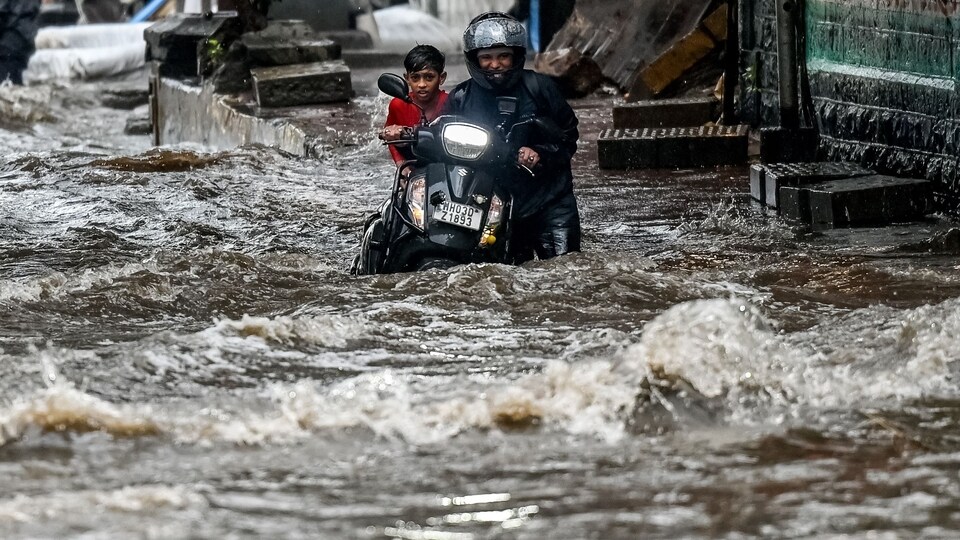
Videos captured water swirling through these critical government institutions, disrupting operations and prompting emergency responses.
In view of the severe weather, the Maharashtra Government issued an official notification allowing early closure of all government offices in Mantralaya and across Brihanmumbai.
The circular, issued by the General Administration Department, cited the India Meteorological Department’s (IMD) "Red Alert" for Mumbai and suburban regions, along with disruption to local train services, as reasons for permitting staff to leave offices by 4 pm.
“Taking into account the current situation, permission is hereby granted for government employees and officers in Mantralaya and other government offices in Greater Mumbai to leave by 4 PM,” the circular stated. Offices involved in emergency and disaster management were advised to take independent decisions regarding essential personnel.
Record early monsoon cripples Mumbai
According to IMD scientist Sushma Nair, this year’s monsoon is the earliest in 75 years, previously arriving on May 29 in 1956, 1962, and 1971. The intensity of Monday’s downpour has already caused massive civic and logistical challenges across Mumbai and parts of Maharashtra.
Mumbai's transport network struggled under the torrential rain. Services on Central Railway's Harbour Line were suspended due to waterlogged tracks, while stations like Masjid, Dadar, Matunga, and Badlapur were flooded. In contrast, Western Railway claimed normal operations, although announcements at Kandivali station mentioned train delays of up to 20 minutes.
The newly-launched Metro Line 3 (Aqua Line) also faced disruption as the Acharya Atre Chowk underground station was inundated, forcing the Mumbai Metro Rail Corporation (MMRC) to halt services between Worli and the affected station. Videos from the scene showed escalator leaks, collapsed false ceilings, and water-logged platforms.
The MMRC reported that a retaining wall collapsed at an under-construction entry/exit structure due to sudden water ingress, raising serious concerns about the construction quality and monsoon preparedness of the 33-km Colaba-BKC-Aarey corridor.
Flooding across Mumbai
Several low-lying areas, including Dadar TT, Parel TT, King's Circle, Hindmata, Kemps Corner, and even the heavily patronized KEM Hospital, were submerged. BEST bus services were rerouted on multiple lines, and a tree branch falling on electric lines disrupted services between Churchgate and Marine Lines.
The BMC reported the highest rainfall in Nariman Point (104 mm in just one hour), followed by Colaba, A Ward, and the Municipal Head Office, all receiving upwards of 80 mm of rainfall between 9 am and 10 am.


