
 E-Paper



Brahmos, Akash and Nirbhay: India rolls out its missiles to counter Chinese threat
India-China standoff: India’s main stay in the stand-off weapons is the Brahmos air-to-air and air-to-surface cruise missile with its 300 kilogramme warhead

 Prefer HTon Google


The 500 km-range Brahmos cruise missile, 800 km-range Nirbhay cruise missiles along with Akash surface-to-air missile (SAM) with a capability to target aerial threats 40 km away are at the core of India’s stand-off weapon deterrence to People’s Liberation Army (PLA) missile deployment in Xinjiang and Tibet regions.
While the PLA’s western theatre command has deployed stand-off weapons up to 2,000 km range and long-range SAMs in Tibet and Xinjiang after the Ladakh stand-off started, people familiar with the matter told Hindustan Times that the supersonic Brahmos, subsonic Nirbhay as well as Akash have been deployed to counter them by India in the worst-case scenario. The Chinese deployment is not limited to occupied Aksai Chin but is located in depth positions from Kashgar, Hotan, Lhasa and Nyingchi along the 3,488 km Line of Actual Control (LAC).
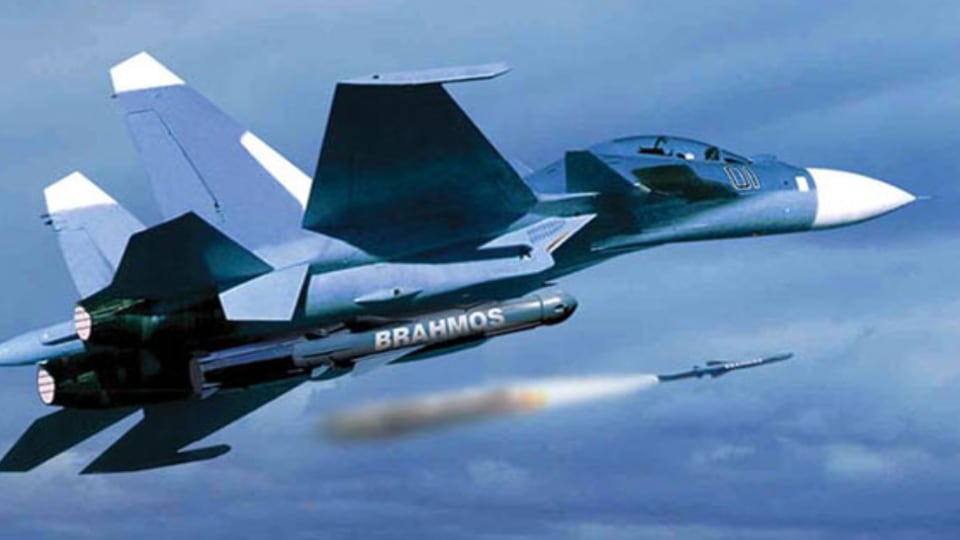
India’s main stay in the stand-off weapons is the Brahmos air-to-air and air-to-surface cruise missile with its 300 kilogramme warhead which can take care of airstrips in Tibet and Xinjiang, or a warship in Indian Ocean.
The Brahmos missile has been deployed in sufficient numbers in the Ladakh sector with the option to deliver the stand-off weapon from a Su-30 MKI fighter. Besides, the Brahmos can be used to create choke points in the Indian Ocean using the Car Nicobar air base in India’s island territories. The IAF’s Car Nicobar air base is the advanced landing ground for SU-30 MKI’s which can use air-to-air refuellers to protect against any PLA warship threat coming from the Strait of Malacca to Sunda Strait across Indonesia, a senior government official said.
While a limited number of Nirbhay subsonic missiles have been produced and deployed, the stand-off weapon system has a range that can reach up to 1,000 km, and has both sea skimming and loitering capability. This means that the missile is capable of flying between 100 metres to four km from ground and pick up the target before engaging it. The Nirbhay missile has only a surface-to-surface version.
The third stand-off weapon used by Indian military is the Akash SAM, which has also been deployed in sufficient numbers to counter any PLA aircraft intrusion across the LAC in Ladakh sector. The PLA Air Force fighter activity in occupied Aksai Chin continues albeit at a reduced level. However, there is concern over PLA air activity across the Daulet Beg Oldi sector near Karakoram pass.
The Akash missile with its three-dimensional Rajendra, a passive electronically scanned array radar that has the capacity to track 64 targets at a time and simultaneously engage 12 of them. The missile has the capacity to engage all aerial targets including fighter planes, cruise missiles and ballistic missiles.


