
 E-Paper



Cabinet nod to revisions in Schedule Tribes lists of four states
The change includes granting tribal status to the Hatti community living in the Trans-Giri region of Himachal Pradesh, Munda said at a briefing for reporters after the cabinet meeting. Polls are due in the hill-state later this year.

 Prefer HTon Google


The Union cabinet on Wednesday approved the inclusion of several communities in the Schedule Tribes list of the Constitution across 4 states, as part of the Constitution (Scheduled Tribes) Order (Amendment) Bill 2022, tribal affairs minister Arjun Munda said.
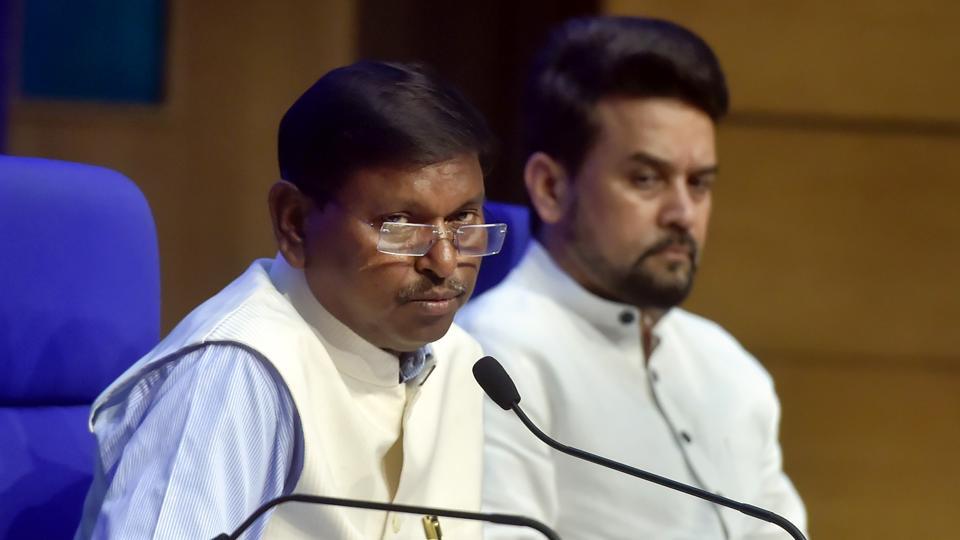
The change includes granting tribal status to the Hatti community living in the Trans-Giri region of Himachal Pradesh, Munda said at a briefing for reporters after the cabinet meeting. Polls are due in the hill-state later this year.
Union minister Anurag Thakur, whose father Prem Kumar Dhamal has served as Himachal CM, said: “Accepting the almost 50-year-old demand of Hatti community of Sirmaur district of Devbhoomi Himachal, the Government of India has decided to include them in the Scheduled Tribes. This will benefit 1.60 lakh people in Himachal Pradesh.”
In Tamil Nadu, it proposes the inclusion of ‘Narikoravan’ and ‘Kurivikkaran’ communities in the list of state’s STs.
In Karnataka inclusion of communities, namely, ‘Betta-Kuruba’ community as a synonym of ‘Kadu Kuruba’ at serial number16 in the state’s ST list, has been suggested.
In Chhattisgarh, similar sounding names have been added to 12 existing tribes in the ST list, and many different Hindi spellings were changed or added, while maintaining the English names.
In Uttar Pradesh, the Gond tribe, along with its five sub-castes, was already approved for inclusion in the ST list for the state. The changes were approved for four districts in Uttar Pradesh — Kushinagar, Sant Ravidas Nagar, Chandauli and Sant Kabir Nagar.
“After the Bill becomes an Act, member of the communities newly listed in the revised list of Scheduled Tribes of… (the states) will also be able to derive benefits meant for STs under the existing schemes of the Government,” a ministry official said, asking not to be named.
“Some of the major schemes include Post Matric Scholarship, National Overseas Scholarship, National Fellowship, Top Class Education, Concessional Loans from National Scheduled Tribes Finance and Development Corporation, Hostels for ST boys and girls etc. In addition, they will also be entitled to benefits of reservation in services and admission to educational institutions as per Government policy,” said the official.
The Bill has to pass through both houses of the Parliament, the Lok Sabha and the Rajya Sabha.
Experts however were sceptical of the move.
“This is a populist move on part of the government as they consider the tribes a potential votebank,” said Professor SS Jodhka from Jawaharlal Nehru University (JNU)’s school of social sciences.
“There will likely be no discussion on the subject unless there is a mobilised opposition. It will depend on the political context and situation when the Bill is introduced in Parliament,” Jodhka said.


